
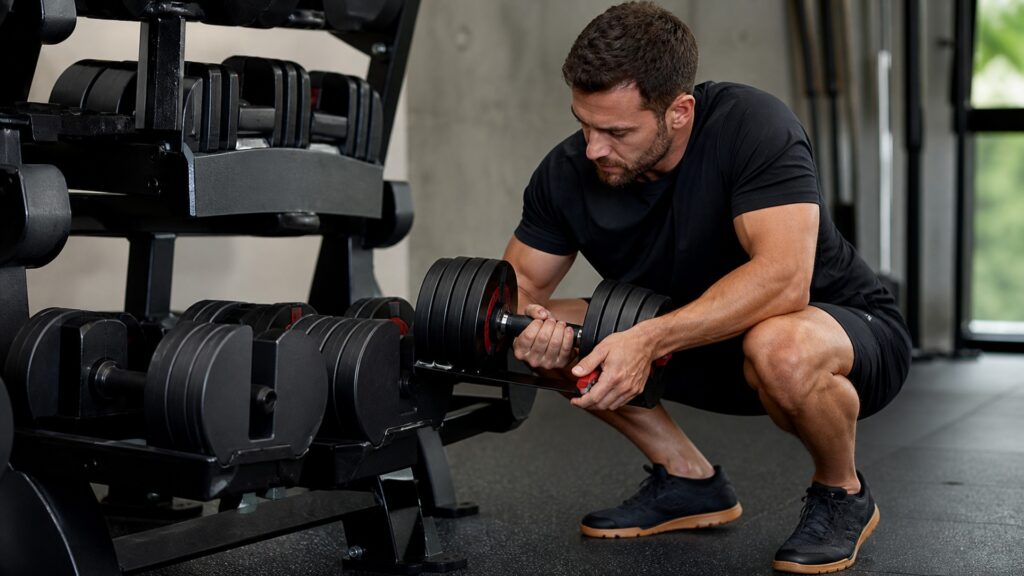
Why Dumbbells Safety Factors Matters

Safety factors matter with dumbbells because the weights are free in the user's hands. There is no machine track to guide the path, no rack automatically catching a missed rep, and no shared bar keeping both sides connected.

That freedom is one reason dumbbells are useful, but it also makes setup, grip, load choice, floor space, and exit strategy important. A safe dumbbell session is not about avoiding effort. It is about choosing a load and movement the user can control from the first rep to the last.

By: Review Streets Research Lab
Updated: October 1, 2026
Explainer · 8-12 min read
dumbbells safety factors explainer hero image for Review Streets
What You'll Learn

How Dumbbell Safety Factors Change A Workout

A practical guide to load choice, setup, grip, space, and control when training with dumbbells.

  • Why free weights require more setup awareness than machines
  • How grip, wrist position, and range of motion affect control
  • Where load jumps can create avoidable risk
  • Why floor space and nearby objects matter
  • How to plan a safe end to a hard set

Tip: The safest dumbbell load is the one the user can start, control, and put down without improvising.

Definitions

Key Safety Concepts For Dumbbell Training

These concepts help readers inspect the practical risks before increasing weight or complexity.

Load Control

Load control is the ability to move and stop the dumbbell without losing position.

  • Example: lowering a dumbbell press smoothly instead of dropping into the bottom
  • Check: watch the last two reps
  • Limit: control can change quickly with fatigue

Grip Security

Grip security is how reliably the hand holds the handle during the exercise.

  • Example: keeping a firm grip during farmer's carries
  • Check: inspect handle texture and hand fatigue
  • Limit: grip can fail before the target muscles do

Start Position

Start position is the setup used before the working reps begin.

  • Example: kicking dumbbells into place for a bench press
  • Check: practice the setup with lighter weights
  • Limit: a good lift can still be risky if setup is awkward

Exit Strategy

Exit strategy is the plan for ending a set safely if the rep cannot be completed.

  • Example: setting dumbbells down beside the hips instead of twisting under load
  • Check: know where the weights will go
  • Limit: not every exercise has an easy bailout

Clearance

Clearance is the space around the body and weights during the movement.

  • Example: keeping a clear area for lunges or raises
  • Check: look at floors, benches, mirrors, and nearby people
  • Limit: small rooms can restrict safe movement

Progression Step

Progression step is the increase from one weight to the next.

  • Example: moving from 25 lb to 30 lb dumbbells
  • Check: increase only when form remains consistent
  • Limit: large jumps can change the exercise too much

Tip: Safety improves when the setup is boring, repeatable, and clear before the hard reps start.

Load

Choose Weight The User Can Control

Dumbbells make it tempting to chase heavier numbers, but each hand has to manage its own load. A weight that is fine for one side may be sloppy or risky for the other.

  • Start with a load that moves smoothly.
  • Stop when range or posture changes sharply.
  • Use smaller increases when possible.

Load should challenge the movement without taking control away.

Grip

Grip And Wrist Position Matter Early

Dumbbell handles vary by thickness, texture, and shape. Grip fatigue, bent wrists, or a shifting handle can make a normal lift feel unstable.

  • Keep the wrist stacked when the exercise requires it.
  • Use handle texture that feels secure.
  • End sets before grip failure creates a drop risk.

The hand is the connection point, so it deserves attention.

Setup

The Start Of The Set Is Part Of The Lift

Many dumbbell problems happen before the working reps begin. Getting heavy dumbbells into position for presses, rows, or split squats can be harder than the exercise itself.

  • Practice setup with lighter weights.
  • Use a bench or floor position that is stable.
  • Avoid twisting while holding heavy dumbbells.

A clean setup makes the working set safer and more repeatable.

Space

Clearance Prevents Avoidable Problems

Dumbbells move around the body. Raises, lunges, step-ups, carries, and floor work all need space that a static equipment footprint does not show.

  • Clear the floor before starting.
  • Check mirror, wall, and bench distance.
  • Leave room to set weights down.

The workout area is part of the safety system.

Finish

Plan How The Set Ends

Hard dumbbell sets need a controlled finish. The user should know whether the weights return to the floor, rack, bench, or sides before fatigue makes that decision harder.

  • Avoid dropping weights unless the space is designed for it.
  • Keep a clear landing area.
  • Use a spotter or lighter load for risky press variations.

A safe finish is planned before the set begins.

Quick Reality Check

Where Dumbbell Safety Factors Help And Where They Have Limits

Good safety habits make dumbbells more useful, but they do not remove every risk.

Where They Help

They keep load, setup, grip, and space aligned with the exercise.

They make progression more repeatable over time.

Where They Fall Short

They cannot replace coaching for unfamiliar movements.

They cannot make poor recovery, pain, or careless loading safe.

Common Myths

Misconceptions About Dumbbell Safety

Dumbbells are simple tools, but simple does not mean risk-free.

Light weights are always safe

Poor setup, fatigue, or awkward movement can make even lighter dumbbells a problem.

Machines are the only equipment that needs safety planning

Free weights need planning because the user controls the path.

Grip strength is a minor detail

Grip can limit or end a set before the target muscles do.

If one side can lift it, both sides are ready

Dumbbells expose side-to-side differences that a shared bar may hide.

Tip: Treat safety checks as part of the workout, not as a separate warning afterthought.

FAQ

Frequently Asked Questions About Dumbbell Safety

Short answers for safer dumbbell setup and progression.

What is the biggest safety factor with dumbbells?

Control is the biggest factor: the user needs to start, move, stop, and set down the weight safely.

Are dumbbells safer than barbells?

They can be easier to bail out of in some exercises, but they also require more independent control.

How should beginners choose weight?

Beginners should choose a load they can move through the intended range without twisting, rushing, or losing grip.

Do adjustable dumbbells change safety?

They can, because the locking mechanism, handle length, and plate shape affect setup and confidence.

What is the practical takeaway?

Use dumbbells with a load, grip, setup, and space that stay controlled through the full set.

Bottom Line

Dumbbell safety factors matter because the user controls the path, balance, and finish of every rep.

Good load choices, secure grip, clear space, and a planned exit make dumbbells easier to use well.

Next Steps

Go Deeper or Compare Your Options

Use these Review Streets paths to compare related categories and practical next decisions.