
Independent Loading
Independent loading means each hand controls its own weight.
- Example: pressing two dumbbells overhead
- Check: watch whether both sides move evenly
- Limit: each side can drift if control fades
Training function matters because dumbbells can build strength, balance, coordination, muscle control, and range options through independent loading. Each side has to manage its own weight rather than sharing one connected implement.
A dumbbell can be a main strength tool, an accessory tool, a home-gym staple, or a way to train around certain movement limits. Its value depends on the exercise, weight jump, grip, setup, and control needed.
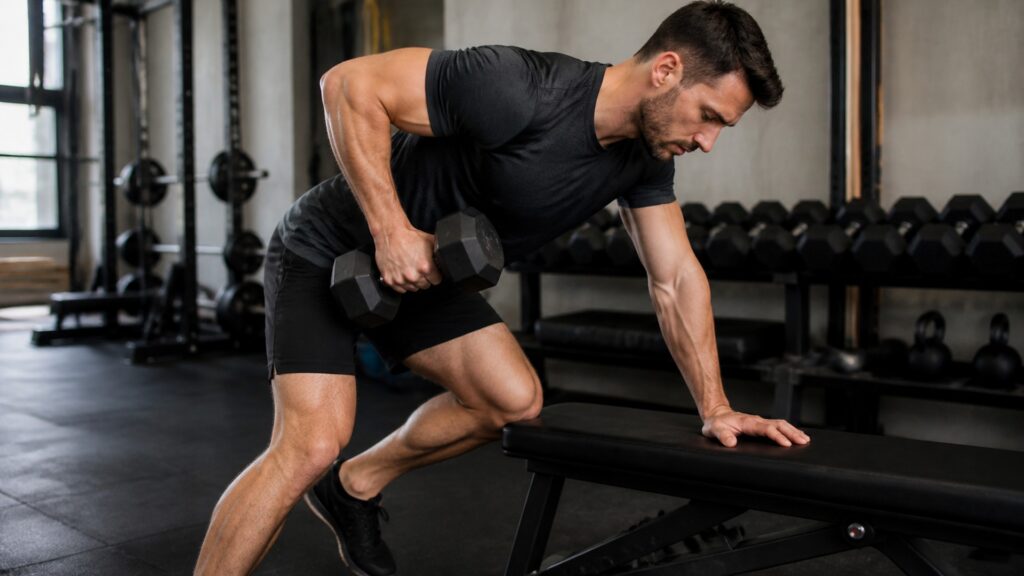
A practical look at independent loading, unilateral work, range control, accessories, and home training.
Tip: Use dumbbells when independent control is part of the training job.
These concepts explain why dumbbells serve a specific strength role.
Independent loading means each hand controls its own weight.
Range freedom is the ability to adjust hand path around the body.
Stabilization demand is the extra control needed because each weight can move separately.
Weight jump is the change between available dumbbell sizes.
Setup and exit are how the lifter gets dumbbells into and out of position.
Pair matching keeps both dumbbells the same weight and style when the exercise needs symmetry.
Tip: Dumbbells are useful when the session needs each side to own its movement.
Because each hand holds its own weight, one side cannot hide behind the other as easily. That can help with control and awareness.
Independent loading is a training function, not just a design detail.
Rows, presses, lunges, carries, split squats, and curls can be trained one side at a time. That helps target control and positioning.
Dumbbells make single-side work practical.
Dumbbells let hands rotate and travel with more freedom than a shared bar. That can help some lifters find a more comfortable range.
Range freedom is useful when it improves control.
Dumbbells may jump in fixed increments, and moving up can be harder than adding small plates to a bar. Rep targets and tempo can help bridge gaps.
Progression depends on the available pair sizes.
A small set of fixed or adjustable dumbbells can support many exercises without a full rack or platform. The tradeoff is weight range and setup speed.
Dumbbells often earn their role through versatility.
Training function matters because dumbbells are flexible but not universal.
They support independent-side control and flexible movement paths.
They fit compact strength training and accessory work.
Heavy setup can become awkward.
Large jumps can make progression harder than expected.
Dumbbells are not only lighter backup tools.
They can be primary tools for many strength plans.
It helps only when the lifter can control both sides.
They save space but may have size, feel, or transition tradeoffs.
They can build strength when load, range, and progression fit the goal.
Tip: Match the dumbbell role to the exercise and progression plan.
Short answers about how dumbbells fit strength work.
They provide independent handheld loading for strength, control, and range work.
Use dumbbells when independent-side control or freer hand path matters.
Yes. Dumbbells can be primary strength tools when the load range fits the goal.
Available pair sizes, setup difficulty, and grip can limit progression.
Use dumbbells when independent control and flexible movement are part of the plan.
Training function matters because dumbbells let each side control its own load and path.
Their best role is strength work that benefits from independence, range freedom, and compact setup.
Use these Review Streets paths to compare related categories and practical next decisions.
Review independent loading, grip, range, and setup basics.
Compare independent-hand loading with shared-bar lifting.
Explore the dumbbells category.
Choose a retailer
Prices checked regularly. We may earn a commission at no cost to you.