
Risk Exposure
Time and degree to which people or vehicle are subject to a hazard.
- Traffic and cold accumulate risk differently
- Long waits multiply minor needs
- Route choice can reduce exposure before gear is needed
Emergency preparedness matters because vehicle failures do not occur in a neutral setting. A dead battery at a staffed parking lot and the same failure on an icy, unlit road create different risks. Distance from help, traffic speed, weather, passengers, medication, communications, and time of day determine the consequence long before the fault happens.
Preparation changes that consequence by adding options: preventive inspection, safer routes, check-in rules, warning equipment, communication redundancy, clothing, water, medical supplies, and more than one mobility path. The goal is not to carry everything. It is to identify the failures that would become dangerous on this trip and keep a workable response after the first plan fails.
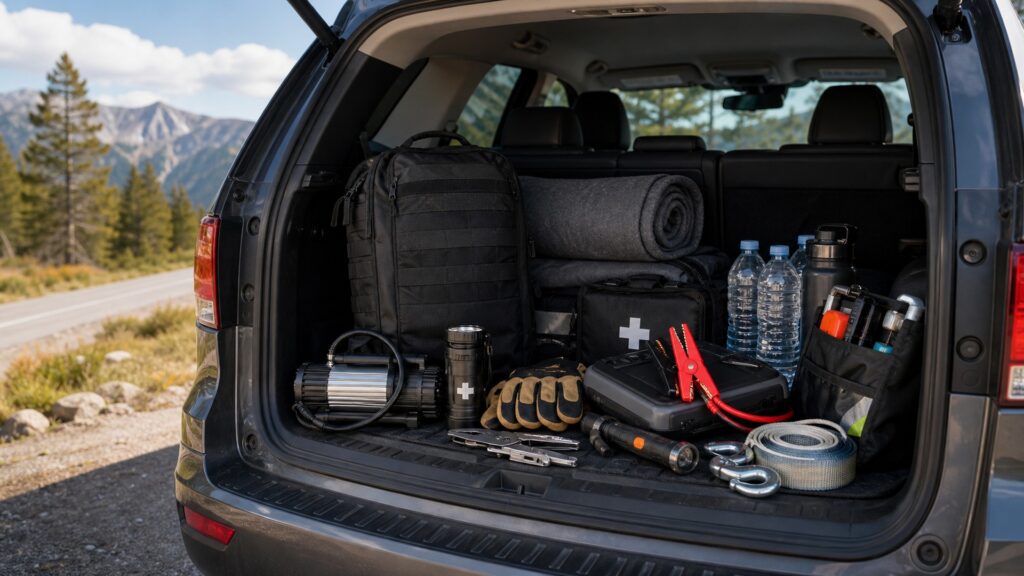
Preparedness starts with exposure, delay, and consequence. The equipment list comes after the route, people, vehicle condition, weather, service access, and outside-contact plan are understood.
Tip: Set a departure trigger and a turnaround trigger before the trip. Decisions made with fresh weather, fuel, daylight, and alternatives are more reliable than choices made after conditions close in.
These planning concepts help size preparation to a real journey instead of fear or generic lists.
Time and degree to which people or vehicle are subject to a hazard.
Expected harm if a credible failure occurs under the trip's conditions.
Realistic interval from recognizing a problem to help reaching the exact vehicle location.
Agreed schedule and escalation action when travelers do not report as planned.
Passenger need for medication, powered equipment, mobility support, temperature control, or specialized care.
Controlled practice of locating, operating, and repacking emergency systems before a trip.
Tip: Update assumptions for each vehicle, passenger group, season, and jurisdiction; emergency resources and network availability change across routes.
Risk ranking combines probability with what happens during delay. For one traveler, an immobilized car means a late arrival; for another, extreme heat, insulin storage, infant care, disability, or an unsafe roadside location makes the same delay urgent.
Preparedness is personal because consequence is personal.
Tire pressure, battery condition, fuel or charge, lighting, wipers, cooling, recalls, weather, daylight, construction, and service hours can remove risk instead of managing it later. A longer route with coverage and shoulders may be safer.
The best emergency resource is the failure or exposure that planning prevents.
A phone plus offline map, a satellite path, a spare plus repair kit, a jump pack plus service contact, or warm clothing plus a safe shelter location can preserve options. Backups must not share the same battery, key, account, or inaccessible cargo area.
Two objects are not redundant when one event disables both.
Survival supplies are governed by people, climate, and delay rather than vehicle cargo capacity. Staying with the vehicle is often easier for rescuers, but fire, flood, unsafe traffic, unstable terrain, or official direction can require evacuation.
Sustainment planning starts with a credible clock and an explicit shelter decision.
Used supplies, flat batteries, corroded contacts, expired medication, downloaded-map gaps, confusing instructions, and inaccessible storage become visible through drills and real incidents. A short debrief prevents the same hidden weakness from surviving.
Preparedness improves through feedback, not through one permanent packing list.
Its strongest effects occur before departure: lower exposure, clearer thresholds, independent backups, and a realistic plan for delay.
The route and timing reflect weather, services, vehicle range, passengers, and communications rather than only the shortest travel time.
Critical warning, contact, medical, shelter, and mobility functions each have accessible equipment, known limits, and a fallback that does not share the same likely failure.
No kit makes floodwater, fire, unstable traffic, severe weather, or remote terrain safe; cancellation, rerouting, evacuation, and professional rescue remain valid planned outcomes.
Carrying more can reduce payload margin, bury urgent equipment, age unnoticed, or create false confidence when the driver has not practiced the decision sequence.
Preparedness myths often substitute purchasing for route and consequence analysis.
Self-reliance has limits set by injury, fire, traffic, weather, vehicle stability, tool capability, and training. Good preparation includes early communication, professional assistance, evacuation, and a clear point where self-help stops.
Urban breakdowns can expose occupants to high-speed traffic, extreme heat, medical delay, crime, or inaccessible towing. The equipment mix changes near services, but warning, communication, medication, and safe-wait decisions still matter.
A checklist can prompt categories, but passenger health, climate, route, vehicle technology, cargo, legal rules, and assistance time determine quantities and priorities. Unexamined lists often omit the one dependency that drives consequence.
Extra cargo can consume payload, obstruct access, become a crash projectile, expire, or distract from simple practiced tools. Resilience comes from independent functions, maintained condition, clear placement, and decisions matched to credible hazards.
Tip: A useful plan changes decisions before, during, and after an incident; it does not merely increase cargo.
These answers cover trip contacts, electric vehicles, medication, staying with the vehicle, and a practical pre-departure review.
Provide route, destination, vehicle description, occupants, medical considerations, expected check-ins, device details, alternate plans, and the exact time and process for escalating a missed contact. Update them when the plan changes.
Account for charger availability, weather-driven range change, queue or outage risk, tow procedures, high-voltage damage boundaries, and cabin-energy use while waiting. Retain range margin and know which services can transport the vehicle correctly.
Follow clinical and storage guidance for the traveler and build margin beyond the planned trip and credible delay. Protect temperature-sensitive medication, keep essential information accessible, and avoid leaving critical supplies in an unreachable vehicle.
The vehicle is usually easier to locate and can provide shelter, but fire, fuel, flood, unstable position, unsafe traffic, extreme temperature, or official instructions may make evacuation necessary. Assess the immediate scene first.
Check vehicle condition, weather, route, range, services, communication coverage, passenger needs, roadside equipment access, spare pressure, powered-device charge, expiration dates, check-in rules, and the thresholds for delay, rerouting, or cancellation.
Emergency preparedness matters because it changes how quickly a routine vehicle problem becomes dangerous under the specific route, weather, passenger, traffic, communication, and delay conditions.
Reduce exposure first, design independent exits, size supplies to a realistic wait, rehearse critical actions, and treat cancellation or professional help as successful planned outcomes when limits are reached.
The next articles separate incident equipment, off-grid communication, and roadway visibility so each backup is designed around its own failure path.
Arrange warning, communications, first aid, shelter, and mobility tools in the order a roadside incident actually unfolds.
Compare terrestrial and satellite distress paths through coverage, sky view, power, subscription, acknowledgement, and coordination.
Use traffic direction, sight distance, curves, crests, conspicuity, and occupant placement to manage a disabled vehicle.
Choose a retailer
Prices checked regularly. We may earn a commission at no cost to you.