
Step-Through Frame
A frame shape with a lower access point for mounting.
- It can reduce how high the leg must lift.
- It still needs clear floor space.
- It does not guarantee suitability for every rider.
Safety factors matter because an exercise bike is used while mounted on a moving machine. Step-through frames, mounting clearance, seat post clamps, toe cages, flywheel guards, emergency brakes, frame levelers, and power cord routing are practical design details, not decorative specs.
The point is consequence, not alarm. When these factors are ignored, the rider may struggle to get on, hold position, keep feet placed, slow the flywheel, or keep the frame steady as cadence and resistance change.
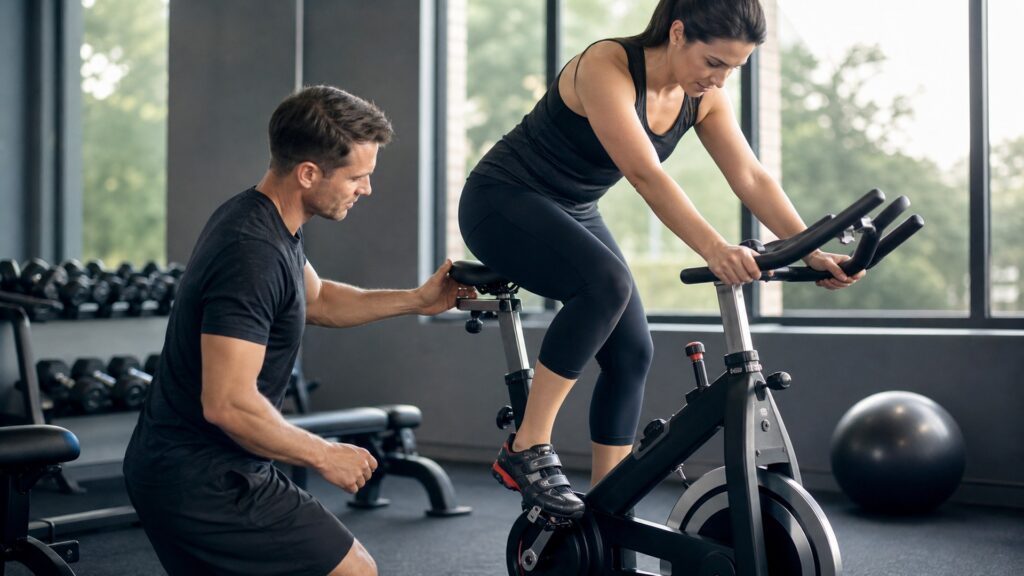
These checks explain how access, contact, moving parts, frame stability, and instructions affect ordinary use.
Tip: Inspect the bike in the order a rider uses it: approach, mount, set position, secure feet, pedal, adjust load, stop, and dismount.
These definitions connect the main idea to the variables, limits, and practical signals readers need to compare options.
A frame shape with a lower access point for mounting.
The locking part that holds saddle height or position.
A pedal enclosure that helps keep the foot on the platform.
A cover or barrier around moving parts.
A stop control used on some fixed-gear or spin-style bikes.
An adjustable foot used to steady the bike on the floor.
Tip: A safety factor is useful only when it points to something observable on the machine or in the manufacturer's instructions.
The first safety consequence appears before resistance is touched. A frame that is awkward to step over or crowded by furniture can make the bike harder to use correctly.
Access is a genuine equipment factor because every ride begins and ends there.
Once seated, the rider depends on clamps, grips, and pedals to stay where expected. If those contact points shift, the session becomes less controlled.
Contact security matters because the rider is applying force repeatedly while supported by a few points.
Some exercise bikes keep the flywheel moving even when the rider wants to slow down. Guards and stop controls reduce confusion around moving parts.
The safety issue is knowing what keeps moving and how the user can stop it.
A bike that seems steady at light effort may rock when cadence rises, resistance increases, or the rider stands on a spin-style frame.
Stability is checked under realistic use, not only when the bike is sitting still.
Equipment safety factors can be inspected, but they cannot decide whether cycling is appropriate for a person with pain, injury, balance issues, or medical restrictions.
A strong safety explanation stays with product consequences and stops before giving personal medical advice.
The useful scope is observable equipment behavior, access, stopping, and manufacturer limits.
It identifies bike parts that affect mounting, position security, stopping, and frame stability.
It explains why safety language should be tied to specific product details rather than vague reassurance.
It cannot certify that a bike is safe for a particular person or condition.
It also cannot replace the manufacturer manual, local supervision needs, or professional medical guidance.
Common shortcuts and misunderstandings can make the topic seem simpler than it is.
The bike stays in one place, but pedals, flywheels, clamps, cords, frame movement, and mounting still create practical checks.
Weight may help, but levelers, floor surface, frame width, and riding style determine whether the bike stays planted.
Retention should secure the foot without creating awkward release or pressure. The correct setup depends on pedal design and footwear.
A guard or emergency brake addresses machine behavior. It does not decide whether cycling is appropriate for a specific health situation.
Tip: Treat strong claims as starting points for comparison, not final answers.
Concise answers to common questions readers may have after the main explanation.
Start with access: step-through height, floor clearance, nearby obstacles, and a clear dismount path around the bike.
A slipping saddle changes body position while the rider is pedaling, which can make the bike harder to control.
No. Stop design varies, especially between freewheel and fixed-gear styles. The important point is knowing how that model slows down.
A mat can help protect flooring and reduce movement on some surfaces, but it should not hide an unstable setup or replace leveler adjustment.
No. It explains product factors. Pain, balance concerns, injury history, or rehabilitation needs require individualized guidance.
Exercise-bike safety factors matter because they shape ordinary steps: getting on, staying positioned, controlling moving parts, keeping the frame steady, and stopping.
The best safety reading is specific and observable. It respects manufacturer limits and avoids turning product features into personal health guarantees.
Use these Review Streets paths to connect the explainer to related categories, comparisons, and next decisions.
Use this to understand the moving parts behind the safety checks.
Read this to connect repeated pedaling with contact-point and setup checks.
Browse exercise-bike types after identifying the safety factors worth comparing.
Choose a retailer
Prices checked regularly. We may earn a commission at no cost to you.