
Workout Role
The job a bike is expected to serve in a routine.
- It may be primary or secondary.
- It shapes which features matter.
- It is not proof of results.
Workout role matters because the same exercise bike can be asked to do very different jobs. A bike used for daily indoor cardio faces different scrutiny than one used for five-minute warmups, cooldown rides, shared household sessions, or quiet desk-adjacent pedaling.
The role changes the standard. It decides whether adjustment range, quick-start controls, noise, feedback, resistance range, subscription reliance, or compact storage deserves the most attention.
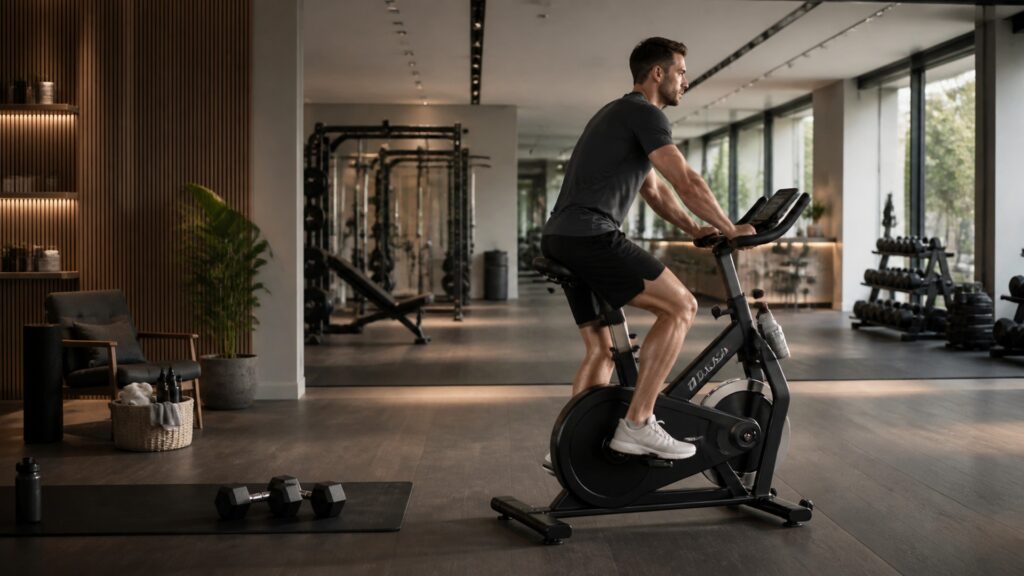
Workout role explains which bike features matter for a specific use case without turning features into result guarantees.
Tip: Name the bike's job in one sentence before comparing specifications.
These definitions connect the main idea to the variables, limits, and practical signals readers need to compare options.
The job a bike is expected to serve in a routine.
A bike used as the main indoor cardio machine.
A short easy ride before another activity.
A lighter session after harder work.
A bike used by more than one person.
Dependence on app content or classes.
Tip: A role is a use case. It is not evidence that a bike will produce a particular result.
Workout role matters because features only become meaningful when they serve a use case. A display, resistance range, or app library can be central for one rider and irrelevant for another.
The role turns scattered specifications into a practical evaluation.
When the bike is the main cardio station, small problems repeat often: saddle limits, noisy drive behavior, confusing controls, or unstable feedback become harder to ignore.
Primary use raises the standard because the machine carries more of the routine.
A bike used before or after another workout does not need to act like a full studio system. The important role may be easy mounting, low starting resistance, and controls that are obvious while attention is elsewhere.
Support roles often reward simplicity rather than feature depth.
For a shared household bike, the role includes reset time. Adjustment markings, saddle range, pedal options, and simple profiles can matter more than peak resistance.
Shared use turns fit and clarity into central criteria.
Calling a bike a recovery tool, fat-loss tool, or rehab tool adds claims the equipment alone cannot support. A role can describe how the bike is used, but not guarantee an outcome.
Workout role is useful only when it stays tied to observable use.
Role analysis helps prioritize features, placement, and controls without promising results.
It explains why a simple bike may suit short support rides while a fuller setup may suit frequent structured sessions.
It clarifies why shared use and room placement can matter as much as resistance range.
It cannot prove health benefits, weight change, rehabilitation suitability, or personal training outcomes.
Those judgments need user-specific context and evidence beyond the product role.
Common shortcuts and misunderstandings can make the topic seem simpler than it is.
A bike can be excellent for intervals and annoying for short warmups if it is slow to start.
Classes help only when guided content is part of the intended job.
Compact models can serve frequent use if fit, stability, and controls match the role.
A light cooldown use case is not the same as a clinical recovery claim.
Tip: Treat strong claims as starting points for comparison, not final answers.
Concise answers to common questions readers may have after the main explanation.
It means the practical job the bike serves, such as primary cardio, warmup, cooldown, shared use, or quiet secondary movement.
Frequent use makes fit, noise, durability, and repeatable feedback matter more.
Fast access, low starting resistance, easy timing, and minimal setup friction usually matter most.
Adjustment range, clear markings, pedal style, and simple controls become more important.
No. It explains use context, not guaranteed fitness, calorie, medical, or recovery outcomes.
Exercise-bike workout role matters because the machine should be judged by the job it must perform.
A primary cardio bike, warmup bike, cooldown bike, shared household bike, and quiet secondary bike do not need the same feature hierarchy.
Use these Review Streets paths to connect the explainer to related categories, comparisons, and next decisions.
Use this to connect workout role with session controls and feedback.
Read this for the mechanical baseline behind bike features.
Browse bike options after defining the intended role.
Choose a retailer
Prices checked regularly. We may earn a commission at no cost to you.