
Steady-State Ride
A session built around holding a fairly consistent effort.
- It depends on stable resistance.
- Cadence cues help keep rhythm.
- Comfort over time becomes important.
Training function is the difference between a bike that merely spins and a bike that can shape a session. The same frame may be asked to support steady-state rides, interval blocks, warmup ramps, cooldown spins, or app-led profiles.
That matters because each session shape stresses different controls. Resistance increments, cadence cues, manual quick changes, heart-rate pairing, and power-zone displays determine whether the rider can actually follow the intended pattern.
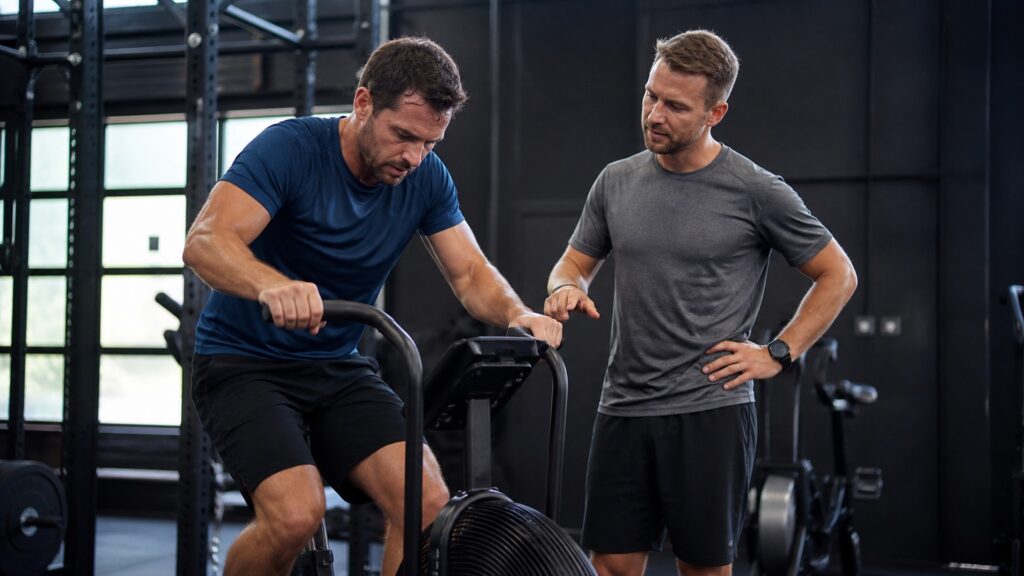
Training function explains what the bike helps organize during use: rhythm, load changes, feedback, and duration.
Tip: Name the session shape first; a feature that matters for interval blocks may be irrelevant for a light cooldown spin.
These definitions connect the main idea to the variables, limits, and practical signals readers need to compare options.
A session built around holding a fairly consistent effort.
A planned alternation between harder and easier periods.
A gradual increase from easy pedaling toward a working level.
A preset or app-led sequence of prompts or resistance changes.
A screen or app view that groups effort around watt targets or estimates.
A control that lets the rider alter load without stopping.
Tip: Training function should be judged by how well the bike supports a specific session pattern, not by the longest feature list.
Pedals and resistance are only the raw materials. Training function matters because it determines whether those materials can be arranged into steady work, deliberate changes, or simple support before another activity.
The causal point is that the same mechanical bike can serve different purposes depending on how it structures effort.
A high maximum resistance sounds impressive, but many sessions rely on whether the bike can change load in manageable increments.
Training function is often about usable control range, not peak difficulty.
A display becomes useful when it matches the job. Time may be enough for an easy spin, cadence may guide rhythm, and power may matter only when the bike can report it credibly.
Metrics should serve the session design rather than dominate it.
Programs can change resistance or give prompts, but they do not know the rider's full context unless paired with appropriate assessment and guidance.
This keeps training function useful without pretending software alone creates safe or effective training.
A bike used as the main cardio machine needs stronger training function than one used for brief warmups. The role changes which controls deserve scrutiny.
Training function matters because the intended role changes the standard the bike must meet.
Session structure explains many bike choices, but it should stay separate from claims about personal results.
It shows why resistance increments, cadence cues, programs, and displays affect how a rider can organize work.
It explains why a bike suited to warmups may not be equally suited to frequent interval sessions.
Training function does not establish fitness improvement, weight change, recovery, or clinical suitability.
Outcome claims require evidence about the person, program, effort, and measurement method.
Common shortcuts and misunderstandings can make the topic seem simpler than it is.
A long menu can help some users, but clear controls and repeatable load changes may matter more than the number of profiles.
Intervals need timed changes, recoveries, and control response. Maximum load alone does not make the bike good for interval work.
Pairing can show data, but it does not automatically interpret readiness, medication effects, fatigue, or medical constraints.
Warmups still need quick access, low starting resistance, stable pedaling, and controls that do not slow the transition into the next activity.
Tip: Treat strong claims as starting points for comparison, not final answers.
Concise answers to common questions readers may have after the main explanation.
It means the bike's controls and feedback can support a defined session shape such as steady riding, intervals, ramping, warmups, or cooldowns.
They determine whether effort changes are smooth enough for the session. Big jumps may make pacing harder even when the bike is otherwise sturdy.
No. They can help structure sessions, but simple manual controls may work well when the rider already knows the intended pattern.
Only carefully. Resistance labels, power estimates, app features, and sensor quality vary, so direct comparisons need context.
No. It describes what the machine can help organize, not what any individual should do.
Training function matters because it turns pedaling hardware into a session that can be repeated, varied, or kept simple on purpose.
A strong explanation follows the intended session shape, then judges controls and feedback according to that job instead of treating features as proof of results.
Use these Review Streets paths to connect the explainer to related categories, comparisons, and next decisions.
Use this to connect training controls back to the bike's mechanical drive and brake system.
Read this when the question is how large a role the bike should have in a routine.
Use this broader guide when the reader is comparing low-impact session options across machine types.
Choose a retailer
Prices checked regularly. We may earn a commission at no cost to you.