
Why Full Size Pickup Trucks Fitment Matters

Full-size pickup fitment matters because an accessory must attach correctly, carry its intended load, and leave the truck's other functions usable. A bed cover that shares mounting space with a rack, a hitch that obstructs a spare tire, or a wheel that contacts suspension parts can create problems even when the product is advertised for the right truck brand.

Start with the exact model year, cab, bed, powertrain, and fitted equipment. Then check the accessory maker's compatibility list and installation instructions against the vehicle manual. Physical attachment is only one part of a good fit: clearance, load limits, wiring, sensors, and daily access also need to work together.

By: Review Streets Research Lab
Updated: October 5, 2026
Explainer · 8-12 min read
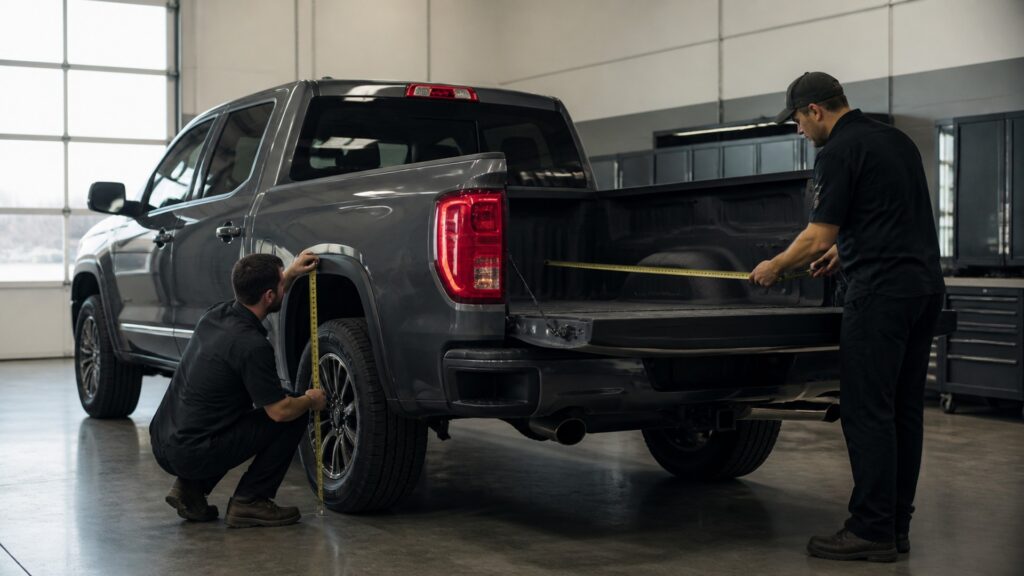
full size pickup trucks explainer hero image for Review Streets
What You'll Learn

What a Complete Fitment Check Includes

Use the truck's actual configuration and the complete combination of accessories.

  • Identify the exact bed and vehicle configuration
  • Check shared mounting space before combining products
  • Allow clearance for moving parts and cargo access
  • Account for installed weight and attachment limits
  • Confirm lighting, cameras, and sensors remain usable

Tip: A product listing for a model family is a starting point. Confirm the specific version before ordering or drilling.

Definitions

Six Parts of Accessory Compatibility

Each check catches a different reason an apparently suitable part may not work.

Configuration Match

Compatibility with the exact vehicle variant named by the manufacturer.

  • Example: A cover approved for one bed length does not fit a different bed just because both trucks share a badge.
  • Check: Check model year, bed length and bed design, including any special tailgate.
  • Limit: A broad full-size label is not a fitment specification.

Mounting Interface

The points and surfaces through which an accessory attaches and transfers force.

  • Example: A rack clamp and a cover rail may compete for the same bed-rail space.
  • Check: Confirm an approved combination or mounting adapter.
  • Limit: Matching overall dimensions does not prove the attachments are compatible.

Operating Clearance

Space required while the truck or accessory moves through its intended range.

  • Example: A tailgate needs room to open without striking a mounted hitch accessory.
  • Check: Check movement using the manufacturer's prescribed procedure.
  • Limit: A stationary gap may disappear during normal motion.

Installed Weight

The mass added by equipment that stays on the vehicle.

  • Example: A rack and toolbox reduce the allowance left for passengers and cargo.
  • Check: Include all installed equipment in the loaded-vehicle calculation.
  • Limit: A strong rack cannot increase the truck's payload rating.

Electrical Compatibility

Agreement between an accessory's electrical requirements and the approved connection.

  • Example: A powered bed accessory needs the correct supply, protection, and wiring route.
  • Check: Use specified connections and installation instructions.
  • Limit: A connector that plugs in does not establish adequate circuit capacity.

Functional Access

The ability to use and service the truck after installation.

  • Example: A toolbox can fit between the rails yet block a bed outlet or prevent a cover opening.
  • Check: Check cameras, controls, tie-downs, storage, and service access.
  • Limit: Attachment alone does not make an arrangement practical.

Tip: Record part numbers for the whole combination so replacement parts and future additions can be checked against it.

Vehicle Identification

Start With the Bed and Equipment You Actually Have

Full-size pickups can offer multiple cabs, bed lengths, tailgates, and factory equipment packages. Even nominal bed measurements may not describe every contour, rail, or mounting point. Identify the vehicle precisely and compare the accessory listing's exclusions as carefully as its headline compatibility statement. Special bed features can change an otherwise familiar installation.

  • Use the model year and exact bed configuration.
  • Check factory liners, storage features, and tailgate equipment.
  • Read exclusions and required installation hardware.

A cover that fits a plain bed may need different provisions when a factory storage or rail system occupies the mounting area.

Combined Accessories

Check How Parts Share the Same Space

Compatibility is not necessarily additive: two products that each fit the bare truck may conflict with each other. Covers, racks, toolboxes, liners, and bed dividers can share attachment points or obstruct operation. Look for a documented combination rather than assuming an installer can solve every conflict by moving a clamp or altering a bracket.

  • Compare installation drawings for all products.
  • Check cover opening travel with the rack and toolbox fitted.
  • Use only approved adapters and attachment arrangements.

The useful question is whether the assembled system works, not whether each unopened box lists the truck model.

Movement and Access

Inspect More Than the Parked Position

Parts near wheels, suspension, steering, exhaust, or the hitch need the clearances specified for their full operating conditions. A truck sitting unloaded on level pavement does not demonstrate every loaded or moving position. Tailgate steps, folding panels, spare-tire access, and camera views also deserve attention before the installation is considered complete.

  • Follow specified clearance checks without unsafe lifting or positioning.
  • Confirm steering and suspension compatibility for wheel changes.
  • Open and close normal access points after installation.

If the instructions cannot establish safe clearance for the combination, seek confirmation from the manufacturer or a qualified installer.

Weight and Attachment

Respect Both the Truck and the Accessory Limits

An accessory has its own load limit, while the truck retains its vehicle, axle, tire, and other applicable limits. Added hardware consumes carrying allowance before cargo is placed on it. Attachment ratings may distinguish driving loads from stationary use, so a parked-load claim cannot automatically support the same weight on the road.

  • Count the equipment's own weight.
  • Use the rating for the intended moving or stationary use.
  • Check the loaded truck and the specified mounting points.

A rack can be within its rated load while the truck is overloaded after passengers, tools, and hitch load are included.

Integration and Inspection

Make Sure the Truck Still Works as Intended

Accessories can cover sensors, change camera views, obstruct lights, or require an electrical connection. Follow both the vehicle and accessory instructions for any recalibration or configuration needs. Finish with an inspection of fasteners, routing, sealing, and access, then follow the stated reinspection schedule. Do not assume a warning-free dashboard proves every altered function is correct.

  • Keep required lighting and visibility unobstructed.
  • Use approved electrical connections and protected routing.
  • Recheck hardware at the intervals the instructions require.

Good fitment remains useful after installation: the truck should still support loading, driving, cleaning, and routine service.

Quick Reality Check

Physical Fit Versus Complete Compatibility

An accessory should pass both the attachment check and the everyday-use check.

A Well-Matched Installation

The exact vehicle and accessory combination is supported, with specified hardware and clearances.

Loads stay within limits and cameras, access points, wiring, and moving parts remain functional.

Reasons to Stop and Recheck

Installation depends on unapproved drilling, improvised brackets, or removing required hardware.

A component attaches but blocks another function or cannot meet the stated load or clearance requirement.

Common Myths

Misconceptions About Full-Size Pickup Fitment

A product category is much broader than an approved installation.

All beds with the same advertised length accept the same cover.

Rail shapes, dimensions, and equipment can differ; use the exact compatibility listing.

If two accessories fit separately, they fit together.

They may compete for the same space or attachment points.

A heavier-duty accessory increases payload.

It adds weight and retains its own rating without changing the vehicle's approved limits.

A part is correctly installed if it does not rattle.

Clearance, fastener requirements, electrical integration, and functional access still need verification.

Tip: Keep installation instructions with the truck's records, especially when several accessories interact.

FAQ

Questions Before Buying or Installing Equipment

Resolve compatibility before committing to the installation.

What information should I give the seller?

The exact model year, model, cab and bed configuration, relevant factory options, and the accessories already installed.

Can a universal part be suitable?

Yes, when its stated dimensions, attachment method, ratings, and instructions support the exact vehicle and use.

Do bed accessories affect payload?

Their added weight uses carrying allowance, even when they are empty.

Why check cameras and sensors?

Equipment can obstruct or alter their operation, and some changes require procedures specified by the vehicle manufacturer.

When should I use a professional installer?

When the job involves structural changes, complex wiring, uncertain clearances, calibration, or procedures beyond your equipment and experience.

Bottom Line

Full-size pickup fitment is about a complete, supported installation that preserves the truck's useful functions.

Verify the exact configuration, combined accessories, movement, weight, and electrical needs before deciding a part belongs on the truck.

Next Steps

Go Deeper or Compare Your Options

Use these Review Streets paths to compare related categories and practical next decisions.

Manufacturer references: Ford F-150 owner manual; Ford towing information and model-year guides; Ford F-150 bed and cargo accessories. Use the manual and ratings for your own model year and configuration.