Why Full Size Pickup Trucks Maintenance Role Matters

Maintenance matters in a full-size pickup because the same vehicle may spend weekdays carrying passengers and weekends towing or hauling. Tires, brakes, fluids, cooling, and load-related equipment must remain ready for both uses. A truck that seems fine during a short commute may reveal a neglected problem only when it is loaded for a long trip.

Service requirements depend on the actual powertrain, model year, and use. Gasoline, diesel, hybrid, and battery-electric pickups do not share one maintenance list. Follow the correct manual, combine time-based and distance-based requirements, and treat reminders as part of a service plan rather than proof that every system has been inspected.

By: Review Streets Research Lab
Updated: October 5, 2026
Explainer · 8-12 min read
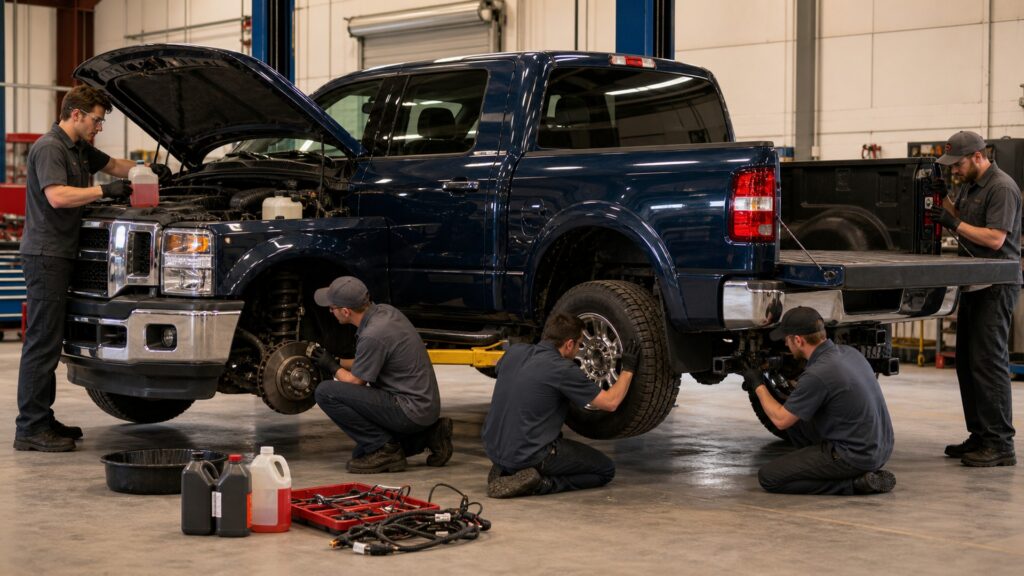
full size pickup trucks explainer hero image for Review Streets
What You'll Learn

Keep a Daily-Use Pickup Ready for Hauling Days

Build maintenance around the truck's equipment and changing workload.

  • Use the schedule for the exact powertrain and model year
  • Account for towing, dust, idling, and short trips
  • Separate engine service from brakes, tires, and driveline care
  • Inspect rarely used towing equipment before a trip
  • Keep records that explain what was serviced and why

Tip: Review due work before the towing season or a major trip, while there is still time to resolve faults.

Definitions

Six Parts of a Useful Pickup Service Plan

Maintenance involves condition and use, not simply an oil-change date.

Model-specific schedule

A model-specific schedule lists inspections and replacements applicable to the exact vehicle and powertrain.

  • Example: different requirements for a gasoline pickup and a battery-electric pickup
  • Check: use the correct model-year manual
  • Limit: another truck's interval may not apply

Operating conditions

Operating conditions are the demands the vehicle experiences that may change maintenance requirements.

  • Example: repeated towing, dusty roads, or extensive idling
  • Check: compare actual use with the manual's special-condition descriptions
  • Limit: low mileage does not necessarily mean easy service

Condition inspection

A condition inspection checks for wear, damage, leaks, or other deterioration.

  • Example: finding uneven tire wear before a highway trip
  • Check: investigate the cause as well as the visible symptom
  • Limit: a reminder reset does not prove an inspection occurred

Driveline service

Driveline service concerns assemblies that transmit drive, such as the transmission, differentials, and transfer case where fitted.

  • Example: using the specified fluid for a rear differential
  • Check: identify each fitted assembly and its requirements
  • Limit: engine-oil replacement does not service the whole driveline

Time-based requirement

A time-based requirement is maintenance due after an elapsed period even if little distance has been driven.

  • Example: a service deadline reached by a lightly used vehicle
  • Check: track calendar dates with mileage
  • Limit: storage or infrequent driving does not suspend every requirement

Service record

A service record documents inspections, repairs, materials, dates, and vehicle usage.

  • Example: an invoice showing the fluid specification and mileage
  • Check: retain detail and note unresolved symptoms
  • Limit: a generic receipt may not show which systems were checked

Tip: Ask what an advertised service includes instead of assuming it covers every fluid and inspection.

Planning

Match the Schedule to the Powertrain

A gasoline or hybrid truck with a combustion engine still has engine maintenance requirements. A battery-electric truck does not need combustion-engine oil changes, but it still has tires, brakes, cooling equipment, and other scheduled items. Diesel models may add fuel and exhaust-system requirements. Read the exact schedule rather than applying one truck's checklist to all full-size pickups.

  • Identify the engine or electric powertrain and model year.
  • Use the specified materials and service procedures.
  • Leave high-voltage work to appropriately qualified technicians.

Fewer engine-related tasks do not make an electric pickup maintenance-free.

Use Pattern

Occasional Towing Can Change What Needs Attention

The manual may prescribe additional service for towing or other demanding conditions. Tell the service provider about how the truck is actually used, including short trips, dust, idling, and loaded travel. A vehicle that mainly commutes can still need a careful check before being asked to tow a loaded trailer for several days.

  • Record substantial changes in use.
  • Review special operating-condition guidance.
  • Avoid inventing a universal interval for every engine or transmission.

Use the manufacturer's conditions to decide the schedule, not the assumption that weekend work does not count.

Road Contact

Tires and Brakes Need More Than a Quick Glance

Tire condition, specified cold inflation pressure, and brake condition affect everyday driving as well as hauling. Investigate uneven wear, pulling, vibration, damage, or unexplained pressure loss. Include the spare tire and the equipment needed to use it where applicable, and check the trailer's tires and brakes separately.

  • Follow the vehicle's pressure and tire specifications.
  • Have abnormal wear and braking symptoms evaluated.
  • Inspect the spare and trailer equipment before travel.

A clean oil-change record cannot establish that the tires or brakes are ready for a loaded trip.

Cooling and Fluids

Check Systems That Work Harder Under Load

A towing trip can demand sustained work from the engine, transmission, and cooling systems. Address leaks and warning messages before departure, and use the correct inspection procedures. Repeatedly topping up a disappearing fluid without finding the cause can postpone a breakdown rather than prevent it.

  • Use the manual's safe procedures for fluid checks.
  • Keep required airflow paths and accessible heat exchangers free of obstruction.
  • Never open a hot pressurized cooling system.

If temperature or operating behavior becomes abnormal, follow the vehicle's instructions and arrange diagnosis.

Trip Readiness

Inspect Equipment That Sits Unused Between Trips

A hitch, wiring connector, and trailer can spend months outside between uses. Check their condition and operation before the departure day. Confirm that loads and equipment have not changed since the setup was last checked, and keep records of work done to the trailer as well as the truck.

  • Inspect coupling hardware and electrical connections as instructed.
  • Test required lights and brakes by the prescribed procedure.
  • Book due service early enough to handle repair delays.

A short pre-trip review is more useful when it happens while there is still time to act on what it finds.

Quick Reality Check

What Maintenance Preserves

Service helps retain condition; it does not change the truck's approved workload.

What It Can Support

Dependable daily use and a better-prepared vehicle for loaded travel.

Early identification of wear, leaks, and equipment faults.

What It Cannot Establish

A higher payload or towing rating than the manufacturer allows.

That an uninspected trailer or newly changed load is suitable just because the truck was serviced.

Common Myths

Misconceptions About Full-Size Pickup Maintenance

Avoid treating a single reminder or service item as the whole job.

I rarely tow, so towing-related checks do not matter.

The truck and trailer still need to be ready for the loaded trip, even if it is occasional.

The maintenance reminder covers everything.

Reminders have defined purposes. The full schedule and condition inspections can include other items.

An electric pickup needs no maintenance.

It avoids combustion-engine tasks but retains scheduled inspections and service requirements.

Low mileage means fluids and tires cannot need attention.

Time, use, storage, condition, and the applicable schedule also matter.

Tip: Keep both dates and mileage so light annual use does not hide overdue work.

FAQ

Questions About Maintaining a Full-Size Pickup

Practical answers for a truck used for both transport and hauling.

Where should I find the schedule?

Use the manufacturer's manual for the precise model year and powertrain, including any special operating conditions.

Should I shorten every interval when towing?

Follow the specific schedule and conditions rather than applying an arbitrary rule to all components.

What if I own a hybrid?

Follow its own engine, driveline, cooling, and electrical-system requirements. Do not substitute either a gasoline-only or battery-electric checklist.

What records help when buying used?

Look for dated, itemized work, correct materials, recurring symptoms, and evidence of relevant inspections. Combine records with an independent condition check.

What should I do before an occasional long tow?

Review due service and unresolved faults, then inspect the truck, hitch, trailer, tires, lights, and brakes using the applicable instructions.

Bottom Line

Maintenance keeps a full-size pickup ready for the change from ordinary driving to loaded work.

Use the exact powertrain's schedule, track time and distance, and inspect the complete truck-and-trailer setup before demanding trips.

Next Steps

Go Deeper or Compare Your Options

Use these Review Streets paths to compare related categories and practical next decisions.

Manufacturer references: Ford F-150 owner and maintenance manual; NHTSA tire care guidance; Ford owner manuals by model and powertrain. Use the manual and ratings for your own model year and configuration.