
Why Functional Trainers Matter

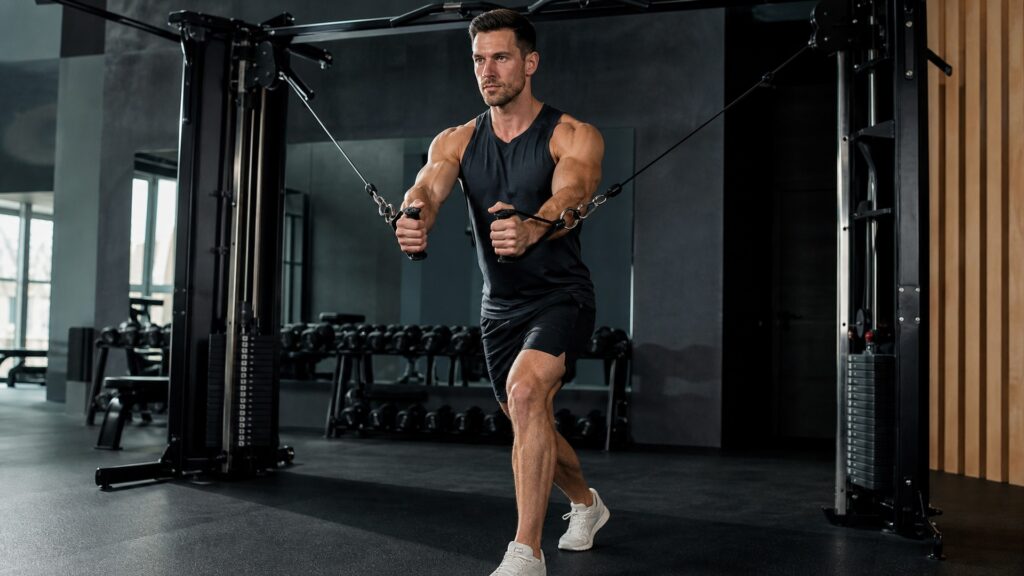
Functional trainers matter because they give a home gym adjustable resistance from many angles without needing a separate station for every movement. Dual pulleys, handles, stacks, and attachments can turn one footprint into rows, presses, flyes, chops, curls, and accessory work.

Their value is not just variety. A functional trainer matters when pulley height, cable travel, stack load, ratio, stability, and attachments make those movements smooth enough to repeat. A weak cable path or cramped setup can make the category feel better on paper than in a room.

By: Review Streets Research Lab
Updated: August 31, 2026
Explainer · 8-12 min read
functional trainers explainer hero image for Review Streets
What You'll Learn

How Functional Trainers Use Adjustable Cable Angles

Functional trainers matter when adjustable pulleys create useful lines of pull in a home-gym footprint.

  • Why adjustable pulleys create more exercise variety than fixed stations
  • How line of pull changes the movement being trained
  • Why pulley ratio affects perceived resistance
  • How cable travel and stack load limit some exercises
  • Where attachments add options and friction
  • Why footprint and frame stability matter at home

Tip: Why adjustable pulleys create more exercise variety than fixed stations before comparing products or routines.

Definitions

Key Concepts That Define Functional Trainers

A functional trainer is a cable station with adjustable pulleys that let resistance come from different heights and angles. The cards below clarify the terms that most often change real setup decisions.

Functional trainer

A functional trainer is a cable station with adjustable pulleys that let resistance come from different heights and angles.

  • Many use dual columns for bilateral or crossing patterns.
  • It can support rows, presses, flyes, chops, curls, and rehab-like accessory work without claiming treatment.
  • Its value depends on pulley travel, stack weight, and available space.

Adjustable pulley

An adjustable pulley changes the height and direction of the cable's line of pull.

  • This lets one machine serve low, mid, and high exercises.
  • Adjustment quality affects how smoothly sessions move.
  • Poor height spacing can limit the exercises that feel natural.

Line of pull

Line of pull is the direction the cable resists the body or handle.

  • It changes which part of a movement is loaded.
  • Standing farther, stepping across, or changing pulley height alters it.
  • Understanding the line matters more than copying exercise names.

Pulley ratio

Pulley ratio describes how the selected stack weight translates to handle resistance.

  • A 2:1 ratio may make 100 pounds on the stack feel closer to 50 pounds at the handle.
  • Ratios affect smoothness, travel, and load expectations.
  • Users should compare felt resistance, not only stack labels.

Cable travel

Cable travel is how far the handle can move before the stack or cable path runs out.

  • Tall users and long-range exercises need more travel.
  • Short travel can interrupt rows, flyes, and split-stance patterns.
  • It is a hidden spec that affects real exercises.

Attachment ecosystem

The attachment ecosystem includes handles, bars, ropes, cuffs, and carabiners that change grip and movement options.

  • Attachments expand variety without adding another machine.
  • They also add storage and changeover friction.
  • Quality and compatibility matter for daily use.

Tip: An adjustable pulley changes the height and direction of the cable's line of pull.

Cable Angles

Adjustable Pulleys Make Resistance Direction the Main Feature

A functional trainer's central advantage is movable cable direction. The user can set the pulley high, low, or mid-level and then align the body so resistance matches the intended movement.

  • High pulleys support pulldowns, chops, and triceps work.
  • Low pulleys support curls, raises, rows, and leg attachments.
  • Mid-height pulleys support presses, flyes, and rotations.
  • Dual columns allow opposing or independent arm paths.
  • The exercise changes when the body stands in a different relation to the cable.

Functional trainers matter because they make line of pull adjustable.

Resistance Feel

Pulley Ratio and Cable Travel Shape the Session

The number on the weight stack does not tell the whole story. Pulley ratio changes felt resistance, while cable travel decides whether a movement can finish without interruption.

  • A 2:1 system can feel lighter but smoother with longer travel.
  • Short cable travel can limit tall users or long arm paths.
  • Stack weight must match the intended exercises.
  • Smooth carriage movement matters during controlled reps.
  • Friction in the cable path changes feel.

Useful resistance depends on the whole cable system.

Exercise Coverage

One Footprint Can Cover Many Accessory Patterns

Functional trainers matter in home gyms because they can replace several smaller stations. The same columns can serve upper-body, lower-body accessory, rotational, and single-arm work.

  • Single-arm work is easy to load from either side.
  • Standing exercises can train balance and positioning demands.
  • Cuffs and ropes add movement options beyond handles.
  • Cable crossovers need enough column width.
  • Heavy barbell work still belongs elsewhere.

The machine is versatile because the line of pull moves.

Limits

A Functional Trainer Is Not Every Gym Machine

Functional trainers can be broad, but they are not perfect substitutes for racks, free weights, leg machines, or dedicated lat stations. Load, path, and body support differ.

  • Very heavy pulling may exceed stack limits.
  • Pressing without a bench or stable stance can feel awkward.
  • Compact columns may narrow cable crossover patterns.
  • Attachments can clutter the room if storage is poor.
  • Marketing may overstate one machine as a complete gym.

The category matters most when its limits are respected.

Home Fit

Choose by Pulley Quality, Space, and Exercises You Repeat

The practical value comes from exercises the user will actually perform. Pulley adjustment, stack increments, cable smoothness, frame stability, and clearance decide whether the trainer becomes a daily station.

  • Test whether the pulley heights match intended movements.
  • Check width and ceiling clearance before judging versatility.
  • Compare stack labels with pulley ratio.
  • Plan attachment storage near the machine.
  • Keep medical or rehabilitation claims outside product evaluation.

A functional trainer matters when adjustable resistance fits both the movement plan and the room.

Quick Reality Check

Where Functional Trainers Helps and Where It Needs Context

A practical balance between the useful explanation and the limits that keep the article honest.

What This Clarifies

It explains how functional trainers changes movement setup, training flow, or equipment decisions.

It helps readers compare real mechanisms instead of relying on vague performance or convenience claims.

What It Cannot Prove

It cannot prove that one product or method fits every body, room, routine, or goal.

It cannot replace qualified guidance for pain, medical concerns, rehabilitation, or individualized programming.

Common Myths

Misconceptions About Functional Trainers

Common shortcuts and misunderstandings can make the topic seem simpler than it is.

Functional Trainers is automatically useful for everyone

Usefulness depends on the exercise, setup, body position, space, and the exact problem the tool or concept is meant to solve.

The more advanced option is always better

Advanced features can help, but they can also add friction, cost, dependency, or setup demands that make the simpler option more practical.

One specification tells the whole story

A headline spec needs context from fit, stability, movement path, adjustment, and the user's actual training routine.

Feeling different means it is working better

A different sensation can be useful feedback, but it is not proof of better results, safer training, or faster recovery.

Fitness equipment can replace coaching or medical judgment

Equipment and metrics can support decisions, but symptoms, pain, technique problems, and health concerns need qualified human guidance.

Tip: For functional trainers, a claim is only useful when it names the mechanism and the conditions around it.

FAQ

Frequently Asked Questions About Functional Trainers

Concise answers to common questions readers may have after the main explanation.

What is the main thing to understand about functional trainers?

Look at the mechanism first: how it changes resistance, position, tracking, support, space, or routine flow in the specific fitness setting.

Is it necessary for every home gym or workout?

No. It matters only when it solves a real limitation or supports movements the user will repeat consistently.

How should beginners think about it?

Beginners should prioritize clear setup, repeatable movements, manageable resistance, and enough room to learn before chasing complicated features.

What is the biggest comparison mistake?

The biggest mistake is judging by category label alone instead of checking movement path, fit, adjustment, stability, and use conditions.

Can it prevent injury or guarantee results?

No. It can support better setup or clearer training decisions, but it should not be presented as a safety, rehabilitation, or performance guarantee.

Bottom Line

Functional Trainers matters when its mechanism changes a real training decision rather than merely adding another product label.

The practical takeaway is to match the tool, metric, or setup to the movement, room, routine, and limits that actually shape use.

Next Steps

Go Deeper or Compare Your Options

Use these related explainers to place functional trainers inside adjacent Fitness equipment and accessory decisions.

Quick Summary

Functional Trainers Explained

  • Why adjustable pulleys create more exercise variety than fixed stations
  • How line of pull changes the movement being trained
  • Why pulley ratio affects perceived resistance
  • How cable travel and stack load limit some exercises
  • Practical value depends on setup, repeated use, and honest limits.