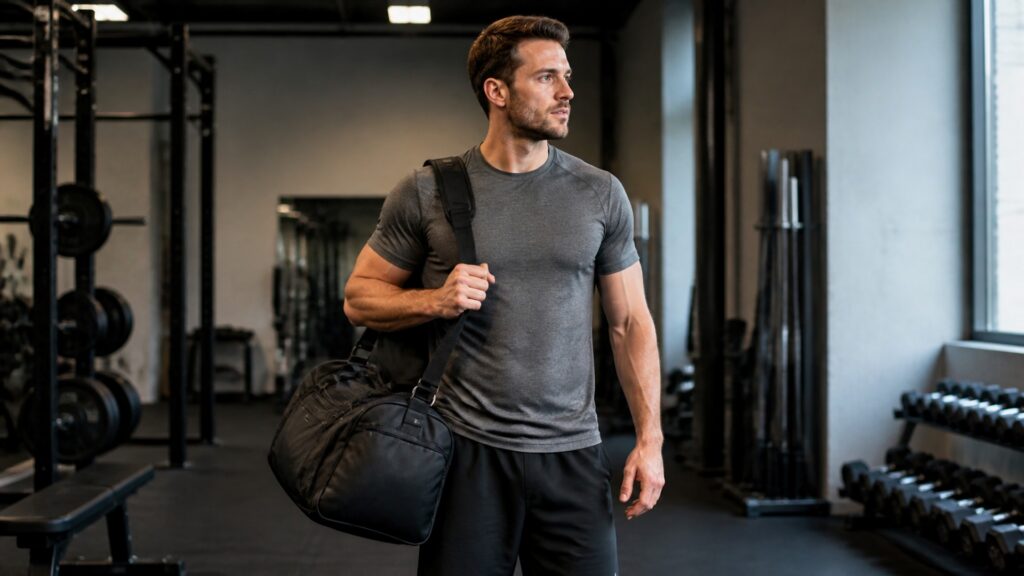
Carry Pattern
Carry pattern is how the bag is moved through the day, such as by hand, shoulder, backpack straps, or rolling.
- Example: a shoulder duffel carried from office to gym
- Check: test the bag with normal packed weight
- Limit: empty-bag comfort can be misleading
Storage Layout
Storage layout is how the bag separates shoes, clothes, bottles, electronics, toiletries, and small training items.
- Example: a shoe pocket plus a main compartment and quick-access pocket
- Check: pack the gear used most often
- Limit: too many pockets can slow packing
Wet Separation
Wet separation keeps damp towels, sweaty clothes, or toiletries away from clean items.
- Example: a lined pocket for a towel after training
- Check: look for washable or vented spaces
- Limit: separation does not replace cleaning
Access Speed
Access speed is how quickly common items can be found without unpacking the whole bag.
- Example: keys and headphones in a small outer pocket
- Check: find essentials in one step
- Limit: fast-access pockets may be less secure
Durability Point
A durability point is a part of the bag that takes repeated stress, such as a zipper, seam, strap, or base panel.
- Example: a reinforced bottom that handles locker-room floors
- Check: inspect stitching and zipper movement
- Limit: stronger materials can add weight
Routine Fit
Routine fit is how well the bag matches the user's commute, locker, workout, laundry, and storage pattern.
- Example: a compact backpack for a bike commute and short gym session
- Check: compare the bag to a normal training day
- Limit: one bag may not fit every use case