
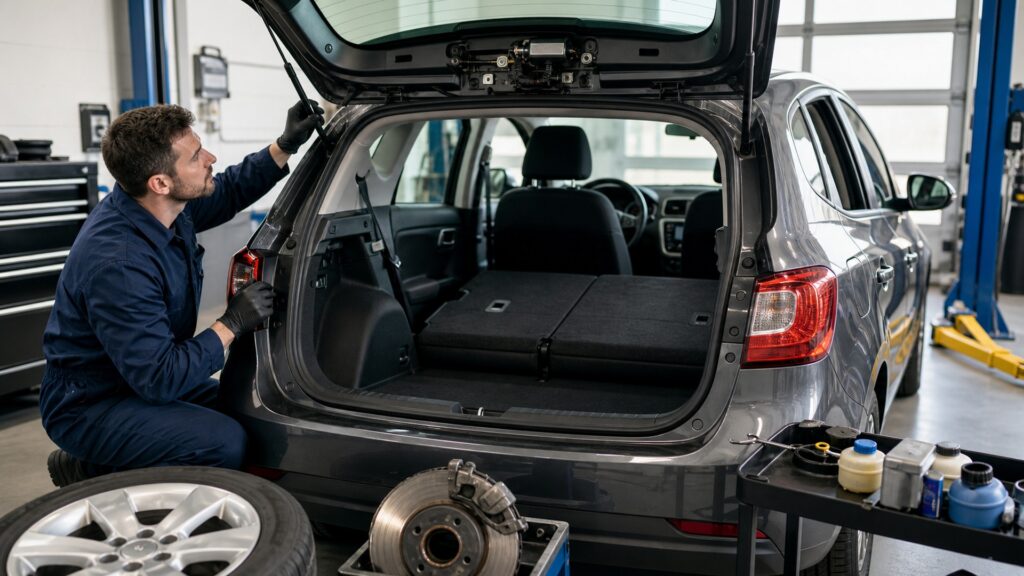
Why Hatchbacks Maintenance Role Matters

Maintenance keeps a hatchback useful in two ways: it supports the vehicle's mechanical condition and preserves the doors, seats, glass, and cargo area that make the body style convenient. A healthy engine does not help much if the hatch will not stay open, the luggage floor is damp, or a folded seat will not lock back into place.

The service schedule comes from the exact vehicle, not from the word hatchback. Gasoline, hybrid, and electric models have different requirements, and age and use can matter alongside mileage. Combine the manufacturer's maintenance instructions with regular attention to the rear opening and passenger-cargo area.

By: Review Streets Research Lab
Updated: October 5, 2026
Explainer · 8-12 min read
hatchbacks explainer hero image for Review Streets
What You'll Learn

Keep the Whole Hatchback Ready for Use

Separate scheduled servicing from the small checks that reveal wear, leaks, and access problems.

  • Find the maintenance requirements for your specific powertrain.
  • Check hatch supports, latches, and seals as working parts.
  • Investigate dampness rather than simply covering it up.
  • Keep folding-seat hardware and rear visibility in good order.
  • Use service records to understand what has actually been done.

Tip: Record the date, mileage, and work performed. A reset service display is not a repair record.

Definitions

Maintenance Terms That Matter to Hatchback Owners

Different checks prevent different kinds of inconvenience and deterioration.

Scheduled maintenance

Scheduled maintenance is the work specified by the manufacturer at defined times, distances, or service indications.

  • Example: an oil service or inspection called for by the vehicle's schedule
  • Check: the correct model, year, engine, and market instructions
  • Limit: one hatchback's interval does not apply to every other model

Condition-based service indication

A condition-based service indication uses the vehicle's monitoring logic to identify when listed work is due.

  • Example: a service code shown with estimated oil life
  • Check: what each displayed code means in the manual
  • Limit: a reminder does not diagnose every developing fault

Liftgate support

A liftgate support helps hold and control the rear hatch when open.

  • Example: a gas strut that holds the hatch at its intended position
  • Check: whether the hatch remains securely open
  • Limit: a weak support should not be trusted or improvised around

Weather seal

A weather seal is a flexible barrier around an opening that helps exclude water and air.

  • Example: the rubber seal around the hatch aperture
  • Check: damage, displacement, and trapped debris
  • Limit: water entry can have causes beyond the visible seal

Seatback latch

A seatback latch secures a folding backrest in its intended passenger position.

  • Example: the latch engaging when a rear seat is raised
  • Check: the manufacturer's locking confirmation
  • Limit: an upright-looking backrest is not necessarily locked

Service history

Service history is the evidence of inspections, replacements, and repairs over time.

  • Example: dated invoices with mileage and parts details
  • Check: whether due items were completed
  • Limit: a stamped book may not describe all the work

Tip: Use ordinary checks to spot a problem; use the repair procedure or a qualified technician to determine the remedy.

Service Plan

Start With the Correct Maintenance Instructions

A hatchback body can sit over very different powertrains. An engine-powered car may need oil-related service that a battery-electric model does not, while both still have tires, brakes, and other components requiring attention. Consult the exact owner information, including any time limits or special-use instructions.

  • Match the schedule to model year and powertrain.
  • Check the meaning of every service code.
  • Keep track of time as well as mileage.

Honda's Civic Hatchback Maintenance Minder documentation, for example, lists several service items alongside oil-life information; the display should not be read as an oil-only reminder. Honda: Civic Hatchback Maintenance Minder.

Rear Opening

Treat the Hatch as a Working Door

The hatch is opened repeatedly and exposed to weather, grit, and changing loads. Pay attention to an opening that becomes unexpectedly heavy, will not remain raised, or needs repeated attempts to latch. These are functional changes worth investigating, not just annoyances to work around.

  • Check that the latch closes normally and the warning clears.
  • Keep hands and belongings clear of the closing path.
  • Have damaged or unreliable supports assessed.

Follow the vehicle's instructions for cleaning and care; do not bend a support or substitute an improvised prop for a repair. Mazda: liftgate operation and care.

Water Entry

A Damp Cargo Floor Deserves an Explanation

Shopping spills are one possible cause of moisture, but repeated dampness after rain can indicate a leak. A mat can hide the evidence while moisture remains underneath. Check accessible floor areas and the storage well during cleaning, and note when the water appears so a repairer can reproduce the problem.

  • Look beneath removable mats where the manual permits.
  • Keep visible sealing surfaces free of loose dirt and debris.
  • Report persistent wetness, musty smells, or new wind noise.

Drying the area helps reveal whether moisture returns, but it does not establish that the cause has been repaired.

Passenger Area

Keep Seat Mechanisms and Rear Glass Usable

Frequent loading can leave debris around folding-seat hinges, belts, and latches. Return seats according to the manual, keeping the belts clear, and verify that each occupied backrest is secured. Rear glass, any rear wiper, washer, and defogger also deserve attention because the hatch is part of the driver's view.

  • Remove loose debris without dismantling seat hardware.
  • Check the specified seatback locking indication.
  • Clean rear glass with products suitable for its heater elements.

A troublesome latch or an unreliable visibility aid should be fixed rather than accepted as part of the car's age.

Road Contact

Do Not Let Cargo Convenience Distract From Tires

A useful luggage area can make a hatchback the car used for nearly every errand. Tires deserve deliberate checks even when the car seems to drive normally. NHTSA recommends checking pressures with the tires cold and using the vehicle label or manual for the correct values.

  • Inspect for damage and uneven wear.
  • Use the approved tire size and specifications.
  • Follow the vehicle's guidance for rotation and replacement.

Keep tire and brake inspections in the service plan, and have new vibration, pulling, or unusual braking behavior investigated. NHTSA: tire maintenance.

Quick Reality Check

Owner Checks and Workshop Work Have Different Roles

A practical routine makes problems visible without guessing at repairs.

Useful Routine Observations

Record service reminders, tire condition, leaks, and changes in hatch behavior.

Notice whether rear seats lock correctly and rear visibility aids work.

Work That Needs Proper Diagnosis

Persistent water entry, a weak liftgate support, or a faulty seat latch.

Warnings, braking concerns, or mechanical symptoms that ordinary cleaning does not resolve.

Common Myths

Misconceptions About Hatchback Maintenance

Small size and low mileage do not remove service requirements.

A low-mileage car needs no servicing

The manufacturer may specify time-based work as well as distance-based intervals. Check both.

The service light covers every problem

A maintenance reminder is not a complete condition inspection. Leaks, damage, and changing behavior still need attention.

Cargo-area wear is only cosmetic

Hatch supports, seat latches, seals, and visibility equipment have practical functions that cosmetic repairs cannot replace.

Tip: Describe when a symptom occurs instead of ordering a part based on appearance alone.

FAQ

Questions About Maintaining a Hatchback

Answers for routine ownership and used-car checks.

Do all hatchbacks have similar service costs?

No. Powertrain, equipment, tire sizes, age, condition, and local labor costs matter more than the rear-door shape.

Should I ignore a hatch that slowly drops?

No. Keep clear of an unreliable hatch and have its support system assessed. Do not rely on it remaining above you.

What should I ask for when buying used?

Request service records, inspect for cargo-area dampness and damaged trim, operate the hatch and folding seats, and arrange an independent mechanical inspection.

Can an electric hatchback skip maintenance?

No. Its powertrain requirements differ, but tires, brakes, suspension, cabin systems, and body hardware still require the specified care.

Bottom Line

Good maintenance preserves both the car's roadworthiness and the access features that make a hatchback useful.

Follow the exact service instructions, document completed work, and investigate changes in hatch operation, seat locking, moisture, or driving behavior.

Next Steps

Go Deeper or Compare Your Options

Use these Review Streets paths to compare related categories and practical next decisions.