Why Hatchbacks Safety Factors Matters

Hatchback safety depends on the specific vehicle, its condition, the people using it, and how it is loaded. The rear hatch tells you about access, not how well the car will protect occupants in a crash. Crash-test evidence, suitable restraints, maintained tires and brakes, clear visibility, and secure cargo all deserve separate attention.

The shared passenger-and-luggage area makes loading especially relevant. A practical folding-seat arrangement can expose occupants to unsecured belongings if used carelessly. Evaluate the car's safety equipment and ratings, then use its cargo space within the limits and instructions for that exact model.

By: Review Streets Research Lab
Updated: October 5, 2026
Explainer · 8-12 min read
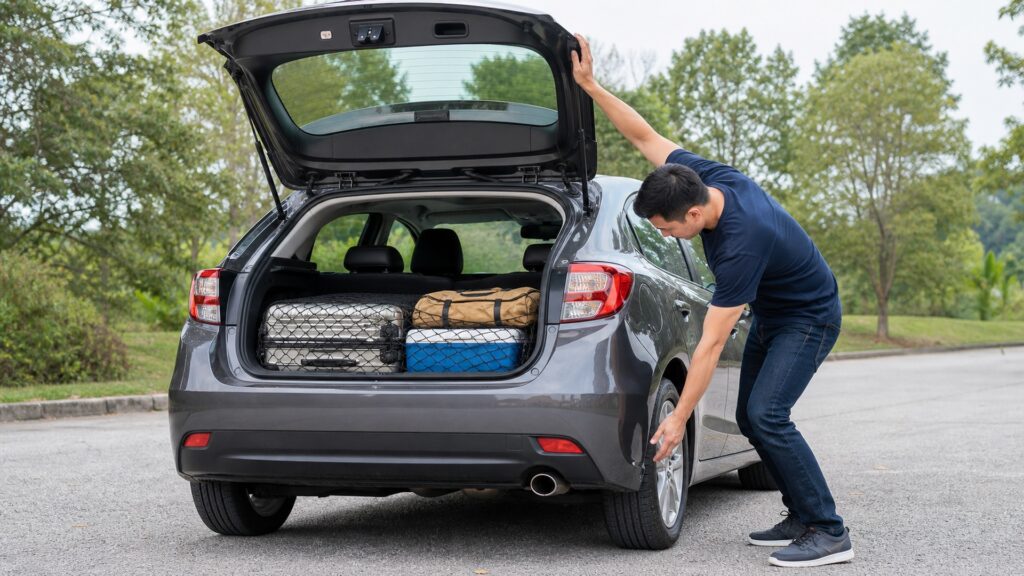
hatchbacks explainer hero image for Review Streets
What You'll Learn

Assess the Car, Its Condition, and Its Load

Use specific evidence and everyday checks instead of assuming a body shape is safe or unsafe.

  • Look up ratings for the correct model year and body variant.
  • Understand the limits of comparing crash-test scores.
  • Account for passengers when checking carrying capacity.
  • Use the correct restraints and keep cargo secured.
  • Treat cameras and driver assistance as aids with operating limits.

Tip: Before a used-car purchase, combine rating research with a VIN recall check and an independent inspection.

Definitions

Six Distinct Parts of Hatchback Safety

Each factor addresses a different risk and needs its own evidence.

Crashworthiness

Crashworthiness is a vehicle's ability to protect occupants during a crash.

  • Example: performance in a defined frontal or side impact test
  • Check: results for the relevant model year and variant
  • Limit: a test result does not cover every real-world collision

Crash avoidance

Crash avoidance includes capabilities intended to help prevent a collision or reduce its severity.

  • Example: an automatic emergency braking system responding within its specified limits
  • Check: which functions the exact car has
  • Limit: features do not replace attentive driving

Cargo restraint

Cargo restraint limits movement of belongings using suitable securing methods and designated provisions.

  • Example: luggage secured at approved tie-down points
  • Check: the manual's instructions and anchor limitations
  • Limit: a parcel cover is not a heavy-cargo restraint

Occupant-and-cargo limit

The occupant-and-cargo limit is the permitted combined carried weight specified for the vehicle.

  • Example: passengers using part of the allowance before bags are added
  • Check: the vehicle loading label and manual
  • Limit: a partly empty luggage area can still contain too much weight

Child-restraint compatibility

Child-restraint compatibility is the ability to install an appropriate child seat correctly in an allowed vehicle position.

  • Example: a supported installation that leaves the front seat usable
  • Check: both the child-seat and vehicle instructions
  • Limit: having anchor points does not prove every seat will fit well

Usable visibility

Usable visibility is the driver's view through glazing and mirrors, supported where fitted by cameras and sensors.

  • Example: seeing the area around the rear corners before maneuvering
  • Check: seating position, obstructions, and clean viewing surfaces
  • Limit: a camera image does not reveal every possible hazard

Tip: Keep ratings, maintenance, restraints, and loading as separate checks; a strength in one does not cancel a weakness in another.

Evidence

Read Ratings for the Exact Vehicle

Start with the model year and body variant, and check which crash conditions were tested. NHTSA distinguishes frontal, side, and rollover results. Its frontal and overall ratings should only be compared within the same vehicle class and a weight difference of no more than 250 pounds. A simple star-count comparison across unrelated vehicles can therefore mislead.

  • Read individual results and any safety concerns.
  • Do not substitute another model year's score without confirmation.
  • Treat a missing rating as missing evidence, not a failed test.

Use the rating agency's explanation to understand what the comparison can and cannot establish. NHTSA: safety ratings and comparison limits.

Cargo

Plan the Load Before Folding the Seats

A hatch makes it tempting to keep adding items because they fit through the opening. Carrying capacity is a weight limit as well as a space problem, and passengers use part of the allowance. Folding seats changes the layout, not the permitted vehicle load. Keep occupied seats, belts, and the driver's view clear.

  • Consult the vehicle's loading label and instructions.
  • Use designated securing provisions for the cargo.
  • Keep the hatch fully closed and latched for travel.

Do not use a luggage cover as a substitute for restraint. Mazda's hatchback guidance specifically warns about unsecured luggage and objects placed on the cover. Mazda: hatchback cargo and liftgate precautions.

Restraints

Check the Seats That Will Actually Be Used

Every passenger needs an appropriate designated seating position and restraint. If a child seat is part of the routine, verify a permitted installation using both manuals and try the real seat in the car. Rear-seat space is not only about legroom: belt access, anchor locations, and front-seat clearance affect practical use.

  • Use a child restraint appropriate for the child.
  • Follow the specified belt or anchor installation method.
  • Return folding backrests to their locked positions before passenger use.

NHTSA offers child-seat selection and installation guidance, including help locating a qualified inspection service. NHTSA: child-seat selection and installation.

Condition

Tires and Brakes Still Do the Physical Work

Electronic systems cannot make damaged tires or neglected brakes sound. Check the exact vehicle's condition, especially when buying used. An inspection should address damage, wear, warning messages, and unexplained changes in braking or steering. A short drive without a dashboard warning is not a complete assessment.

  • Use the specified tire pressures and suitable tires.
  • Have pulling, vibration, or unusual braking checked.
  • Keep scheduled inspections and maintenance current.

NHTSA's tire guidance is a useful starting point for pressure, wear, and replacement checks. NHTSA: tire safety.

Visibility and Assistance

Know What the Driver Must Still Do

Rear pillars, passengers, cargo, dirt, and weather can affect what you see. Set the seating position and mirrors before driving, and keep required viewing surfaces clear. Learn the limits of the actual assistance systems rather than assuming a familiar feature name guarantees the same behavior in every car.

  • Check rearward visibility in the loaded seating arrangement.
  • Keep camera and sensor areas as directed by the manual.
  • Look for open recalls using the vehicle's VIN.

A clean recall lookup and functioning assistance features are useful checks, but neither is a guarantee against every hazard. NHTSA: VIN recall lookup.

Quick Reality Check

What a Good Safety Check Combines

Buying evidence and daily use answer different questions.

Before Choosing the Car

Review relevant crash-test results, equipment, recall information, and vehicle condition.

Test the actual seating and child-restraint arrangements you need.

Before Using Its Cargo Space

Check weight limits and keep passenger restraints and visibility unobstructed.

Secure belongings and confirm that the hatch and required seatbacks are latched.

Common Myths

Misconceptions About Hatchback Safety

Avoid shortcuts that turn one feature into a complete safety judgment.

All hatchbacks have the same safety profile

Design, size, equipment, model year, and condition vary. Assess the exact vehicle.

A high rating makes cargo restraint less important

Crash-test performance does not secure belongings for you. Follow the loading instructions.

If the hatch closes, the load is acceptable

Closing clearance does not establish that the load is within weight limits or properly restrained.

Driver assistance means the car will handle every hazard

Assistance systems have operating limits. The driver must remain attentive and responsible.

Tip: A repeatable loading and restraint check is more useful than confidence based on a label.

FAQ

Questions About Hatchback Safety

Answers for vehicle research and everyday use.

Are hatchbacks inherently unsafe?

The body label is not enough to judge. Research the exact car and consider its condition, restraints, loading, and how it will be driven.

Can people ride in the cargo area?

No. Passengers need designated seats and appropriate restraints; luggage space is not a passenger position.

Can I drive with the hatch partly open for a long item?

Do not treat that as a loading solution. Owner guidance warns about open-hatch travel, including cargo and exhaust hazards. Use a suitable transport arrangement instead.

Where should I start a used-car safety check?

Confirm the identity and equipment, check ratings and VIN recalls, inspect the seating and restraint setup, and arrange an independent condition inspection.

Bottom Line

Hatchback safety is a combination of vehicle-specific protection, sound condition, correct restraints, and responsible loading.

Use reliable test evidence when choosing the car, then preserve those benefits through maintenance, attentive driving, and careful use of the shared cargo area.

Next Steps

Go Deeper or Compare Your Options

Use these Review Streets paths to compare related categories and practical next decisions.

Quick Summary

Check Each Part Separately

  • Research the correct model and year.
  • Compare ratings within their stated limits.
  • Respect carrying capacity.
  • Secure cargo and use proper restraints.
  • Maintain visibility and vehicle condition.