Why Heavy Duty Pickup Trucks Fitment Matters

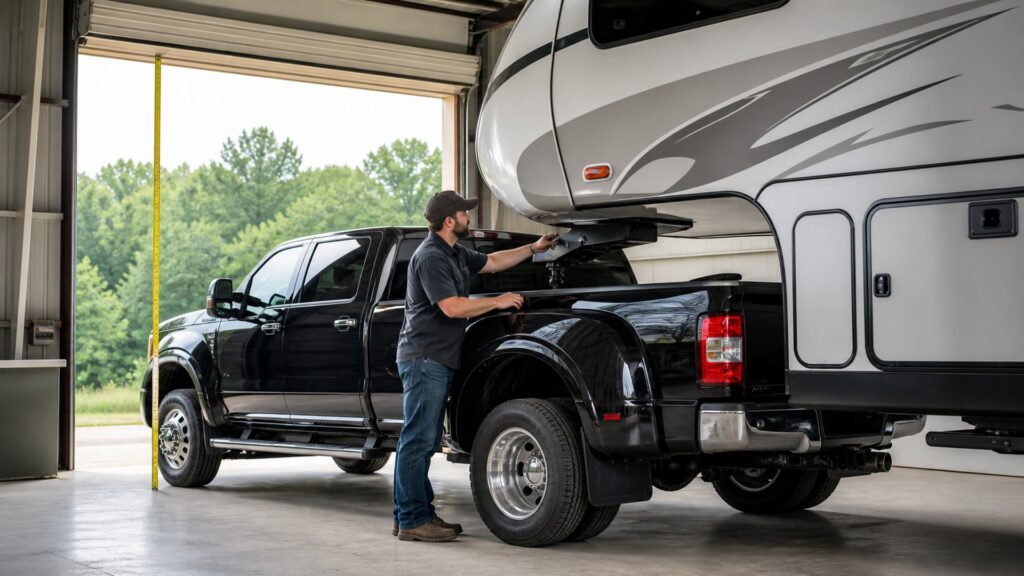
Fitment matters on a heavy-duty pickup because a part or load must do more than fit into the available space. A hitch, camper, wheel, rack, or toolbox must match the exact truck, use suitable mounting points, retain required clearances, and stay within the relevant ratings. A physically attachable accessory can still be incompatible with the vehicle or the way it will be used.

Model year, cab and bed configuration, drivetrain, factory packages, and installed equipment can change the answer. Check the complete combination before buying or installing anything. Discovering that a camper consumes the remaining payload or that a trailer contacts the cab in a turn is far more consequential than a cosmetic mismatch.

By: Review Streets Research Lab
Updated: October 5, 2026
Explainer · 8-12 min read
heavy duty pickup trucks explainer hero image for Review Streets
What You'll Learn

Check Compatibility Before Installing Equipment

Treat dimensions, attachment, movement, and weight as separate parts of fitment.

  • Identify the truck's exact build and factory equipment
  • Check mounting approval rather than hole alignment alone
  • Allow clearance through turns and suspension movement
  • Include the accessory itself in the weight budget
  • Confirm that cameras, lighting, and other systems still function

Tip: Record the VIN, model year, cab, bed, and relevant option codes before asking a supplier to confirm compatibility.

Definitions

Six Checks Behind Correct HD Truck Fitment

A complete fitment decision goes beyond a product listing that says 'fits HD trucks.'

Configuration match

Configuration match means a product is approved for the particular vehicle build it will attach to.

  • Example: a hitch listed for the truck's model year and factory prep package
  • Check: verify the supplier's exact application information
  • Limit: a shared model name does not guarantee identical hardware

Mounting interface

A mounting interface is the set of attachment points and hardware transferring load into the vehicle.

  • Example: an approved under-bed hitch mounting system
  • Check: use specified brackets, fasteners, and installation instructions
  • Limit: matching bolt holes alone does not establish load suitability

Dynamic clearance

Dynamic clearance is the space needed as connected parts turn, flex, or move during operation.

  • Example: trailer-to-cab clearance during a turn
  • Check: check the approved range of movement and setup guidance
  • Limit: a stationary gap can close on an incline or during articulation

Accessory mass

Accessory mass is the weight added by installed equipment.

  • Example: a hitch, toolbox, and rack carried on every trip
  • Check: include the installed weight in the payload calculation
  • Limit: useful equipment still reduces capacity available for other loads

Center of gravity

Center of gravity is the effective balance point of a load.

  • Example: a truck camper whose specified balance point must suit the vehicle
  • Check: follow the truck and camper makers' compatibility information
  • Limit: overall weight alone does not prove acceptable load placement

System compatibility

System compatibility means an addition can operate alongside the vehicle's other equipment as intended.

  • Example: a rack that preserves a camera's necessary view
  • Check: check lighting, sensors, wiring, and access after installation
  • Limit: a secure mechanical installation can still obstruct another function

Tip: Ask for the compatibility decision in writing when a substantial load or specialized installation is involved.

Vehicle Identification

The Exact Build Is the Starting Point

An HD model family can contain multiple cab lengths, beds, wheelbases, rear-wheel arrangements, and factory packages. Products that fit one combination may not fit another. Identify the vehicle from its documentation and labels, then compare that information with the part maker's application list and installation requirements.

  • Use the model year and build details, not appearance alone.
  • Confirm whether factory hitch prep or other required equipment is present.
  • Check compatibility with equipment already installed.

A sales listing that names the model family is the beginning of the check, not its completion.

Hitches

Check the Connection and the Room Around It

A hitch has to attach through a suitable interface and have adequate ratings for the intended load. Fifth-wheel and gooseneck arrangements also require attention to cab clearance, bed geometry, and turning movement. Receiver accessories need compatible dimensions and hardware as well as sufficient capacity; an adapter does not automatically preserve the original rating.

  • Verify approval for the truck and hitch combination.
  • Follow the manufacturers' clearance and setup instructions.
  • Use the applicable rating for the complete assembled connection.

Do not discover a clearance problem by attempting a tight loaded turn.

Campers and Bed Equipment

Fit the Weight and Balance, Not Just the Floor Dimensions

A camper or heavy bed installation can fit between the sides yet exceed payload or rear-axle limits once loaded. Water, supplies, batteries, passengers, and hitch equipment must be accounted for as applicable. Camper selection also requires the specified center-of-gravity and truck-compatibility information, not just a bed-length match.

  • Use the loaded equipment weight rather than a bare-shell figure.
  • Include installed options and supplies.
  • Verify axle loads and the manufacturers' placement guidance.

A measurement of length cannot answer a weight-distribution question.

Wheels and Clearance

A Bolt Pattern Is Only One Requirement

Wheel and tire compatibility also involves load capability, dimensions, offset, brake clearance, and the manufacturer's permitted combinations. A change can affect clearance during steering and suspension movement even if the vehicle looks fine while parked. Suspension modifications can alter other relationships, including hitch height and the operation of related equipment.

  • Use approved specifications and qualified installation support.
  • Check clearance throughout the intended operating range.
  • Do not treat a lift or helper device as an increase in vehicle ratings.

Choose a complete compatible setup rather than assuming one matching dimension proves fitment.

Final Inspection

Confirm the Truck Still Performs Its Other Jobs

After installation, inspect the functions that the addition might affect. Check access to tie-downs, the tailgate, filling points, lights, sensors, and camera views as applicable. Follow any specified inspection or fastener recheck procedure, and measure the loaded vehicle where weight has changed materially.

  • Operate doors and the tailgate through their required travel.
  • Check wiring protection and lighting function.
  • Keep installation instructions and configuration records.

Good fitment leaves the truck able to load, maneuver, and operate as intended with the new equipment in place.

Quick Reality Check

What a Fitment Check Should Establish

The product and vehicle must work together under the intended load and movement.

Evidence of a Suitable Match

The exact configuration is supported, the mounting method is approved, and all relevant ratings pass.

Required movement, visibility, access, and other vehicle functions remain available.

Reasons to Stop the Installation

The application is ambiguous, hardware must be improvised, or required clearances are unverified.

Loaded weight, balance, or an obstructed vehicle function remains unresolved.

Common Myths

Misconceptions About HD Truck Fitment

Physical attachment is only one part of compatibility.

It bolts on, so it must be suitable.

Attachment does not establish approval, load capability, or clearance under movement.

All beds of the same advertised length are identical.

Geometry, interfaces, equipment, and application details can vary.

An accessory's weight is too small to count.

Added weights accumulate and reduce the remaining allowance. Use real figures.

A lift or helper spring creates more payload.

Such changes do not by themselves raise the manufacturer's vehicle and axle ratings.

Tip: Resolve uncertain compatibility before installation rather than trying to correct it after a loaded trip.

FAQ

Questions About Heavy-Duty Pickup Fitment

Practical checks for accessories, hitches, and carried equipment.

What information should a supplier need?

The exact model year, VIN or configuration details, cab and bed arrangement, relevant factory packages, and existing modifications.

Can I judge a camper by whether it fits in the bed?

No. Loaded weight, axle loads, center of gravity, tie-down requirements, and manufacturer compatibility also matter.

Why does turning clearance matter?

The relative positions of truck and trailer change in a turn. A gap that exists when straight may not remain.

Can an adapter change a hitch's usable rating?

It can. Use the ratings and restrictions for the assembled system rather than assuming the original receiver rating still governs alone.

When should a professional inspect the setup?

Use qualified support for structural, hitch, suspension, wheel, or other installations where approval, loads, clearances, or safety functions are uncertain.

Bottom Line

Fitment matters because an HD truck and its equipment must remain compatible in mounting, movement, weight, and operation.

Confirm the exact application and the complete loaded setup before treating an accessory or camper as ready to use.

Next Steps

Go Deeper or Compare Your Options

Use these Review Streets paths to compare related categories and practical next decisions.

Manufacturer references: Ford towing, hitch, and camper guide; Ford fifth-wheel and gooseneck hitch preparation. Use the manual and ratings for your own model year and configuration.