Why Heavy Duty Pickup Trucks Maintenance Role Matters

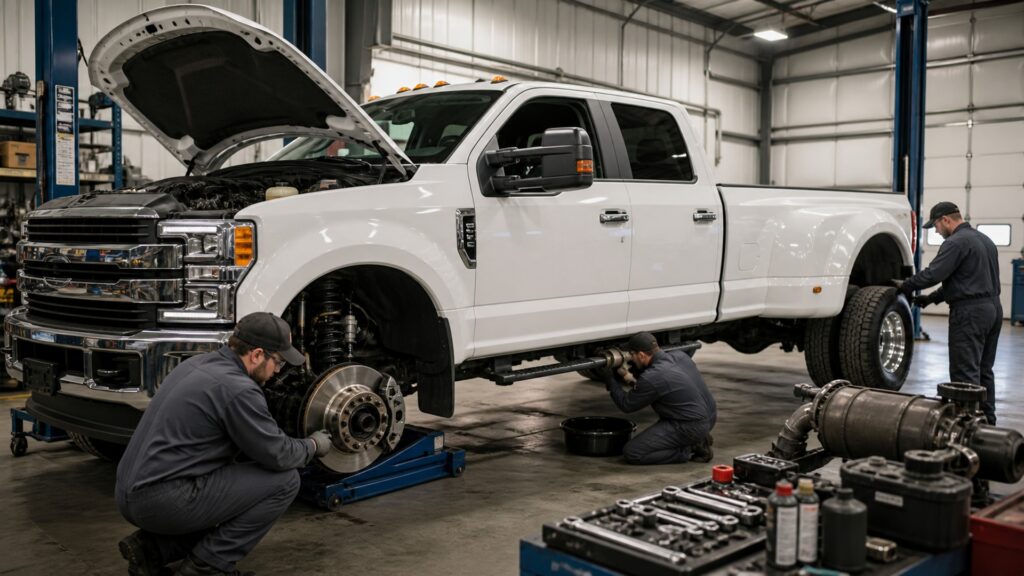
Maintenance keeps a heavy-duty pickup's load-carrying and towing systems in working condition. A truck pulling substantial weight asks its cooling system, brakes, tires, lubricants, and drivetrain to do sustained work. Wear or a small leak that goes unnoticed during an unloaded commute can become a serious interruption when the truck is working hard.

The right service plan follows the truck's model, engine, and operating conditions. Towing, dust, repeated short trips, and extensive idling can change maintenance requirements. Heavy-duty construction does not mean maintenance can be postponed, and an oil change alone does not cover the whole vehicle.

By: Review Streets Research Lab
Updated: October 5, 2026
Explainer · 8-12 min read
heavy duty pickup trucks explainer hero image for Review Streets
What You'll Learn

How Maintenance Protects a Working HD Pickup

Connect service tasks to the systems that carry the load, shed heat, and keep the truck dependable.

  • Choose the maintenance schedule that matches the actual use
  • Understand why low mileage can hide substantial engine operation
  • Keep cooling and driveline service separate from engine-oil service
  • Recognize the extra requirements of diesel equipment
  • Build a useful service history and pre-trip routine

Tip: Keep the owner's manual for the exact model year and engine with your service records.

Definitions

Maintenance Terms That Matter Under Load

These terms help turn a vague instruction to 'service the truck' into specific checks.

Severe-service conditions

Severe-service conditions are uses for which the manufacturer specifies additional or different maintenance.

  • Example: repeated towing or operation in heavy dust
  • Check: find the applicable conditions in the exact maintenance schedule
  • Limit: there is no single severe-service interval for every HD truck

Engine hours

Engine hours measure how long the engine has operated, including time the truck did not travel.

  • Example: a jobsite truck idling for long periods between short moves
  • Check: record hours where available alongside mileage and dates
  • Limit: low odometer mileage alone does not establish light use

Cooling system

The cooling system transfers excess heat from components to the surrounding air.

  • Example: radiators and other heat exchangers rejecting heat during a climb
  • Check: inspect coolant level as instructed, leaks, and obstructed airflow
  • Limit: temperature warnings require attention, not a guessed fluid top-up

Driveline fluids

Driveline fluids lubricate and protect assemblies such as the transmission, axles, and transfer case.

  • Example: the specified lubricant inside a rear differential
  • Check: check each assembly's service requirements separately
  • Limit: an engine-oil service does not replace these fluids

Diesel exhaust fluid

Diesel exhaust fluid is a separate consumable used by equipped diesel exhaust-treatment systems.

  • Example: refilling the clearly identified DEF tank with approved fluid
  • Check: follow the vehicle's fluid specification and storage guidance
  • Limit: DEF does not belong in the fuel tank and is not a fuel additive

Service history

A service history records what was inspected or replaced, when, and with which materials.

  • Example: an invoice listing the correct transmission fluid and mileage
  • Check: keep receipts and note unresolved symptoms
  • Limit: a stamped oil-change record does not prove the rest of the truck was inspected

Tip: Ask for itemized work so the record shows which systems were actually serviced.

Schedule

Match Service to the Work, Not Just the Odometer

Start with the manufacturer's maintenance schedule and the conditions it describes. A truck that tows regularly, works in dust, or idles for extended periods may need attention that a lightly used highway vehicle does not. Time limits also matter when mileage accumulates slowly. Do not borrow an interval from another engine or an older truck.

  • Record mileage, dates, and engine hours if the vehicle provides them.
  • Tell the service provider about towing, dust, and idle time.
  • Use the specified fluids and parts for the engine and driveline.

Ford's Super Duty maintenance guidance, for example, identifies heavy loads, towing, short trips, and other demanding conditions as reasons to consult the applicable severe-service schedule.

Heat Management

Cooling Problems Often Show Up During Hard Work

An engine may hold a normal temperature on a level, unloaded drive yet struggle during a long loaded climb. Airflow obstructions, coolant loss, damaged hoses, or other faults can reduce the system's ability to remove heat. A repair should address the cause; repeatedly adding fluid without finding a leak leaves the problem unresolved.

  • Check fluid levels only by the manual's safe procedure.
  • Have leaks, unusual temperature behavior, and damaged hoses investigated.
  • Keep accessible heat-exchanger surfaces free of debris without damaging them.

Never open a hot pressurized cooling system. If a warning appears, follow the vehicle's instructions and arrange service rather than continuing to test its limits.

Rolling and Stopping

Tires and Brakes Deserve Their Own Inspection

Tires carry the truck and transmit braking and cornering forces. Check their condition, specified cold pressures, and suitability for the vehicle. Brake inspection should look beyond whether the pedal still stops the truck on the commute. Uneven wear, vibration, pulling, damage, or overheating symptoms need attention before the next loaded trip.

  • Inspect the spare as well as the tires on the ground.
  • Have brake wear and fluid condition checked as specified.
  • Inspect trailer tires and brakes separately when towing.

A serviced truck does not make a neglected trailer ready for the road.

Diesel Use

Diesel Service Includes More Than Engine Oil

Depending on the engine, diesel ownership includes fuel-filter service, water-separator procedures, DEF, and exhaust-filter operation. Repeated short trips and low-speed operation can interfere with normal particulate-filter cleaning. Follow the vehicle's displayed instructions and manual; a generic recommendation to drive harder is not a diagnosis or a universal remedy.

  • Use the specified fuel-filter and water-separator procedures.
  • Keep DEF and diesel filling points clearly distinguished.
  • Investigate recurring exhaust-system warnings instead of dismissing them.

Gasoline HD trucks avoid diesel-specific systems, but still need the maintenance their own engine and workload require.

Planning

Use Service Visits to Prevent Predictable Downtime

Before a major towing trip or busy work period, review upcoming service and unresolved symptoms early enough to arrange repairs. Inspect the hitch, electrical connector, lights, and accessible mounting points using the applicable instructions. A useful record includes the symptom and repair outcome, not just the date the truck entered a shop.

  • Schedule due work before a period when the truck cannot be spared.
  • Record recurring fluid loss, warning messages, or vibration.
  • Review a used truck's records alongside an independent inspection.

A clean-looking truck with missing records may require more investigation than a work-worn vehicle with a well-documented service history.

Quick Reality Check

What Maintenance Can and Cannot Do

Service protects existing capability; it does not authorize a heavier load.

What It Helps Preserve

Reliable cooling, lubrication, tire condition, and braking operation.

A predictable service plan and better evidence of how the truck has been cared for.

What It Cannot Replace

Compliance with the truck's load, axle, hitch, and trailer limits.

Repair of an identified fault or a proper inspection of a truck with an unknown history.

Common Myths

Misconceptions About HD Pickup Maintenance

Strong components still wear and still depend on the correct service.

Heavy-duty means longer intervals automatically.

The applicable schedule decides. Demanding use can add service requirements rather than remove them.

Low mileage guarantees low wear.

Idle time, age, short trips, and operating conditions can matter even when little distance is covered.

Fresh engine oil means the truck is fully serviced.

Cooling, brakes, tires, driveline fluids, filters, and other systems have separate requirements.

Every diesel warning can be cleared by a highway drive.

Warnings can indicate different conditions. Follow the specific instruction and obtain diagnosis when required.

Tip: Do not reset a maintenance reminder unless the associated service was actually completed.

FAQ

Questions About Maintaining a Heavy-Duty Pickup

Practical answers for towing, work use, and used-truck evaluation.

Should I follow normal or severe service?

Use the operating-condition definitions in the exact manual. Describe your real towing, dust, idling, and trip pattern when discussing service.

How often should I change transmission fluid?

Use the interval and fluid specification for the exact transmission and operating conditions. There is no reliable universal interval for all HD trucks.

Does maintenance increase payload?

No. It helps maintain the vehicle's condition but does not raise its rated limits.

What records matter when buying used?

Look for dated, itemized service records, fluid specifications, recurring repairs, and evidence that engine and driveline requirements were followed.

What should be checked before a long towing trip?

Review due service and inspect tires, lights, hitch equipment, fluids, and the trailer using the relevant manuals. Resolve known faults before departure.

Bottom Line

Maintenance matters because a heavy-duty pickup can only use its rated capability reliably when its working systems remain in proper condition.

Build the service plan around the actual engine, workload, time, and mileage, and keep records that show more than oil changes.

Next Steps

Go Deeper or Compare Your Options

Use these Review Streets paths to compare related categories and practical next decisions.

Manufacturer references: Ford Super Duty owner and maintenance manual. Use the manual and ratings for your own model year and configuration.

Quick Summary

HD Maintenance Priorities

  • Match the schedule to towing, dust, idle time, and trip pattern.
  • Cooling, brakes, tires, and driveline fluids need separate attention.
  • Diesel equipment adds specific service and operating requirements.
  • Records and early planning help prevent avoidable downtime.