Why Heavy Duty Pickup Trucks Safety Factors Matters

Safety in a heavy-duty pickup depends on controlling the weight it carries and pulls. The truck's size and power do not remove the need for correct loading, sound tires, effective brakes, visibility, and compatible hitch equipment. A capable truck can still be overloaded at one axle or paired with a trailer it cannot safely support.

The practical safety check follows the complete trip: verify the loaded weights, inspect the truck and trailer, set up the connection correctly, and drive for the road and weather. Electronic assistance can help with specific tasks, but it cannot turn an unsuitable combination into a suitable one.

By: Review Streets Research Lab
Updated: October 5, 2026
Explainer · 8-12 min read
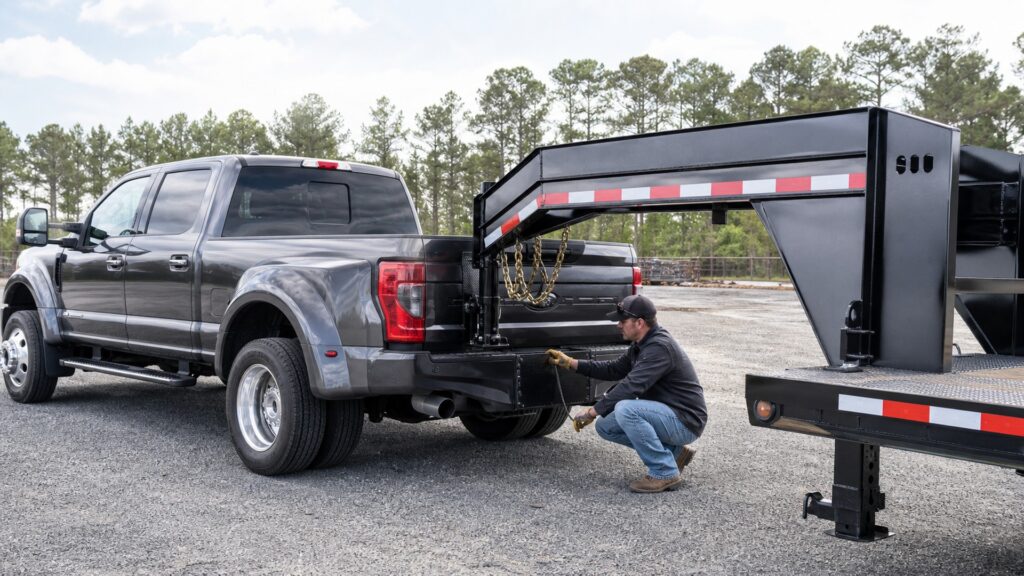
heavy duty pickup trucks explainer hero image for Review Streets
What You'll Learn

What Keeps a Loaded Heavy-Duty Pickup Controllable

Focus on weight, tires, braking, visibility, and the connection between truck and trailer.

  • Check the vehicle, axle, tire, hitch, and combination limits
  • Understand why load placement matters as well as total weight
  • Inspect the trailer as carefully as the truck
  • Recognize what downhill braking aids can and cannot do
  • Plan maneuvers around the truck's size and blind areas

Tip: A level-looking truck is not proof of correct loading. Use ratings and measured weights.

Definitions

Six Safety Checks Behind the HD Badge

Each limit or component addresses a different failure risk.

Axle rating

Gross axle weight rating is the maximum permitted load on a particular axle assembly.

  • Example: a rear axle supporting cargo plus trailer hitch load
  • Check: obtain axle weights for the loaded combination
  • Limit: being below total GVWR does not prove both axles are within limits

Combined weight rating

Gross combination weight rating limits the loaded truck and trailer together.

  • Example: a loaded truck towing a loaded equipment trailer
  • Check: compare the combination's measured weight with the applicable rating
  • Limit: other vehicle, axle, tire, hitch, and trailer limits still apply

Load distribution

Load distribution is how weight is positioned across the vehicle and trailer.

  • Example: cargo placement changing tongue load and axle loading
  • Check: follow the truck and trailer loading instructions
  • Limit: moving weight carelessly can create instability even below total limits

Trailer brake controller

A trailer brake controller operates compatible trailer brakes in coordination with the tow vehicle.

  • Example: an integrated controller connected to an equipped trailer
  • Check: confirm compatibility, connection, and the prescribed setup procedure
  • Limit: it does not repair worn brakes or a wiring fault

Brake fade

Brake fade is reduced braking effectiveness associated with excessive heat in friction brakes.

  • Example: brakes working hard during a prolonged descent
  • Check: use the manual's descent guidance and investigate abnormal braking
  • Limit: engine or exhaust braking cannot replace functioning service brakes

Blind area

A blind area is a space the driver cannot adequately see from the driving position.

  • Example: the area close to a tall hood or behind a trailer
  • Check: check mirrors, cameras, and the path before moving
  • Limit: a camera view is not a guarantee that the entire area is clear

Tip: A pass on one measurement does not cancel a failure on another.

Loading

Check Every Relevant Limit Before the Trip

Start with the actual truck's certification and loading labels, its towing guide, and the ratings of the trailer and hitch equipment. Count passengers, installed gear, bed cargo, and hitch load. A tow rating by itself cannot confirm that the truck has enough carrying capacity for the trailer's tongue or pin load.

  • Use loaded weights rather than brochure or empty-trailer figures.
  • Check vehicle, axle, tire, receiver, coupling, and trailer limits.
  • Use a suitable vehicle scale when assembling or changing a working combination.

For example, a truck below its overall weight limit can still have too much weight on the rear axle; the total alone would miss that problem.

Connection

Treat the Hitch and Trailer as Part of the Vehicle

The receiver, mount, ball or coupling, and attachment points must be compatible and correctly rated. Follow the applicable coupling procedure, including required safety connections, breakaway equipment, lighting, and brake checks. A correctly sized ball is only one part of the connection. Weight-distributing equipment, where permitted and required, also needs proper setup.

  • Inspect couplers, pins, fasteners, wiring, and attachment points.
  • Verify trailer lighting and braking by the prescribed checks.
  • Confirm clearance through turns and uneven entrances.

Do not leave an unresolved connection or braking fault for the road to reveal.

Stopping

Plan for Heat and Distance, Especially Downhill

A loaded combination asks more of the braking system than an empty truck. Descents can add sustained heat, so follow the manufacturer's guidance for gear selection, tow/haul operation, and any engine or exhaust brake. These aids can reduce demand on friction brakes, but all required truck and trailer brakes must remain functional.

  • Reduce speed appropriately before a demanding descent.
  • Leave space for the load, surface, weather, and visibility.
  • Stop safely and seek assistance if braking behavior becomes abnormal.

Four-wheel drive helps deliver driving torque; it is not a shortcut to shorter stopping distances.

Tires and Cargo

Secure the Load and Keep Its Support System Sound

Correct loading includes restraints, tire condition, and specified cold inflation pressures. Cargo that shifts changes forces during braking and turns. Heavy objects carried high can also affect stability. Use appropriate securement and the manufacturer's placement guidance, and remember that a cover over the bed does not tie the load down.

  • Inspect truck and trailer tires for damage and condition.
  • Secure cargo using equipment suitable for the load and attachment points.
  • Recheck the setup as directed during travel, especially after changes.

Suspension helpers may change stance, but they do not by themselves raise the manufacturer's vehicle or axle ratings.

Visibility

Give a Large Truck Enough Space to Maneuver

A tall hood, wide mirrors, a long wheelbase, and a trailer can all complicate close maneuvering. Walk around before backing when practical and use a spotter when visibility is inadequate, with a clear signal plan. If the spotter disappears from view, stop. Cameras and sensors supplement this process rather than making unseen space safe.

  • Adjust mirrors for the truck and any attached trailer.
  • Check height, width, and turning clearance before entering tight spaces.
  • Keep people clear of the moving truck and trailer.

A careful route and parking plan can prevent a maneuver that the available space or visibility cannot support.

Quick Reality Check

What HD Hardware Helps With, and What Remains the Driver's Job

Capability and correct operation must work together.

Hardware Can Help

A suitable chassis, brakes, towing controls, and visibility equipment can support the rated work.

Engine or exhaust braking, where fitted, can assist with controlling speed on descents.

The Driver Still Must

Stay within every applicable limit and inspect the complete truck-and-trailer setup.

Adapt speed, spacing, route, and maneuvers to the load, road, weather, and visibility.

Common Myths

Misconceptions About Heavy-Duty Pickup Safety

A strong vehicle still has physical limits.

If the engine pulls it easily, the load is safe.

Acceleration does not establish acceptable axle loading, tire loading, braking, or hitch compatibility.

The truck is level, so it cannot be overloaded.

Appearance is not a measurement. Suspension devices can change stance without increasing ratings.

Driver assistance will correct a bad trailer setup.

Assistance has defined capabilities and limitations. It does not authorize overload or improper loading.

Four-wheel drive means the truck will stop better on ice.

Driven wheels can improve propulsion in some conditions. Stopping still depends on tires, available grip, speed, and braking.

Tip: Resolve an uncertain rating or equipment fault before setting out with the load.

FAQ

Questions About HD Pickup Safety

Answers for loading and operating a heavy truck-and-trailer combination.

Which rating matters most?

All applicable limits must be met. The first limit reached constrains the combination, even when the others have room remaining.

How do I know whether the rear axle is overloaded?

Obtain the loaded axle weight and compare it with the axle rating and the relevant tire limits. Do not infer it only from total truck weight.

Can airbags or helper springs raise payload?

They can change suspension support or stance, but they do not by themselves increase the manufacturer's ratings.

Is an exhaust brake a substitute for trailer brakes?

No. It is a speed-control aid on equipped vehicles. Required trailer brakes and truck service brakes still need to function properly.

What should stop a departure?

An exceeded or unresolved limit, damaged tires, a questionable coupling, inoperative required lighting or brakes, or an unexplained vehicle warning needs resolution before travel.

Bottom Line

Heavy-duty pickup safety comes from a correctly rated, correctly loaded, well-maintained combination operated with enough space and control.

Check the whole system, from axle weights and tires to the trailer connection and the route, rather than relying on the truck's size or power.

Next Steps

Go Deeper or Compare Your Options

Use these Review Streets paths to compare related categories and practical next decisions.

Manufacturer references: Ford towing information and model-year guides; NHTSA tire safety guidance; Chevrolet trailering guide. Use the manual and ratings for your own model year and configuration.