Why Interior Cleaning Fitment Matters

Interior-cleaning fitment is the compatibility of a method with a specific material, contamination, and hidden construction. Cabins combine leather, coated textiles, carpet, foam, plastics, soft-touch paint, displays, glass, wood, metal, adhesives, wiring, sensors, airbags, and belts. One product or brush can improve one surface while discoloring, swelling, scratching, or saturating another.

Equipment must fit too. A vacuum needs suitable filtration and tools; an extractor must recover enough of the liquid it applies; towels must not lint or drag; brushes need appropriate stiffness; steam or heat must remain within material and vehicle limits. Fit is proven through owner guidance, labels, concealed tests, restrained application, recovery, and post-dry inspection.

By: Review Streets Research Lab
Updated: September 1, 2026
Explainer · 8-12 min read
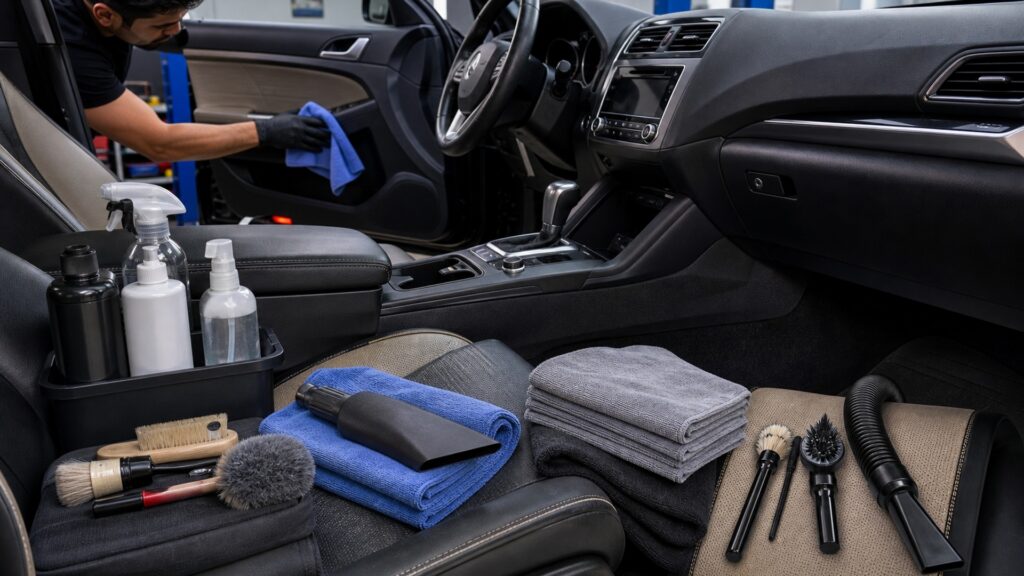
interior cleaning fitment explainer hero image for Review Streets
What You'll Learn

Match the Entire Method to the Installed Cabin Assembly

Fitment connects material, soil, chemistry, applicator, moisture path, machine recovery, temperature, safety-system location, ventilation, and drying rather than trusting an all-interior label.

  • Build a surface and system map
  • Read vehicle and product restrictions
  • Test color texture and gloss discreetly
  • Choose tool stiffness and towel behavior
  • Limit liquid to available recovery
  • Verify hidden drying and function

Tip: Option packages, replacement upholstery, window film, prior repairs, aftermarket screens, coatings, and unknown dressings can change fitment even between two vehicles of the same model year.

Definitions

Key Concepts That Define Interior Cleaning Fitment

These terms identify the material, tool, moisture, and safety interfaces that make cabin cleaning vehicle-specific. The interface map includes cabin material map, vehicle cleaning restriction, concealed colorfastness test, chemical pH range, solvent sensitivity, brush stiffness, towel lint and drag, extractor recovery ratio, headliner adhesive, display oleophobic coating, seat-mounted airbag seam, and seat-belt retractor moisture.

Cabin Material Map

A surface-by-surface record of leather, textile, carpet, foam, plastic, display, glass, wood, metal, coating, film, adhesive, and prior repair locations.

  • Options change materials
  • Touch changes can reveal coatings
  • Photos support tool assignments

Colorfastness Test

A concealed trial checking whether cleaner, moisture, heat, and contact transfer dye, alter color, change gloss, distort texture, or weaken the material.

  • Representative areas matter
  • Dry results can differ
  • Towel color must be interpreted

Recovery Ratio

The relationship between liquid deliberately applied to a porous material and the amount removed through extraction, wet vacuuming, blotting, evaporation, and drainage.

  • Perfect recovery is impossible
  • Padding retains liquid
  • Repeated passes improve removal

Oleophobic Coating

A thin display-surface treatment intended to reduce fingerprint oil adhesion and improve wiping, potentially damaged by unsupported solvents, abrasives, or friction.

  • Vehicle guidance governs cleaning
  • Edges admit moisture
  • Static can affect electronics

Airbag Seam

A designed upholstery, trim, steering-wheel, dashboard, pillar, or curtain deployment path that must not be obstructed, altered, saturated, or contaminated by cleaning work.

  • Locations vary by vehicle
  • Strong chemistry can affect material
  • Damage needs qualified inspection

Retractor Moisture Path

A route by which cleaner or water can travel along seat-belt webbing or through openings into the concealed winding and locking mechanism.

  • Belts often require mild methods
  • Natural drying is common guidance
  • Mechanism entry must be prevented

Tip: When the installed material or prior treatment cannot be confirmed, choose the least aggressive reversible test or stop; a broad product claim cannot resolve construction uncertainty.

Map Materials and Restrictions

The Same Cabin Contains Multiple Cleaning Specifications

Owner guidance may prescribe mild solution for one surface, prohibit solvents on screens, limit moisture near belts, discourage wet leather, or protect low-gloss finishes. Aftermarket materials add another manufacturer layer.

  • Identify trim and option variations
  • Locate films coatings and repairs
  • Read vehicle-specific cleaning sections
  • Create separate tool and product assignments

Fitment begins with the installed assembly rather than the bottle category.

Match Chemistry to Soil and Substrate

pH, Solvent, Surfactant, and Dwell Affect Materials Differently

Protein, oil, dye, mineral, ink, sugar, and particulate soils respond differently, while leather coatings, plastics, adhesives, and textiles have different tolerance. A concealed test observes both cleaning and unintended transfer.

  • Classify the contaminant source
  • Use supported concentration and dwell
  • Apply to a tool when directed
  • Inspect after complete drying

A chemical can remove the stain and still fail material fitment.

Match Contact Media

Brush Stiffness, Towel Weave, Edge, and Tool Shape Control Local Stress

Soft bristles can enter texture without scuffing; stiff brushes may distort fibers or coatings. Towel nap affects pickup and drag; hard edges, drill brushes, and crevice tools concentrate force near seams and screens.

  • Start with the gentlest effective contact
  • Keep tool edges away from delicate finishes
  • Change media before loading
  • Use dedicated tools by contamination zone

Contact fitment is measured at the surface, not by how soft the tool feels in hand.

Match Moisture and Recovery

Porous Layers, Electronics, Adhesives, and Headliners Limit Liquid Application

Extractor spray, steam, foam, and hand-applied cleaner can migrate into padding, seams, modules, ventilation, and glued laminates. Apply only what can be controlled and recovered, then provide airflow and time.

  • Dry-vacuum before wet treatment
  • Separate spray and recovery passes
  • Protect switches and openings
  • Verify backing and foam dryness

The maximum safe moisture load is set by hidden construction.

Match Safety-System Boundaries

Belts, Airbags, Sensors, Displays, Pedals, and Controls Need Functional Acceptance

Use vehicle-approved methods around webbing and retractors, avoid contaminating deployment seams, preserve display coatings, keep grip surfaces dry and non-slip, and confirm seats, occupancy sensors, switches, cameras, and controls after work.

  • Inspect belts and airbag zones first
  • Keep dressings off driving controls
  • Use screen-clean modes where provided
  • Document any pre-existing warning or damage

Fitment includes how the vehicle operates after the material looks clean.

Quick Reality Check

Interior Fitment Is Surface-Specific and System-Aware

One cabin can require several cleaners, tools, moisture limits, and acceptance tests because visible trim is attached to hidden adhesives, foam, wiring, sensors, mechanisms, and restraint systems.

Evidence of Compatible Fit

Vehicle and product guidance support the material; a concealed test cleans without dye, color, gloss, texture, coating, adhesion, odor, or residue change; and the chosen tool remains controlled.

Applied moisture is recoverable, underlying layers dry, displays and electronics function, belts and airbags remain unobstructed, controls preserve grip, and final ventilation removes product vapor and humidity.

Reject or Refer the Method When

Material identity, contamination source, prior treatment, restraint-system condition, chemical compatibility, colorfastness, moisture path, ventilation, recovery, or drying cannot be established within a controlled representative test.

Stop for dye transfer, swelling, haze, delamination, sagging headliner, electrical behavior, warning lights, belt damage, persistent moisture, biological contamination, fuel or chemical spills, mold, or structural odor reservoirs.

Common Myths

Misconceptions About Interior Cleaning Fitment

Fitment myths assume leather is one material, all-purpose means all vehicles, gentle tools cannot abrade, or surface dryness proves hidden construction is safe.

All automotive leather accepts the same cleaner

Leather can differ in coating, dye, perforation, finish, repair, age, and adjacency to airbag seams or heating and ventilation features. Follow vehicle guidance, use supported chemistry, and test for color, gloss, texture, and transfer.

An all-purpose interior cleaner fits every cabin surface

Broad claims cannot account for every display coating, wood finish, soft-touch paint, window film, textile, adhesive, belt, airbag zone, or aftermarket material. Verify the exact product directions and vehicle restrictions surface by surface.

A soft brush cannot damage interior trim

Bristle ends, trapped grit, pressure, speed, chemical lubrication, repeated passes, and edge contact can scuff coatings, distort fibers, or drive soil deeper. Test the tool in use, not merely by touching it dry.

If upholstery feels dry, extraction fitment was correct

Surface fibers can dry while foam, backing, seams, or underlay retain liquid. Application amount, recovery passes, humidity, airflow, time, wick-back, odor, and deeper inspection determine whether the moisture process actually fit.

Tip: Use vehicle-specific restrictions, material tests, recovery evidence, and system checks for each zone.

FAQ

Frequently Asked Questions About Interior Cleaning Fitment

These answers cover leather, screens, headliners, seat belts, airbags, extractor sizing, towel and brush selection, steam, aftermarket materials, and proof after a concealed test.

How should a cabin material map be built?

Walk the cabin by zone, recording surface type, finish, perforation, film, repair, option equipment, airbag and belt locations, electronics, existing damage, soil, and vehicle guidance. Photograph boundaries before assigning products and tools.

What makes an extractor suitable?

Its spray pattern, solution control, nozzle, hose, suction, filtration, recovery tank, electrical rating, and tool geometry must suit the material and site. More heat or liquid is not better when recovery and drying are limiting.

Can steam fit interior cleaning?

Only where the vehicle, material, adhesive, electronics, and tool guidance support its heat, moisture, pressure, and distance. Test cautiously, avoid restraint and display zones, and stop at softening, distortion, color change, odor, or condensation.

How are screens and glossy trim tested?

First follow the owner manual and use the recommended cloth, screen mode, and moisture. Test a small edge only if permitted, avoid unsupported cleaner and dry friction, then inspect haze, scratches, coating change, and touch operation.

What proves fitment after the cabin dries?

The target soil remains improved; color, texture, gloss, coating, adhesion, and odor are stable; no wick-back appears; controls retain grip; glass and screens are clear; electronics operate; belts and airbags remain unobstructed; and no moisture persists.

Bottom Line

Interior-cleaning fitment matters because chemistry, contact media, moisture, heat, recovery, and drying interact with many cabin materials plus hidden electronics, adhesives, sensors, mechanisms, and restraint systems.

Map the installed assembly, follow vehicle and product restrictions, test discreetly, meter liquid, recover and ventilate, then verify material and vehicle function after drying. A clean appearance alone cannot prove compatible fit.

Next Steps

Fit the Method to Both the Surface and What Lies Behind It

Related explainers trace the cabin cleaning mechanism, define when interior work should lead, and explain the fitment discipline for broader detailing kits.

How Interior Cleaning Works

Follow dry capture, material identification, chemistry, agitation, transfer, extraction, drying, and final operation through the cabin.