Why Paint Protection Maintenance Role Matters

Paint protection begins at installation but survives through maintenance. Road film, minerals, insects, bird waste, sap, salts, iron particles, wash residue, and dressings can mask behavior or exceed a layer's chemical and physical limits. Safe cleaning restores observability before anyone diagnoses failure.

Maintenance is layer-specific. Film edges need controlled spray and inspection; coatings need compatible chemistry and low-abrasion contact; waxes and sealants need evidence-based renewal. Records connect exposure and care to changes in release, staining, clarity, adhesion, or coverage. Without that chronology, normal contamination can be misread as product failure and unnecessary abrasion can shorten the layer's useful life.

By: Review Streets Research Lab
Updated: September 1, 2026
Explainer · 8-12 min read
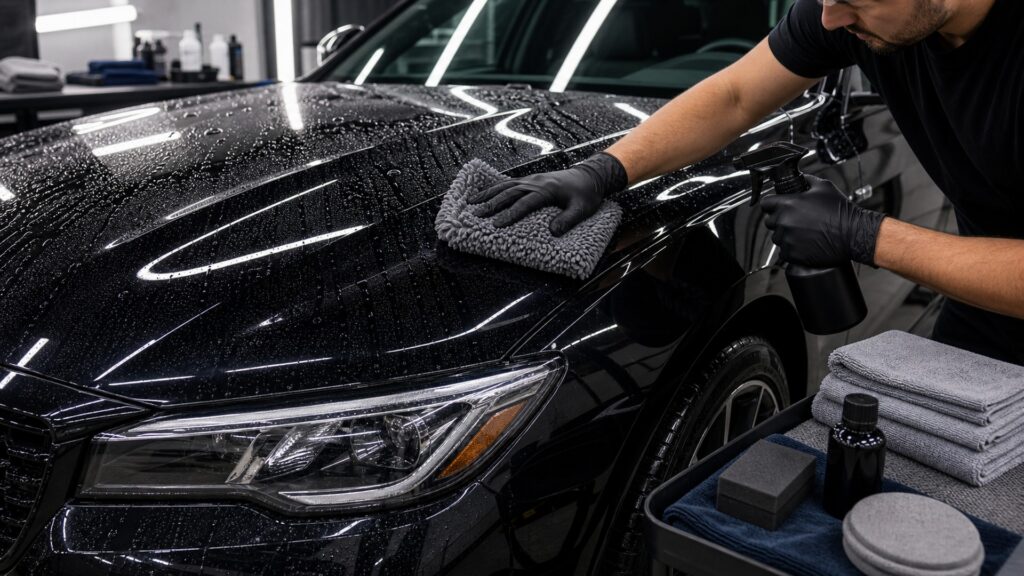
paint protection maintenance role explainer hero image for Review Streets
What You'll Learn

Resolve Paint Protection Maintenance Role through Its Controlling Evidence

The explanation separates five mechanisms that decide paint protection maintenance role instead of repeating a generic care sequence.

  • Frequent Compatible Washing Limits Residence Time and Abrasive Loading
  • Bird Waste, Insects, Sap, Minerals, Salts, and Chemicals Need Prompt Response
  • Clean Surfaces Reveal Coverage, Clarity, Edges, Adhesion, and Damage
  • Decontamination, Top-Up, Repair, or Replacement Must Match the Installed System
  • Care History Determines Warranty, Diagnosis, and Renewal Timing
  • How to verify the finished state

Tip: Use the first failed paint protection maintenance role gate to choose the next test; do not compensate with unrelated force, chemistry, or product.

Definitions

Key Concepts That Define Paint Protection Maintenance Role

These definitions anchor paint protection maintenance role to exact materials, mechanisms, limits, and observable evidence. Required article-specific evidence includes compatible wash chemistry, loose-particle pre-rinse, clean contact media, mineral-water drying, contaminant residence limit, film edge inspection, coating decontamination test, abrasion minimization, behavior-after-cleaning, damage referral point, maintenance record, renewal or removal trigger.

Compatible Wash Chemistry

Compatible Wash Chemistry locates the interface where paint protection maintenance role under the named surface and operating conditions.

  • Measure compatible wash chemistry before work
  • Observe how compatible wash chemistry changes
  • Record compatible wash chemistry after verification

Loose-Particle Pre-Rinse

Loose-Particle Pre-Rinse sets the usable boundary for paint protection maintenance role under the named surface and operating conditions.

  • Measure loose-particle pre-rinse before work
  • Observe how loose-particle pre-rinse changes
  • Record loose-particle pre-rinse after verification

Clean Contact Media

Clean Contact Media explains the material response during paint protection maintenance role under the named surface and operating conditions.

  • Measure clean contact media before work
  • Observe how clean contact media changes
  • Record clean contact media after verification

Mineral-Water Drying

Mineral-Water Drying measures the transfer created by paint protection maintenance role under the named surface and operating conditions.

  • Measure mineral-water drying before work
  • Observe how mineral-water drying changes
  • Record mineral-water drying after verification

Contaminant Residence Limit

Contaminant Residence Limit reveals the failure condition within paint protection maintenance role under the named surface and operating conditions.

  • Measure contaminant residence limit before work
  • Observe how contaminant residence limit changes
  • Record contaminant residence limit after verification

Film Edge Inspection

Film Edge Inspection records the verified outcome after paint protection maintenance role under the named surface and operating conditions.

  • Measure film edge inspection before work
  • Observe how film edge inspection changes
  • Record film edge inspection after verification

Tip: Use each paint protection maintenance role term at its defined interface rather than as a generic synonym for cleaning or protection.

Routine Soil Control

Frequent Compatible Washing Limits Residence Time and Abrasive Loading

Pre-rinse removes loose particles; appropriate chemistry loosens film; clean media minimizes grinding; complete rinsing and drying prevent residue and mineral concentration. This section pairs compatible wash chemistry with mineral-water drying; coating decontamination test supplies the stop signal. Record behavior-after-cleaning before changing maintenance record, then inspect compatible wash chemistry again after the material reaches its stable cleaned, dried, cooled, or cured state. A valid row 216 decision connects loose-particle pre-rinse to film edge inspection without masking damage referral point. If damage referral point changes first, hold mineral-water drying constant and diagnose the interface rather than adding unrelated pressure, passes, chemistry, or product. In the protection service log, compatible wash chemistry is evaluated beside mineral-water drying after coating decontamination test; if behavior-after-cleaning changes before maintenance record, the next action is cleaning or inspection rather than automatic topping, polishing, or replacement. Maintenance interval 1 connects loose-particle pre-rinse with the layer's exposure history, verifies film edge inspection on a residue-free surface, and records damage referral point so contamination masking is not mistaken for irreversible material loss.

  • Wash before heavy buildup
  • Use compatible dilution
  • Rotate clean media
  • Dry standing water

Protection is easier to maintain before contamination matures.

Hazard Removal

Bird Waste, Insects, Sap, Minerals, Salts, and Chemicals Need Prompt Response

Heat and time can concentrate or react with contamination, so removal speed, chemistry, dwell, agitation, and inspection follow the specific layer and hazard. This section pairs loose-particle pre-rinse with contaminant residence limit; abrasion minimization supplies the stop signal. Record damage referral point before changing renewal or removal trigger, then inspect loose-particle pre-rinse again after the material reaches its stable cleaned, dried, cooled, or cured state. A valid row 216 decision connects clean contact media to coating decontamination test without masking maintenance record. If maintenance record changes first, hold contaminant residence limit constant and diagnose the interface rather than adding unrelated pressure, passes, chemistry, or product. In the protection service log, loose-particle pre-rinse is evaluated beside contaminant residence limit after abrasion minimization; if damage referral point changes before renewal or removal trigger, the next action is cleaning or inspection rather than automatic topping, polishing, or replacement. Maintenance interval 2 connects clean contact media with the layer's exposure history, verifies coating decontamination test on a residue-free surface, and records maintenance record so contamination masking is not mistaken for irreversible material loss.

  • Identify the contaminant
  • Cool the surface
  • Use supported removal
  • Reinspect after stabilization

Protection may buy response time but not indefinite immunity.

Layer Inspection

Clean Surfaces Reveal Coverage, Clarity, Edges, Adhesion, and Damage

Behavior is assessed only after masking soil and maintenance residue are removed; film lift, puncture, staining, or coating changes need layer-specific interpretation. This section pairs clean contact media with film edge inspection; behavior-after-cleaning supplies the stop signal. Record maintenance record before changing compatible wash chemistry, then inspect clean contact media again after the material reaches its stable cleaned, dried, cooled, or cured state. A valid row 216 decision connects mineral-water drying to abrasion minimization without masking renewal or removal trigger. If renewal or removal trigger changes first, hold film edge inspection constant and diagnose the interface rather than adding unrelated pressure, passes, chemistry, or product. In the protection service log, clean contact media is evaluated beside film edge inspection after behavior-after-cleaning; if maintenance record changes before compatible wash chemistry, the next action is cleaning or inspection rather than automatic topping, polishing, or replacement. Maintenance interval 3 connects mineral-water drying with the layer's exposure history, verifies abrasion minimization on a residue-free surface, and records renewal or removal trigger so contamination masking is not mistaken for irreversible material loss.

  • Inspect under stable light
  • Check high-load zones
  • Photograph edge change
  • Avoid picking or aggressive testing

Diagnosis on dirty protection is unreliable.

Corrective Maintenance

Decontamination, Top-Up, Repair, or Replacement Must Match the Installed System

Some contamination can be safely removed, some behavior restored with supported maintenance products, and some film or coating damage requires qualified correction. This section pairs mineral-water drying with coating decontamination test; damage referral point supplies the stop signal. Record renewal or removal trigger before changing loose-particle pre-rinse, then inspect mineral-water drying again after the material reaches its stable cleaned, dried, cooled, or cured state. A valid row 216 decision connects contaminant residence limit to behavior-after-cleaning without masking compatible wash chemistry. If compatible wash chemistry changes first, hold coating decontamination test constant and diagnose the interface rather than adding unrelated pressure, passes, chemistry, or product. In the protection service log, mineral-water drying is evaluated beside coating decontamination test after damage referral point; if renewal or removal trigger changes before loose-particle pre-rinse, the next action is cleaning or inspection rather than automatic topping, polishing, or replacement. Maintenance interval 4 connects contaminant residence limit with the layer's exposure history, verifies behavior-after-cleaning on a residue-free surface, and records compatible wash chemistry so contamination masking is not mistaken for irreversible material loss.

  • Identify installed product
  • Test the least aggressive method
  • Follow maker sequence
  • Refer adhesion or paint damage

Random products can hide or worsen the real condition.

Lifecycle Record

Care History Determines Warranty, Diagnosis, and Renewal Timing

Dates, mileage, exposures, wash methods, chemicals, inspections, damage, repairs, and installer guidance help distinguish contamination, misuse, wear, and warranted defects. This section pairs contaminant residence limit with abrasion minimization; maintenance record supplies the stop signal. Record compatible wash chemistry before changing clean contact media, then inspect contaminant residence limit again after the material reaches its stable cleaned, dried, cooled, or cured state. A valid row 216 decision connects film edge inspection to damage referral point without masking loose-particle pre-rinse. If loose-particle pre-rinse changes first, hold abrasion minimization constant and diagnose the interface rather than adding unrelated pressure, passes, chemistry, or product. In the protection service log, contaminant residence limit is evaluated beside abrasion minimization after maintenance record; if compatible wash chemistry changes before clean contact media, the next action is cleaning or inspection rather than automatic topping, polishing, or replacement. Maintenance interval 5 connects film edge inspection with the layer's exposure history, verifies damage referral point on a residue-free surface, and records loose-particle pre-rinse so contamination masking is not mistaken for irreversible material loss.

  • Keep installation documents
  • Log unusual exposure
  • Record maintenance chemistry
  • Plan removal before instability

A remembered history is weaker than a traceable one.

Quick Reality Check

Where Paint Protection Maintenance Role Helps—and Where It Stops

The method is useful only when its mechanism, material, conditions, and verification remain inside the documented paint protection maintenance role boundary.

Evidence Supporting Use

compatible wash chemistry and loose-particle pre-rinse remain controlled while clean contact media produces the expected material response.

mineral-water drying, contaminant residence limit, and film edge inspection can be observed independently without masking residue or an unstable finish.

Evidence Requiring a Stop

Stop when coating decontamination test, abrasion minimization, or behavior-after-cleaning cannot be verified within the supported process window.

Unknown material, uncontrolled damage referral point, incompatible maintenance record, or failed renewal or removal trigger requires another method, location, repair, or qualified service.

Common Myths

Misconceptions About Paint Protection Maintenance Role

These myths replace paint protection maintenance role evidence with shortcuts that fail across materials and conditions.

Protected paint can be washed less carefully

A retained layer still experiences grit, contact pressure, concentrated chemistry, mineral water, towels, brushes, and jets; poor maintenance can abrade, stain, contaminate, or lift it. Verify paint protection maintenance role on the named material after complete drying.

Loss of beading means the coating is gone

Traffic film, minerals, surfactants, waxes, and other residue can alter water behavior; clean and decontaminate compatibly before deciding the layer has functionally failed. Check paint protection maintenance role against vehicle guidance and the observed residue.

Pressure washing is the best way to clean film edges

Concentrated spray, short distance, heat, and an edge-facing angle can promote lift; follow the film maker's pressure, distance, angle, and cure restrictions. Confirm paint protection maintenance role with a controlled test before broader application.

A universal topper restores every protection system

An unsupported product can mask behavior, change gloss or friction, attract soil, complicate diagnosis, or conflict with film, coating, warranty, and future maintenance. Reinspect paint protection maintenance role under stable light, temperature, and moisture conditions.

Tip: Test the claimed paint protection maintenance role mechanism and inspect the dried or cured result before accepting it.

FAQ

Frequently Asked Questions About Paint Protection Maintenance Role

These answers resolve the remaining material, process, safety, and verification questions around paint protection maintenance role.

How often should protection be washed?

Base frequency on exposure, contamination, storage, climate, product guidance, and safe access; wash before hazardous buildup rather than relying on a fixed calendar alone. Document paint protection maintenance role, the affected surface, and the final functional check.

How are water spots handled?

Cool and clean the surface promptly with layer-compatible methods, distinguish removable mineral residue from etching or staining, and avoid aggressive abrasion without condition evidence. Keep paint protection maintenance role within the product label and recovery capacity.

What film-edge changes need service?

Growing lift, trapped contamination, tearing, clouding, adhesive change, shrinking, or impact damage warrants documentation and installer review rather than picking, trimming, or gluing blindly. Judge paint protection maintenance role by transferred soil rather than immediate appearance.

Can coatings be polished during maintenance?

Abrasive polishing can reduce or remove a coating and clear coat; diagnose contamination first and use only a supported correction or reapplication plan. Stop paint protection maintenance role when color, texture, grip, or adhesion changes.

When is renewal due?

Renew or replace when cleaning no longer restores the named function, coverage or adhesion is compromised, damage exceeds repair limits, or product and warranty guidance sets a service point. Compare paint protection maintenance role with the untreated area after all

Bottom Line

Why Paint Protection Maintenance Role Matters turns on compatible wash chemistry, loose-particle pre-rinse, and clean contact media; the decision remains incomplete until mineral-water drying, contaminant residence limit, and film edge inspection are documented.

Accept the result only when coating decontamination test, abrasion minimization, and behavior-after-cleaning remain compatible with damage referral point, maintenance record, and renewal or removal trigger after the applicable inspection interval.

Next Steps

Continue the Paint Protection Maintenance Role Decision

These article-level destinations extend the mechanism, fitment, or category boundary for paint protection maintenance role without padding the module with taxonomy ancestors.