What Makes Paint Protection Different from Car Wash Equipment

Paint protection is an installed material state. Wax, sealant, coating, or film remains on prepared paint and changes selected interactions with water, chemicals, contamination, abrasion, or impacts. Its variables include coverage, thickness, adhesion, cure, edges, exposure, degradation, repair, and compatible maintenance.

Car wash equipment is a delivery system. Pumps, nozzles, hoses, brushes, blowers, tanks, and reclaim systems move water, chemistry, contact, and air so soil leaves the vehicle. Equipment can prepare or maintain protection, but pressure, flow, or foam cannot create a cured coating or adhered film without the protection product and installation process.

By: Review Streets Research Lab
Updated: September 1, 2026
Explainer · 8-12 min read
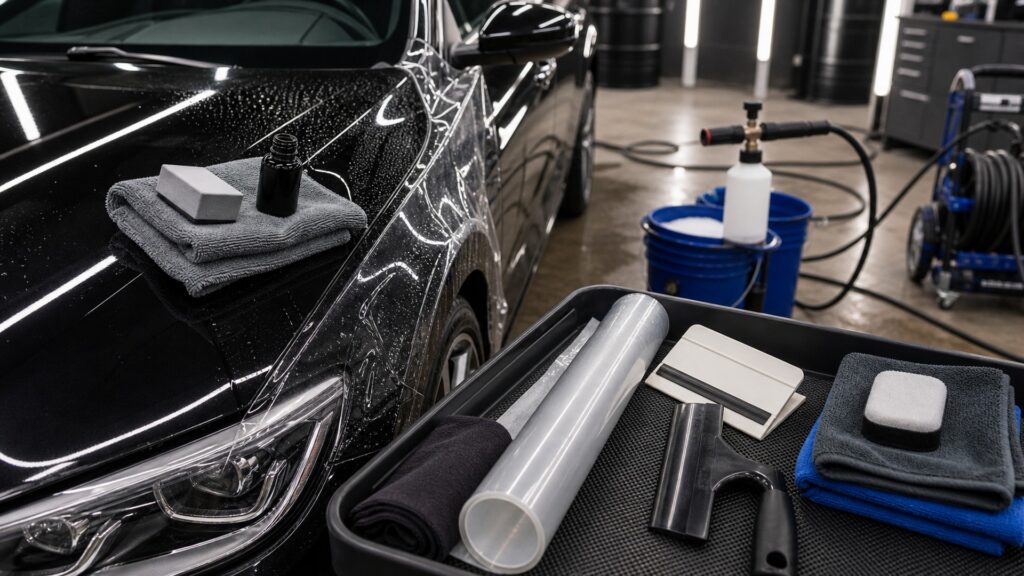
paint protection different from car wash equipment explainer hero image for Review Streets
What You'll Learn

Resolve Paint Protection and Car Wash Equipment through Its Controlling Evidence

The explanation separates five mechanisms that decide paint protection and car wash equipment instead of repeating a generic care sequence.

  • Protection Is Installed; Equipment Is Operated
  • Protection Adds a Layer while Washing Removes Soil
  • Cure and Adhesion Differ from Pressure and Flow
  • Wash Equipment Can Preserve or Damage Installed Protection
  • Layer Degradation and Machine Faults Need Different Diagnosis
  • How to verify the finished state

Tip: Use the first failed paint protection and car wash equipment gate to choose the next test; do not compensate with unrelated force, chemistry, or product.

Definitions

Key Concepts That Define Paint Protection and Car Wash Equipment

These definitions anchor paint protection and car wash equipment to exact materials, mechanisms, limits, and observable evidence.

Installed Protective Layer

Installed Protective Layer locates the interface where paint protection and car wash equipment under the named surface and operating conditions.

  • Measure installed protective layer before work
  • Observe how installed protective layer changes
  • Record installed protective layer after verification

Wash Delivery System

Wash Delivery System sets the usable boundary for paint protection and car wash equipment under the named surface and operating conditions.

  • Measure wash delivery system before work
  • Observe how wash delivery system changes
  • Record wash delivery system after verification

Retained Material

Retained Material explains the material response during paint protection and car wash equipment under the named surface and operating conditions.

  • Measure retained material before work
  • Observe how retained material changes
  • Record retained material after verification

Soil Transport

Soil Transport measures the transfer created by paint protection and car wash equipment under the named surface and operating conditions.

  • Measure soil transport before work
  • Observe how soil transport changes
  • Record soil transport after verification

Coating Cure State

Coating Cure State reveals the failure condition within paint protection and car wash equipment under the named surface and operating conditions.

  • Measure coating cure state before work
  • Observe how coating cure state changes
  • Record coating cure state after verification

Film Edge Bond

Film Edge Bond records the verified outcome after paint protection and car wash equipment under the named surface and operating conditions.

  • Measure film edge bond before work
  • Observe how film edge bond changes
  • Record film edge bond after verification

Tip: Use each paint protection and car wash equipment term at its defined interface rather than as a generic synonym for cleaning or protection.

State versus Machine

Protection Is Installed; Equipment Is Operated

One remains on paint between services while the other produces temporary cleaning output. Evidence joins installed protective layer with soil transport; hydraulic pressure sets the next limit. Record contact abrasion before changing layer degradation. Compare installed protective layer after hydraulic pressure stabilizes, then use soil transport to confirm whether contact abrasion produced the intended result. For row 211, wash delivery system establishes the baseline beside coating cure state. If rinse flow changes first, hold installed protective layer constant and inspect layer degradation. A valid decision connects wash delivery system to contact abrasion, preserves coating cure state, and documents rinse flow after the applicable drying or curing interval.

  • Identify the retained layer
  • Record installation
  • Measure machine settings
  • Separate lifecycles

The categories exist on different time scales.

Material Flow

Protection Adds a Layer while Washing Removes Soil

Application retains selected material; wash flow exports contamination and spent chemistry. Evidence joins wash delivery system with coating cure state; rinse flow sets the next limit. Record maintenance interaction before changing equipment service condition. Compare wash delivery system after rinse flow stabilizes, then use coating cure state to confirm whether maintenance interaction produced the intended result. For row 211, retained material establishes the baseline beside film edge bond. If contact abrasion changes first, hold wash delivery system constant and inspect equipment service condition. A valid decision connects retained material to maintenance interaction, preserves film edge bond, and documents contact abrasion after the applicable drying or curing interval.

  • Keep application media clean
  • Control excess product
  • Rinse residues
  • Protect drainage

Opposite material directions require different proof.

Different Controlling Measures

Cure and Adhesion Differ from Pressure and Flow

Protection depends on substrate, wetting, leveling, bond, and exposure; equipment depends on supply, nozzle, duty, and maintenance. Evidence joins retained material with film edge bond; contact abrasion sets the next limit. Record layer degradation before changing installed protective layer. Compare retained material after contact abrasion stabilizes, then use film edge bond to confirm whether layer degradation produced the intended result. For row 211, soil transport establishes the baseline beside hydraulic pressure. If maintenance interaction changes first, hold retained material constant and inspect installed protective layer. A valid decision connects soil transport to layer degradation, preserves hydraulic pressure, and documents maintenance interaction after the applicable drying or curing interval.

  • Check cure conditions
  • Inspect edges
  • Verify inlet flow
  • Use approved nozzles

A rating from one category says nothing about the other.

Maintenance Interaction

Wash Equipment Can Preserve or Damage Installed Protection

Compatible chemistry and clean media maintain layers; concentrated jets, harsh cleaners, stiff brushes, and grit can abrade coatings or lift film edges. Evidence joins soil transport with hydraulic pressure; maintenance interaction sets the next limit. Record equipment service condition before changing wash delivery system. Compare soil transport after maintenance interaction stabilizes, then use hydraulic pressure to confirm whether equipment service condition produced the intended result. For row 211, coating cure state establishes the baseline beside rinse flow. If layer degradation changes first, hold soil transport constant and inspect wash delivery system. A valid decision connects coating cure state to equipment service condition, preserves rinse flow, and documents layer degradation after the applicable drying or curing interval.

  • Pre-rinse grit
  • Use broad safe spray
  • Avoid film edges
  • Dry promptly

Maintenance is the point where the categories meet.

Failure Evidence

Layer Degradation and Machine Faults Need Different Diagnosis

Contamination can mask coating behavior; delamination is not a pump problem; pulsing pressure is not protection failure. Evidence joins coating cure state with rinse flow; layer degradation sets the next limit. Record installed protective layer before changing retained material. Compare coating cure state after layer degradation stabilizes, then use rinse flow to confirm whether installed protective layer produced the intended result. For row 211, film edge bond establishes the baseline beside contact abrasion. If equipment service condition changes first, hold coating cure state constant and inspect retained material. A valid decision connects film edge bond to installed protective layer, preserves contact abrasion, and documents equipment service condition after the applicable drying or curing interval.

  • Clean before judging layers
  • Inspect film adhesion
  • Measure equipment output
  • Repair the correct system

Shared symptoms do not create shared causes.

Quick Reality Check

Where Paint Protection and Car Wash Equipment Helps—and Where It Stops

The method is useful only when its mechanism, material, conditions, and verification remain inside the documented paint protection and car wash equipment boundary.

Evidence Supporting Use

installed protective layer and wash delivery system remain controlled while retained material produces the expected material response.

soil transport, coating cure state, and film edge bond can be observed independently without masking residue or an unstable finish.

Evidence Requiring a Stop

Stop when hydraulic pressure, rinse flow, or contact abrasion cannot be verified within the supported process window.

Unknown material, uncontrolled maintenance interaction, incompatible layer degradation, or failed equipment service condition requires another method, location, repair, or qualified service.

Common Myths

Misconceptions About Paint Protection and Car Wash Equipment

These myths replace paint protection and car wash equipment evidence with shortcuts that fail across materials and conditions.

Protected paint no longer needs wash equipment

Protection can ease release but still accumulates road film, salts, minerals, insects, and particles requiring compatible cleaning. Verify paint protection and car wash equipment on the named material after complete drying.

High pressure renews coating performance

Pressure may remove masking soil but cannot rebuild a depleted layer and can damage paint or film when misused. Check paint protection and car wash equipment against vehicle guidance and the observed residue.

Foam adds paint protection automatically

Foam is a delivery state; only a supported retained product applied and cured as directed creates the claimed layer. Confirm paint protection and car wash equipment with a controlled test before broader application.

A failing wash result means protection failed

Supply, nozzle, chemistry, contact media, water quality, or technique may be the actual cleaning limitation. Reinspect paint protection and car wash equipment under stable light, temperature, and moisture conditions. Record paint protection and car wash equipment factor 4 before final

Tip: Test the claimed paint protection and car wash equipment mechanism and inspect the dried or cured result before accepting it.

FAQ

Frequently Asked Questions About Paint Protection and Car Wash Equipment

These answers resolve the remaining material, process, safety, and verification questions around paint protection and car wash equipment.

Can pressure washers be used on PPF?

Follow the film maker limits for pressure, fan, distance, angle, temperature, edges, and post-installation cure. Document paint protection and car wash equipment, the affected surface, and the final functional check.

Does coating change wash equipment needs?

It may improve release, but safe pressure, flow, chemistry, contact, rinse, drying, and drainage remain necessary. Keep paint protection and car wash equipment within the product label and recovery capacity.

What proves equipment is working?

Stable supply, pressure, flow, spray, chemical delivery, rinse transport, safety controls, and maintained components. Judge paint protection and car wash equipment by transferred soil rather than immediate appearance. Record paint protection and car wash equipment factor 7 before final acceptance.

What proves protection is working?

Clean the surface first, then inspect layer-specific coverage, adhesion, clarity, contamination release, edges, and exposure history. Stop paint protection and car wash equipment when color, texture, grip, or adhesion changes.

Which category should be purchased first?

Choose cleaning capacity for recurring soil removal and protection only after paint condition, preparation, exposure, cure, and maintenance are feasible. Compare paint protection and car wash equipment with the untreated area after all residue leaves.

Bottom Line

What Makes Paint Protection Different from Car Wash Equipment depends on installed protective layer, wash delivery system, and retained material; later evidence adds soil transport, coating cure state, and film edge bond.

Accept the result only after hydraulic pressure, rinse flow, and contact abrasion remain stable under the documented material and operating conditions.

Next Steps

Continue the Paint Protection and Car Wash Equipment Decision

These article-level destinations extend the mechanism, fitment, or category boundary for paint protection and car wash equipment without padding the module with taxonomy ancestors.