
Stroke Rate Target
A planned strokes-per-minute range.
- It shapes rhythm.
- It is not resistance by itself.
- It works with split pacing.
Training function matters on a rowing machine because the workout is organized through strokes, not just through load. Stroke rate targets, split pacing, rest timers, drag-factor context, technique drills, and race modes decide whether the machine can support the session the reader intends.
A rower with plenty of resistance can still be a poor fit for rate ladders or interval practice if the monitor is hard to read, rest periods are awkward, or the feedback does not match the stroke work.
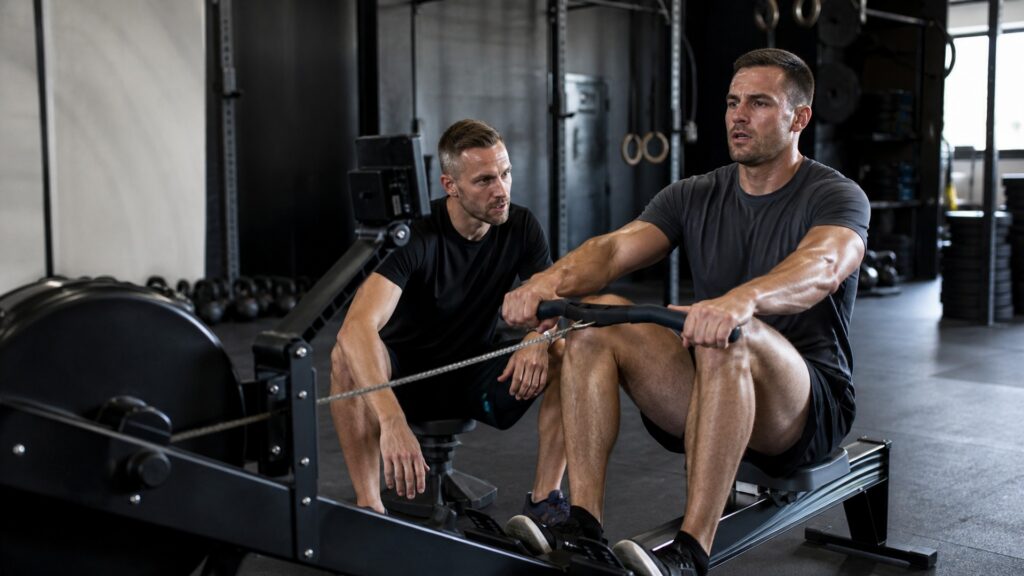
Training function connects the rower's monitor, settings, and stroke rhythm to specific session types.
Tip: A rower trains through rhythm and pacing; judge features by the session they help organize.
These definitions connect the main idea to the variables, limits, and practical signals readers need to compare options.
A planned strokes-per-minute range.
Using pace estimates to manage effort.
A measured or estimated feel of flywheel drag on some rowers.
A session that changes stroke rate in steps.
A focused practice of part of the stroke.
A monitor mode that frames pace against a target or virtual competitor.
Tip: Do not treat every monitor feature as equal; match rate, split, drag, and timers to the session.
The rower already has a stroke sequence. Training function matters because it turns that sequence into steady rows, intervals, drills, rate ladders, or race-style pacing.
The feature question begins with the session's shape.
Stroke rate says how often the user rows. Split estimates how much work the machine thinks each stroke pattern is producing. Both can matter, but they do not measure the same thing.
Training function improves when the display separates rhythm from output.
On air rowers, the damper changes airflow feel, while drag factor gives a more useful context on supported monitors. Magnetic and water rowers use different control logic.
A good rower explains its own load language instead of hiding behind a level number.
An interval row and a technique drill can use the same machine in opposite ways. One needs fast work/rest tracking; the other may need quieter feedback and attention to sequencing.
Training function matters because rowing practice is not one generic session.
Programmed rows can guide time, rate, or pace, but they cannot assess technique quality, readiness, pain, or long-term training needs by themselves.
The rower's training function is a tool for structure, not a guarantee of outcome.
Training function explains how a rower supports pacing, drills, intervals, and repeatability.
It shows why rower monitors matter differently from simple resistance controls.
It helps readers choose between simple steady-row use and more structured practice.
It cannot guarantee fitness improvements, calorie burn, safe technique, or recovery.
Results depend on user context, program design, and execution.
Common shortcuts and misunderstandings can make the topic seem simpler than it is.
A rower also needs readable rate, pace, and timing for many sessions.
Rate gives rhythm, but split and stroke quality can tell a different story.
Programs can organize time and pace, but they do not fully evaluate the person using the machine.
Even basic users benefit from knowing that damper numbers are not universal.
Tip: Treat strong claims as starting points for comparison, not final answers.
Concise answers to common questions readers may have after the main explanation.
Because rowing sessions rely on rhythm, pacing, timing, and feedback, not just resistance.
It depends on the session. Stroke rate, split, time, and rest intervals each answer different questions.
No. Damper changes feel on many air rowers, while effort still comes from how the stroke is performed.
Not always. Clear time, rate, and pace readings may matter more than a large workout library.
Some feedback can help, but a monitor is not the same as individualized coaching.
Rowing-machine training function matters because it organizes a stroke-based activity into sessions a user can pace, repeat, and interpret.
The best features are the ones that match the intended row: steady work, intervals, drills, rate practice, or race-style pacing.
Use these Review Streets paths to connect the explainer to related categories, comparisons, and next decisions.
Use this to understand the machine parts behind rate, split, and drag.
Read this to connect training function with catch-to-recovery technique.
Browse rower types after identifying the needed training functions.
Choose a retailer
Prices checked regularly. We may earn a commission at no cost to you.