
Fluid Access
Fluid access is how easily the runner can drink during the run.
- Example: sipping from a flask without stopping
- Check: test access at running pace
- Limit: easy access still needs stable fit
Safety factors matter because running hydration gear can affect heat, balance, visibility, breathing, and route readiness. Carrying fluid helps when dehydration risk is real, but the wrong setup can also add bounce, rubbing, overheating, or distraction.
A safer hydration setup carries enough fluid for the route while staying stable, reachable, breathable, and compatible with visibility or emergency gear when needed.
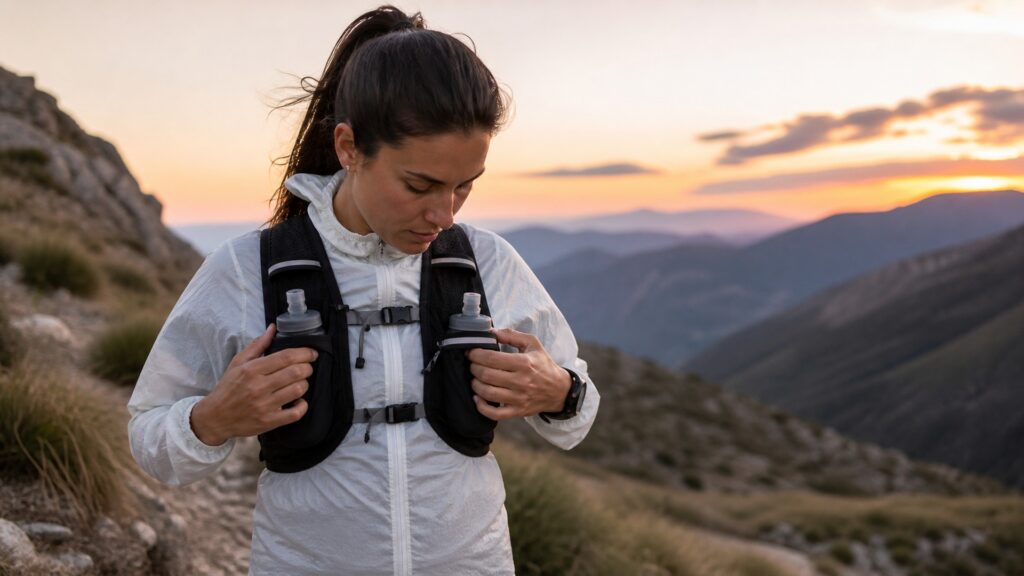
A practical look at fluid planning, heat, load stability, visibility, and emergency access.
Tip: Hydration support should lower risk without creating new distractions.
These concepts show how hydration gear affects route safety and comfort.
Fluid access is how easily the runner can drink during the run.
Capacity match is how well carried fluid fits distance, heat, and refill options.
Bounce control is how well bottles, belts, flasks, or reservoirs stay stable.
Heat load is the warmth added by wearing or carrying hydration gear.
Route planning is deciding whether the runner must carry fluid or can refill along the way.
Reach pattern is how the runner grabs, drinks, replaces, or adjusts hydration gear while moving.
Tip: Enough fluid matters, but stable and visible carrying matters too.
Heat, distance, duration, and limited refill options can make fluid carrying a safety issue rather than just a comfort choice.
Fluid access matters most when the route gives few alternatives.
Overpacking fluid can add weight, bounce, slosh, and heat. More capacity is not automatically safer if it makes the runner less stable or more distracted.
Safe capacity is balanced capacity.
Vests and packs can trap heat even while they carry fluid. Hot runs require both fluid planning and gear that does not make cooling harder.
The hydration solution should not worsen the heat problem.
A vest or pack can cover reflective clothing, lights, or ID placement. Safety planning should include what the hydration setup blocks or reveals.
Hydration gear should work with safety gear, not hide it.
Gear that needs constant adjustment can pull attention from footing, traffic, and surroundings. Drinking access should be simple enough to use without losing awareness.
Stable gear helps the runner stay aware.
Hydration gear is safest when it answers real fluid needs without adding avoidable problems.
It supports hot, long, remote, or unsupported routes.
It keeps fluid reachable before thirst or heat becomes a bigger issue.
It can add heat, bounce, rubbing, blocked visibility, or distraction.
It can create false confidence if route safety still needs separate planning.
Carrying water is only one part of safe run planning.
Too much weight can add bounce, heat, and discomfort.
A vest carries fluid, but it may not solve visibility, ID, lighting, or traffic needs.
It also affects heat management, route planning, and attention.
Access can be closed, crowded, seasonal, or farther apart than expected.
Tip: Treat hydration as one part of route readiness.
Short answers for safer fluid-carrying choices.
Carry enough for distance, heat, effort, and refill access without adding unnecessary weight.
Yes, if it bounces, rubs, traps heat, hides visibility gear, or distracts the runner.
Use safety gear when light, traffic, isolation, or emergency access calls for it.
Test loaded fit, drinking access, heat comfort, and whether visibility or phone access remains clear.
Hydration gear should improve fluid access while preserving stability, awareness, visibility, and comfort.
Safety factors matter because hydration gear affects fluid access, heat, stability, visibility, and attention.
The safest setup carries enough fluid without adding avoidable bounce, heat, rubbing, or distraction.
Use these Review Streets paths to compare related categories and practical next decisions.
Review how hydration gear supports training demands.
Compare broader running accessories with hydration-specific gear.
Explore related running gear categories.
Choose a retailer
Prices checked regularly. We may earn a commission at no cost to you.