
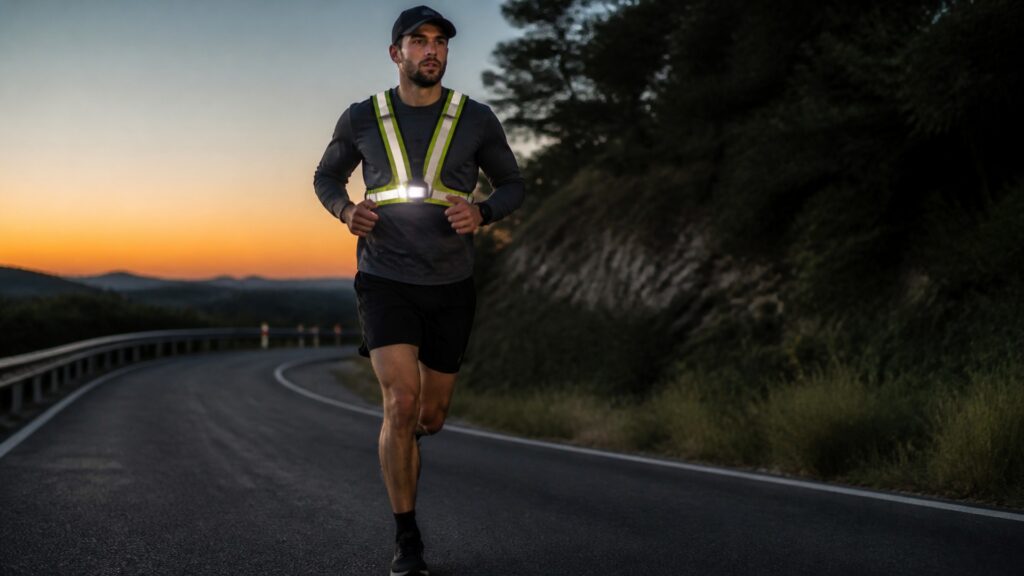
Why Running Safety Gear Movement Pattern Matters

Movement pattern matters because running safety gear has to work while the body repeats stride, arm swing, breathing, and head movement. A light, reflective vest, phone holder, ID band, or weather-visible layer can help only if it stays visible and stable in motion.

The best safety gear moves with the runner. It should not bounce, twist, block arm swing, restrict breathing, cover reflective areas, or require constant adjustment during the run.

By: Review Streets Research Lab
Updated: September 30, 2026
Explainer · 8-12 min read
running safety gear movement pattern explainer hero image for Review Streets
What You'll Learn

How Running Motion Changes Safety Gear

A practical look at visibility placement, bounce, reach, breathing, and awareness while running.

  • Why standing fit does not prove running fit
  • How arm swing and torso rotation affect visibility
  • Where bounce and rubbing create distraction
  • Why lights and reflectors need stable placement
  • How to test safety gear before relying on it

Tip: Safety gear has to work in motion, not just look right before the run starts.

Definitions

Key Movement Concepts For Running Safety Gear

These concepts explain how repeated running movement changes safety gear performance.

Visibility Support

Visibility support helps the runner see or be seen in low-light or complex route conditions.

  • Example: wearing reflective pieces or a light on an early run
  • Check: view the runner from front, side, and back
  • Limit: visibility gear does not remove traffic risk

Route Awareness

Route awareness is how well the runner can notice traffic, footing, people, weather, and exits.

  • Example: keeping lighting and phone access simple on a dark route
  • Check: avoid gear that steals attention
  • Limit: gear cannot replace judgment

Emergency Access

Emergency access is the ability to reach ID, phone, medication, or help when needed.

  • Example: keeping a phone and ID in a reachable pocket
  • Check: make essentials accessible without unpacking everything
  • Limit: not every route needs the same kit

Fit And Stability

Fit and stability describe whether safety gear stays put without rubbing, bouncing, or blocking movement.

  • Example: a lighted vest that does not shift during arm swing
  • Check: test at running pace
  • Limit: secure gear still needs comfort

Weather Readiness

Weather readiness is choosing gear that supports safety in rain, heat, cold, wind, or glare.

  • Example: using a brim, light shell, or high-visibility layer
  • Check: match gear to effort and conditions
  • Limit: too much gear can overheat the runner

Safety Role

Safety role is the specific risk a piece of gear is meant to reduce.

  • Example: a rear light for road visibility or ID for emergency contact
  • Check: name the risk before adding the item
  • Limit: one item rarely covers every risk

Tip: Gear that shifts out of place can lose its safety function.

Visibility

Reflective And Lighted Gear Must Stay Visible

A reflector or light helps only when others can see it. Arm swing, jacket layers, hydration packs, and posture can hide safety features during motion.

  • Check visibility from front, side, and back.
  • Place lights where they do not swing wildly.
  • Avoid covering reflectors with straps or packs.

Stable placement keeps visibility useful.

Fit

Bounce Can Become A Safety Distraction

Gear that bounces or twists pulls attention away from footing, traffic, and surroundings. Small movement problems can grow over distance.

  • Test gear at running pace.
  • Secure loose straps and clips.
  • Remove gear that needs constant fixing.

Safety gear should not steal focus from the route.

Arm Swing

Safety Gear Should Leave Natural Motion Alone

Items on wrists, arms, waist, or chest can interfere with arm swing or torso rotation. That can make the runner adjust movement without noticing.

  • Keep bulky items out of arm path.
  • Avoid over-tightening vests or bands.
  • Check that breathing remains easy.

A safer setup supports movement instead of fighting it.

Access

Phone And ID Gear Must Be Reachable

Emergency access matters only if the runner can reach the item when needed. Storage that twists behind the body or requires unpacking may fail its role.

  • Keep phone or ID in a reachable place.
  • Use secure closures that still open easily.
  • Practice access before longer routes.

Reachability is part of the safety function.

Testing

Short Test Runs Reveal Movement Problems

Safety gear should be tested before a dark, remote, or high-traffic run. A short route can reveal bounce, blocked visibility, rubbing, or poor reach.

  • Test with the gear fully adjusted.
  • Check visibility after adding layers.
  • Fix movement problems before relying on the item.

A test run turns safety gear into dependable gear.

Quick Reality Check

Where Movement Fit Helps And Where It Fails

Safety gear works best when it stays stable and visible throughout the run.

Where It Helps

It keeps lights, reflectors, phone, and ID usable while moving.

It reduces distraction so the runner can stay aware of the route.

Where It Fails

It can bounce, twist, rub, hide reflectors, or block natural motion.

It can become a distraction if it needs repeated adjustment.

Common Myths

Misconceptions About Running Safety Gear Movement

Safety features still need to survive real running motion.

If it is reflective, it is visible enough

Reflective gear can be hidden by arm swing, layers, packs, or poor placement.

Tighter always means safer

Over-tightening can restrict breathing or create pressure.

Small bounce does not matter

Bounce can distract the runner and move lights or reflectors out of position.

Phone storage is separate from safety

Reachable phone and ID access can be part of route readiness.

Tip: Judge safety gear by how it behaves while running.

FAQ

Frequently Asked Questions About Running Safety Gear Movement

Short answers about fit and motion.

Why does movement pattern matter for safety gear?

Because safety gear has to stay visible, stable, reachable, and comfortable while the runner moves.

How should I test reflective gear?

Check visibility from several angles after adding the layers, belts, or packs used on the run.

Can safety gear affect running form?

Yes. Bulky, tight, or shifting gear can interfere with arm swing, breathing, or posture.

What is the biggest warning sign?

Repeated adjustment, bouncing, rubbing, or hidden visibility features mean the setup needs a change.

What is the practical takeaway?

Choose safety gear that stays in place through your actual stride and route conditions.

Bottom Line

Movement pattern matters because running safety gear must stay visible, stable, reachable, and comfortable while the runner moves.

The best setup supports awareness without interrupting stride, breathing, or arm swing.

Next Steps

Go Deeper or Compare Your Options

Use these Review Streets paths to compare related categories and practical next decisions.