
Mixing Insert
A mixing insert helps break up powder as liquid moves through the bottle.
- Example: a wire ball or grid inside the shaker
- Check: see whether clumps remain after shaking
- Limit: some thick formulas still stay gritty
Safety factors matter in shaker bottles because the bottle holds drinks that may include protein, dairy, electrolytes, caffeine, or supplements, and it is often shaken hard, carried in bags, and reused frequently. Leaks, residue, odors, poor materials, and confusing measurements can all create avoidable problems.
A safer shaker bottle seals reliably, cleans thoroughly, uses appropriate materials, and makes portions easy to understand. It should support the drink routine without hiding buildup in lids, seals, inserts, or corners.
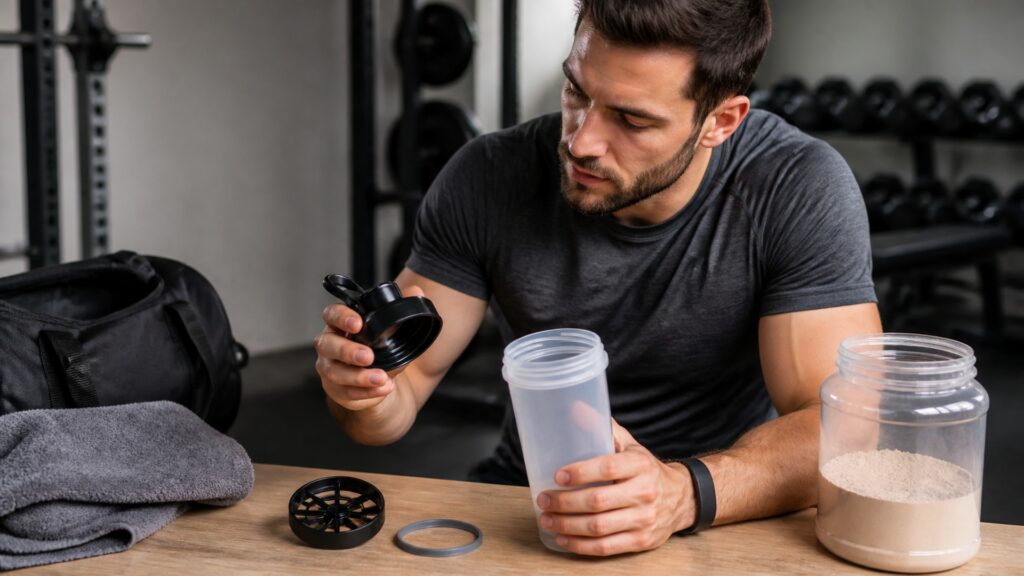
A practical look at seals, materials, residue, measurements, heat, and cleaning.
Tip: Judge the gear by the problem it solves during the workout, not by the size of the feature list.
These concepts keep the decision tied to real training conditions, comfort, and setup.
A mixing insert helps break up powder as liquid moves through the bottle.
A leak seal keeps liquid inside the lid, cap, and threads during shaking or carry.
Bottle shape affects mixing movement, grip, cupholder fit, and cleaning.
Measurement marks help repeat liquid amounts for powders or electrolytes.
Cleaning access is how easily the bottle, lid, seal, and insert can be washed and dried.
Safety Fit is the part of shaker bottle use that matters most for this decision.
Tip: The right hydration setup is the one that stays comfortable, accessible, and clean enough to use repeatedly.
A shaker bottle is shaken harder than an ordinary drink cup. Weak caps, dirty threads, or worn seals can leak into bags or onto equipment.
Leak control is the first safety factor.
Some drinks leave film, odor, or trapped residue if they sit too long. Lid grooves, inserts, and seals deserve as much attention as the bottle body.
Clean parts make the bottle safer to reuse.
Plastic, stainless steel, and insulated designs behave differently. Heat, dishwashers, acidic drinks, and repeated use can affect comfort and durability.
Material fit supports long-term use.
Measurement marks help users avoid overly concentrated drinks or inconsistent texture. Clear markings are especially useful for powders that depend on liquid ratios.
Portion clarity prevents avoidable guesswork.
Leaving mixed drinks in a warm car or closed gym bag can make odor and residue worse. The bottle should fit the user's carry habits.
Safe use includes what happens after mixing.
Safety-focused choices reduce leaks, residue, and portion confusion.
They make sealed carry and reuse more reliable.
They reduce odor, buildup, and hard-to-clean areas.
They do not replace careful supplement dosing.
They still depend on cleaning after use.
A bottle can look simple and still need safety checks.
Caps and seals can wear or collect residue.
Sometimes deep cleaning helps, but persistent odor may mean replacement.
They are useful guides, not precision tools.
Lids, seals, and inserts may still need inspection.
Tip: A hydration pack is useful only when it makes drinking easier without creating new friction.
Short answers for practical training and gear decisions.
A reliable seal and easy cleaning usually matter most.
Replace it if it cracks, leaks, holds odor, or has damaged seals.
It is better to rinse soon after use, especially with protein or dairy-based drinks.
They can be durable and odor-resistant, but they still need proper cleaning and care.
Choose a bottle that seals, cleans, measures, and stores safely for the drinks you use.
Safety factors matter because shaker bottles handle mixed drinks, hard shaking, carry, residue, and repeated reuse.
The safest designs seal reliably, clean easily, show measurements clearly, and avoid trapping buildup in small parts.
Use these Review Streets paths to compare related categories and practical next decisions.
Explore the shaker bottle category.
Review the bottle system.
Check shaking, carry, and handling fit.
Choose a retailer
Prices checked regularly. We may earn a commission at no cost to you.