Why Single Axle Utility Trailers Operating Function Matters

A single-axle utility trailer is useful when the whole hauling sequence works: the load can be placed correctly, secured, transported, removed at the destination, and followed by a safe return or storage arrangement. Adequate deck space is only the starting point. An inaccessible tie-down or an unsuitable unloading area can make an otherwise adequate trailer a poor tool for the job.

Plan the operation around the actual load and stops. Tools, a mower, bagged material, and loose debris require different handling arrangements. The best layout keeps the load within its limits while making necessary access possible; convenience does not override weight distribution or restraint.

By: Review Streets Research Lab
Updated: October 7, 2026
Explainer · 8-12 min read
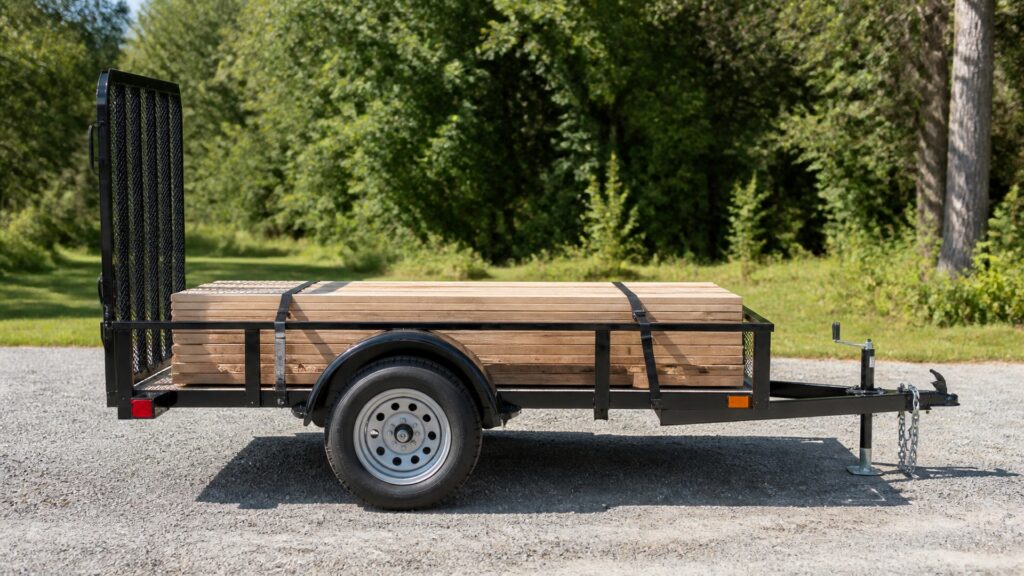
single axle utility trailers explainer hero image for Review Streets
What You'll Learn

Plan the Haul from Loading to Storage

Connect trailer capability with the sequence of real tasks.

  • Why the destination affects the initial loading plan
  • How access and restraint must coexist
  • What must be ready before the trailer moves
  • Why partial deliveries require another load check
  • How return loads and storage complete the job

Tip: Before loading, picture how the first item will come off and where the remaining load will sit afterward.

Definitions

Six Concepts for a Workable Hauling Sequence

These terms connect the trailer to the job it performs.

Loading access

Loading access is the usable path from the loading area onto the trailer.

  • Example: moving a machine along a suitable ramp
  • Check: clearance, surface, ramp suitability, and trailer instructions
  • Limit: fitting on the deck does not prove it can be loaded there

Load sequence

Load sequence is the order in which goods are placed and later removed.

  • Example: arranging two deliveries without blocking the first load
  • Check: access alongside required distribution and restraint
  • Limit: delivery order cannot override safe loading

Travel configuration

Travel configuration is the secured arrangement of the trailer, equipment, and cargo for movement.

  • Example: gate, ramps, jack, and load prepared for towing
  • Check: all required locks, connections, and clearances
  • Limit: a configuration used during loading may not be ready for travel

Partial-load change

A partial-load change occurs when only some goods are removed or added.

  • Example: unloading one machine while another remains aboard
  • Check: new distribution and remaining securement
  • Limit: less total weight does not automatically mean a suitable arrangement

Unloading area

The unloading area is the space and surface where the load leaves the trailer.

  • Example: a site with room to deploy the approved ramp
  • Check: surface, access, people, and the prescribed support arrangement
  • Limit: arriving at the address does not establish a usable unloading site

Return arrangement

The return arrangement is the load and equipment setup for the journey after the delivery or task.

  • Example: secured empty containers and stowed ramps
  • Check: changed mass, loose items, and travel preparation
  • Limit: an empty deck can still have unsecured equipment

Tip: Assess the trailer at each stage, including the apparently simple trip home.

Job planning

Start with the Destination and Handling Method

Establish what will be moved, its mass and dimensions, and how it will get on and off the trailer. Check the destination for access and an appropriate unloading location. Where a ramp, gate, or handling device is involved, verify that it is intended for the task and load. Do not discover a blocked unloading path after the trailer is full.

  • Describe the actual load and handling method.
  • Check destination access before departure.
  • Use the trailer and equipment instructions.

A mower might fit on a deck yet be unsuitable for the available ramp or unloading surface. That is an operating mismatch even if the trailer’s overall cargo allowance is sufficient.

Reference: Utility-trailer operating instructions.

Layout

Arrange Access Without Sacrificing Distribution

Choose positions that satisfy the trailer’s load requirements and allow the intended restraint to be applied and checked. Consider which items need to come off first, but do not move heavy cargo into an unsuitable position merely to simplify delivery order. If the two requirements conflict, change the delivery plan, loading method, or trailer choice.

  • Keep required attachment points accessible.
  • Check mass and specified tongue load.
  • Leave a practical path to the first delivery.

For example, placing small tool cases in front of a machine may block the only exit path. Moving them can improve access, but the complete load arrangement still needs to be reassessed.

Departure

Convert the Loading Setup into a Travel Setup

Loading may leave a gate down, ramps deployed, straps loose, or a jack in use. Before travel, follow the required preparation for the actual trailer: secure cargo and movable equipment, complete the coupling checks, and verify lights and any fitted braking equipment. Walk around the completed combination rather than assuming that finishing the load means finishing the preparation.

  • Secure the load with suitable equipment.
  • Stow or lock movable parts as instructed.
  • Check connections and installed systems.

NHTSA’s load-security guidance applies to both cargo and objects that could escape. A loose ramp or empty container can create a road hazard even though it is not part of the delivered goods.

Reference: NHTSA load-security guidance.

At the stop

Treat Every Delivery as a New Load Arrangement

Use the prescribed parking and support arrangements before unloading. Remove goods in a way that keeps people clear of moving equipment and follows the relevant instructions. After a partial delivery, inspect what remains. Its mass may be lower, but its position and restraint can now be unsuitable for travel.

  • Use an appropriate unloading area.
  • Follow ramp and handling-equipment instructions.
  • Recheck remaining load before moving.

If the forward item is removed while a heavy rear item remains, the original distribution is no longer the same. Do not assume the departure assessment still applies merely because the total load is smaller.

Return and storage

Finish with a Deliberate Reset

Secure empty containers, leftover materials, tools, and ramps for the return. Check any damage or defects noticed during the job and record what needs attention. At storage, use the trailer’s prescribed parking, support, and security arrangements. Folding features, if fitted, have their own handling and locking instructions.

  • Account for everything returning with the trailer.
  • Report defects before the next user takes it.
  • Leave the trailer in its approved stored condition.

A clear handover might identify a damaged ramp latch or missing restraint, so the next assignment does not begin with an avoidable delay or unsafe workaround.

Reference: Trailer and component manuals.

Quick Reality Check

An Adequate Deck and a Workable Job

A trailer can fit the cargo yet fail elsewhere in the sequence.

Static fit answers

Whether the objects occupy the available deck space.

Whether the planned mass appears within the relevant allowance.

Operating assessment adds

Loading, securing, access, and unloading at the actual sites.

Safe arrangements after partial delivery, for return travel, and in storage.

Common Myths

Misconceptions About Everyday Trailer Use

Good operation includes the steps between departure and arrival.

If the load fits, the job is planned

The handling method and destination must also work.

First-off cargo should always go at the back

Convenient access cannot override required distribution or restraint.

A smaller remaining load needs no reassessment

Removing goods changes the arrangement and can alter tongue load or securement.

The empty return needs no preparation

Ramps, tools, containers, and other equipment still need to be secured.

Tip: Plan for the load at every stop, not just the full trailer at departure.

FAQ

Questions About Operating a Single-Axle Utility Trailer

Practical answers for complete hauling tasks.

What should I plan before loading?

The actual mass and dimensions, suitable handling equipment, load distribution, restraint, and destination access.

How should multiple deliveries be arranged?

Balance access with the trailer’s loading requirements and reassess the remaining cargo at each stop.

Can a gate always be used as a ramp?

No. Use it for loading only if its design, rating, and instructions support that task.

What belongs in the pretravel check?

The completed load, coupling, secured moving parts, lights, and fitted systems under the exact instructions.

What should be recorded after the job?

Any damage, missing equipment, unresolved defect, or other condition affecting the next assignment.

Bottom Line

A utility trailer earns its place by supporting the entire haul, from a workable loading path to safe unloading and return.

Plan access and stop order within the load limits, and reassess the trailer whenever its configuration changes.

Next Steps

Go Deeper or Compare Your Options

Use these Review Streets paths to compare related categories and practical next decisions.