
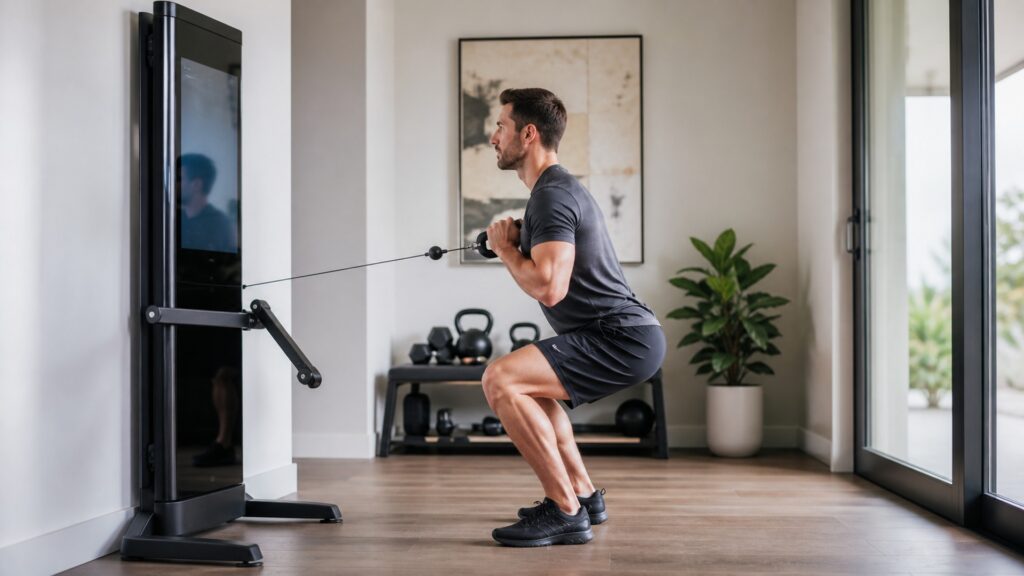
Why Smart Home Gyms Movement Pattern Matters

Movement pattern matters in smart home gyms because the hardware determines which exercises feel natural, which ones are awkward, and which training goals the system can realistically support. A compact machine may look versatile, but the cable path, resistance style, bench position, and screen guidance all shape the movements it handles well.

A strong smart home gym should support the movement patterns a user actually needs, not just a long exercise list. The better test is whether pressing, pulling, squatting, hinging, core work, and mobility options fit the hardware and the user's space.

By: Review Streets Research Lab
Updated: September 21, 2026
Explainer · 8-12 min read
smart home gyms movement pattern explainer hero image for Review Streets
What You'll Learn

How Movement Patterns Shape Smart Home Gym Fit

A practical look at why exercise mechanics, cable paths, and hardware layout matter before buying.

  • Why supported movements matter more than exercise-count claims
  • How cable paths and resistance style affect training feel
  • Where substitutions can expose hardware limits
  • Why space and setup change movement quality
  • How to judge whether the system fits a real routine

Tip: Judge the system by what it makes easier during real workouts, not by how advanced it sounds.

Definitions

Key Concepts Behind Smart Home Gyms Movement Pattern Matters

These concepts clarify the practical signals readers should check before choosing a smart home gym.

Movement Pattern

A movement pattern is the basic action an exercise trains, such as pushing, pulling, squatting, hinging, rotating, or carrying.

  • Example: a cable chest press and a push-up both serving a push pattern
  • Check: see whether the system supports the pattern well
  • Limit: pattern labels do not prove the exercise feels natural

Cable Path

Cable path is the direction and angle from which resistance pulls during an exercise.

  • Example: a low cable path for rows or hinges
  • Check: compare the path to the movement shown
  • Limit: awkward angles can change the exercise

Resistance Feel

Resistance feel is how the load behaves through the movement.

  • Example: digital resistance that feels steady through a press
  • Check: test smoothness and control
  • Limit: digital load may not feel like free weights

Exercise Substitution

Exercise substitution is the alternate movement used when the system cannot perform the original exercise well.

  • Example: using a cable pull-through instead of a barbell deadlift
  • Check: ask whether the substitute preserves the goal
  • Limit: some substitutions change the training effect

Space Clearance

Space clearance is the room needed to perform movements safely around the hardware.

  • Example: needing room for lunges, rows, and cable angles
  • Check: measure the full workout area
  • Limit: a compact machine still needs movement space

Pattern Coverage

Pattern coverage is the range of useful movements the system can support across a plan.

  • Example: press, pull, hinge, squat, core, and mobility options
  • Check: review a week of workouts, not one demo
  • Limit: coverage depends on the user's goals

Tip: The best smart home gym features are the ones that reduce friction without hiding important limits.

Hardware Fit

The Machine Shapes The Movement

Smart home gyms are not neutral platforms. Their cable positions, handles, resistance, bench, and screen placement all affect how exercises work.

  • Check angles for presses and pulls.
  • Test whether setup changes are practical.
  • Look for movements that feel stable and repeatable.

Good hardware makes common patterns feel natural.

Exercise Claims

Exercise Counts Need Context

A system may advertise many exercises, but the quality of those movements matters more than the total number. Some variations may be minor or less useful for the user's goals.

  • Look past the headline exercise count.
  • Check the patterns covered across a week.
  • Identify which exercises you would actually use.

A smaller set of strong movements can beat a large list of awkward ones.

Substitutions

Alternatives Should Preserve The Training Goal

Smart home gyms often use substitutions for movements that normally require free weights, racks, or machines. The substitute is useful only if it keeps the intended pattern and difficulty close enough.

  • Compare what the substitute trains.
  • Watch for missing lower-body or hinge options.
  • Choose simpler alternatives when control is better.

The substitute should solve the equipment limit without changing the workout beyond recognition.

Space

Movement Quality Depends On The Room

Even a compact smart home gym can feel limiting if the room is too small. Cable movements, lunges, floor work, and accessories all need space around the machine.

  • Measure side, front, and floor clearance.
  • Think about mat, bench, and accessory placement.
  • Avoid setups that force shortened range.

The room is part of the movement system.

Practical Check

Review A Real Week Of Workouts

The best way to judge movement pattern fit is to inspect several workouts together. A single demo may look strong while the weekly plan repeats the same pattern or avoids important movements.

  • Check push, pull, lower-body, core, and mobility options.
  • Look for usable progressions.
  • Confirm the system supports your preferred training style.

Movement pattern fit shows up in the whole routine, not one impressive exercise.

Quick Reality Check

Where Movement Pattern Fit Helps And Where It Has Limits

Pattern-aware evaluation keeps the purchase tied to real exercises.

Where It Helps

It shows whether the hardware supports the user's actual training goals.

It reveals whether substitutions preserve the workout's purpose.

Where It Falls Short

It cannot guarantee perfect form or comfort for every body.

Some users may still need free weights, machines, or coaching outside the system.

Common Myths

Misconceptions About Smart Home Gym Movement Patterns

Exercise variety is useful only when the movements work well.

More exercises always mean better coverage

A long list can include variations that do not add much value.

Cable resistance works the same for every pattern

Cable angle and body position can change the exercise.

Compact systems need almost no workout space

The hardware may be compact, but the movements still need clearance.

Digital resistance replaces every free-weight movement

It can replace some training needs, but the feel and setup are different.

Tip: Treat strong claims as reasons to inspect the system more closely, not as final proof.

FAQ

Frequently Asked Questions About Smart Home Gym Movement Patterns

Short answers for practical buying and training decisions.

Why do movement patterns matter before buying?

They show whether the system supports the exercises and training goals the user actually needs.

What patterns should I check?

Check pressing, pulling, squatting, hinging, core work, rotation, and mobility as they relate to your goals.

Are exercise counts reliable?

They are a starting point, but useful movement quality matters more than the total number.

Can smart home gyms replace free weights?

Sometimes for many exercises, but not always with the same feel, load range, or setup.

What is the practical takeaway?

Choose a system whose hardware supports the movement patterns you will use repeatedly.

Bottom Line

Movement pattern matters because smart home gym hardware shapes which exercises work well in real use.

The strongest systems support the user's actual movement needs with stable setup, useful substitutions, and enough room to train.

Next Steps

Go Deeper or Compare Your Options

Use these Review Streets paths to compare related categories and practical next decisions.