
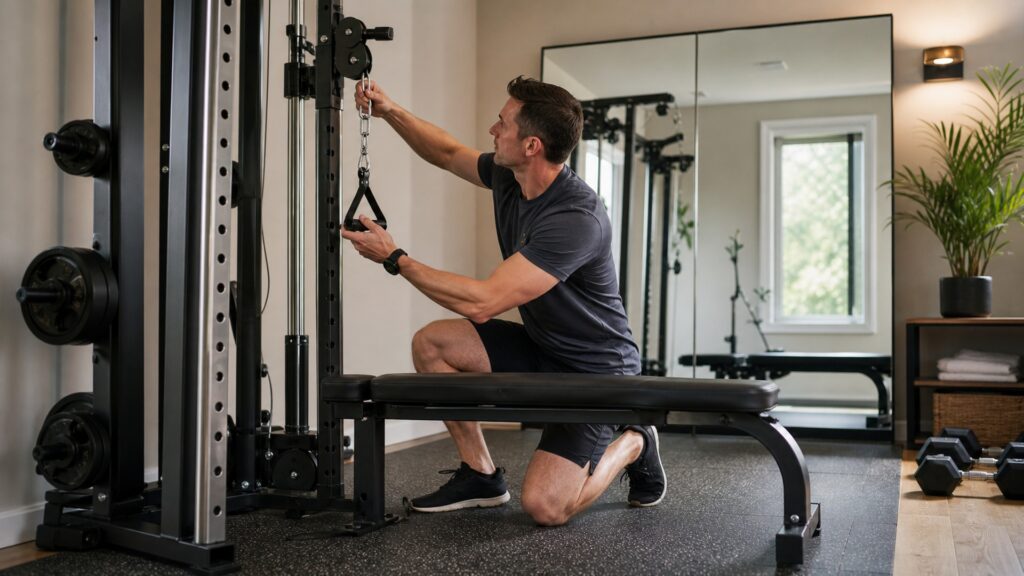
Why Smart Home Gyms Safety Factors Matters

Safety factors matter in smart home gyms because the equipment brings resistance, moving parts, guided workouts, and limited home space into one system. A product can look compact and polished while still requiring careful setup, clear instructions, and enough room to move safely.

The practical question is not whether a smart home gym sounds safe in general. The question is whether the resistance, cable path, anchoring, accessories, screen guidance, and workout flow help the user train with control in the actual room where the system will be used.

By: Review Streets Research Lab
Updated: September 23, 2026
Explainer · 8-12 min read
smart home gyms safety factors explainer hero image for Review Streets
What You'll Learn

How Safety Factors Shape Smart Home Gym Use

A practical look at the setup, resistance, space, and guidance details that affect safe home training.

  • Why installation and anchoring matter before the first workout
  • How resistance changes and cable paths affect control
  • Where space clearance can change exercise safety
  • Why instructions and form cues need to match the hardware
  • What to check before relying on automatic guidance

Tip: Judge the system by how it changes real training decisions, not by how advanced the feature sounds.

Definitions

Key Concepts Behind Smart Home Gyms Safety Factors Matters

These concepts clarify the practical signals readers should check before choosing home fitness technology.

Stable Installation

Stable installation means the system is placed, mounted, or supported according to its intended use.

  • Example: a wall-mounted strength system attached to the correct surface
  • Check: confirm installation requirements before buying
  • Limit: poor installation can undermine every other feature

Resistance Control

Resistance control is how predictably the load starts, changes, and stops during an exercise.

  • Example: digital resistance increasing only after a clear setting change
  • Check: test smoothness at low and moderate loads
  • Limit: fast or unclear changes can surprise the user

Cable Path

Cable path is the angle and direction from which resistance pulls during a movement.

  • Example: a low cable path used for rows or hinges
  • Check: compare the pull angle with the exercise shown
  • Limit: awkward angles can affect balance and form

Space Clearance

Space clearance is the usable room around the system for full movements and transitions.

  • Example: enough floor space for lunges, rows, and mat work
  • Check: measure the workout area, not just the hardware footprint
  • Limit: compact equipment still needs movement space

Form Guidance

Form guidance explains setup, body position, tempo, and range of motion for the exercise being performed.

  • Example: showing handle height and stance before a cable press
  • Check: see whether cues match the hardware position
  • Limit: general cues may not fit every body or limitation

Emergency Stop

Emergency stop is the ability to pause, reduce, or exit a session quickly when something feels wrong.

  • Example: a clear pause control within reach during a set
  • Check: find the stop or pause method before training
  • Limit: a hidden control may not help during a difficult rep

Tip: A strong feature should make workouts easier to perform, repeat, or evaluate without hiding important limits.

Setup

Safety Starts Before The Workout

A smart home gym depends on the room, floor, wall, and surrounding space. If the system needs anchoring or clearance, those requirements are part of the safety decision.

  • Check installation requirements before purchase.
  • Measure usable training space around the equipment.
  • Keep accessories stored where they do not create trip hazards.

A safe session is easier when the space is ready before the warmup.

Resistance

The Load Should Change Predictably

Digital resistance and guided strength systems can be useful, but the user needs to understand when the load changes and how to reduce it. Smooth control matters more than impressive maximum numbers.

  • Start with manageable resistance.
  • Confirm how to pause or lower the load.
  • Watch for sudden transitions between exercises.

Predictable resistance helps users stay in control.

Movement

Cable Angles And Clearance Affect Form

Many smart home gyms rely on cables, arms, benches, or compact frames. The exercise may change if the pull angle is awkward or the room forces a shortened range of motion.

  • Compare the demonstrated position with the real setup.
  • Avoid movements that require twisting around the machine.
  • Leave room for full stance and balance.

The hardware should support the movement rather than forcing it.

Instruction

Guidance Needs To Match The Equipment

A screen can make setup easier, but only if the cues match the actual handles, attachments, bench position, and resistance style. Generic coaching is not enough for unfamiliar hardware.

  • Look for setup cues before each movement.
  • Check whether substitutions are explained.
  • Use slower practice reps when trying a new exercise.

Good guidance reduces guesswork without pretending every user moves the same way.

Practical Check

Review The Failure Points Before Training Hard

Before relying on a smart home gym for intense sessions, the user should know how the system behaves when a set is missed, paused, or stopped. Recovery from mistakes matters.

  • Find the pause and stop controls.
  • Check what happens after a missed rep.
  • Make sure the system can be used at a lower intensity.

Safety is strongest when the system handles imperfect workouts gracefully.

Quick Reality Check

Where Safety Factors Help And Where They Have Limits

Good setup and clear controls reduce avoidable risk, but they do not remove every training judgment.

Where They Help

They make installation, movement space, and resistance control easier to evaluate.

They help users spot whether the system fits their room and training style.

Where They Have Limits

They cannot replace medical clearance, coaching, or common sense.

They depend on correct installation and responsible use.

Common Myths

Misconceptions About Smart Home Gym Safety

A polished connected system still needs ordinary safety checks.

Compact means safe in any room

Compact hardware can still need significant space for movement.

Automatic resistance removes judgment

The user still needs to choose appropriate loads and stop when needed.

A screen can correct every form issue

Guidance helps, but it cannot see every limitation or risk.

Installation is a one-time detail

Mounting, floor condition, cable wear, and accessories should still be checked over time.

Tip: Treat strong claims as reasons to inspect the system more closely, not as final proof.

FAQ

Frequently Asked Questions About Smart Home Gym Safety Factors

Short answers for practical buying and training decisions.

What should I check first?

Check installation requirements, clearance, resistance range, and how to pause or stop a session.

Are smart home gyms safer than free weights?

They can reduce some setup friction, but safety depends on the system, exercise, load, and user.

Does automatic tracking improve safety?

It can help review patterns, but it does not guarantee safe form or good judgment.

What room issue matters most?

Usable movement space matters most because cramped setup can affect balance and range of motion.

What is the practical takeaway?

Choose a smart home gym only when the hardware, room, and controls support controlled training.

Bottom Line

Safety factors matter because smart home gyms combine resistance, guidance, and home space into one training environment.

The best systems make setup, movement, load control, and stopping points easy to understand before workouts become difficult.

Next Steps

Go Deeper or Compare Your Options

Use these Review Streets paths to compare related categories and practical next decisions.