
Step Cycle
One repeated stair-machine step from placement through return.
- It defines the movement unit.
- It differs from stride or stroke cycles.
- It repeats throughout the session.
The movement pattern matters because a stair machine asks for repeated upright stepping while the user stays in one place. Step height, tread depth, foot placement, rail contact, and vertical rhythm shape how the machine feels before any workout claim is considered.
That pattern differs sharply from seated cycling, sliding rowing, elliptical striding, and treadmill walking. A stair machine is not generic cardio hardware; it is a controlled step task repeated many times.
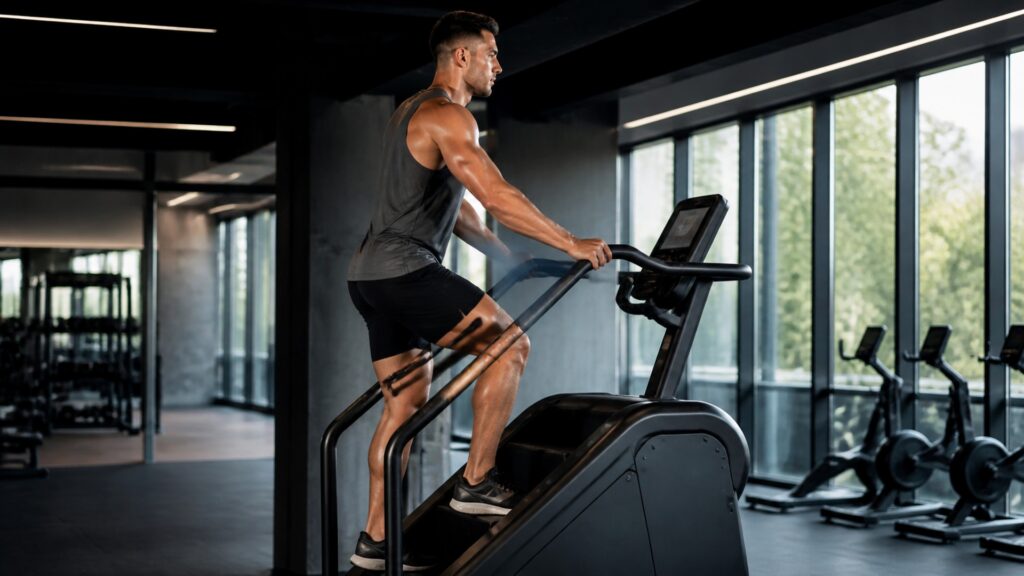
A stair-machine explanation focused on stepping mechanics, support, controls, limits, and practical comparison.
Tip: Keep the explanation tied to the step path and upright support before interpreting intensity labels.
These definitions connect the main idea to the variables, limits, and practical signals readers need to compare options.
One repeated stair-machine step from placement through return.
The way a moving stair tread cycles back through the machine.
The usable area where the foot meets the tread or pedal.
Body position influenced by hand contact on rails.
The machine's recreation of repeated upward stepping.
The route off the machine after stepping.
Tip: Follow the foot first, then the rails and exit path; that order keeps the pattern specific.
The stair-machine movement pattern is upright stepping against treads or pedals. The user repeats foot placement rather than turning a crank, sliding on a rail, or walking on a belt.
The repeated step is the article's central idea.
Two stair machines can both simulate climbing while asking for different step depth, lift, and foot placement.
Geometry explains why stair machines are not interchangeable.
Handrails can steady the user, hold controls, or encourage leaning. They affect the body around the step path without becoming the movement path.
Support contact modifies the pattern rather than replacing it.
The stair pattern differs from bike cadence, rowing strokes, elliptical loops, and treadmill gait because the user repeats vertical foot placement on a machine.
Movement pattern prevents noun-swappable comparisons.
Because the step pattern repeats, awkward tread spacing, rail reach, or dismount layout can matter quickly. That does not create a medical conclusion.
Repetition makes fit consequential without proving health outcomes.
The movement-pattern lens explains how stair machines organize the feet, posture, rhythm, and exit path.
It distinguishes step cycles from bike cadence, rowing strokes, treadmill belts, and elliptical loops.
It shows why tread depth, rail posture, and repeated placement are not minor details.
It cannot evaluate pain, diagnose gait, or prescribe a machine for a person.
It also cannot prove that one stair design is better without product-specific dimensions.
Common shortcuts and misunderstandings can make the topic seem simpler than it is.
It is repeated stepping on controlled treads or pedals, not free walking gait.
Controls change pace or load; the basic step path remains.
Rails support posture while the feet do the step task.
Tread depth, step height, and pedal design vary.
Tip: Treat strong claims as starting points for comparison, not final answers.
Concise answers to common questions readers may have after the main explanation.
It is repeated upright stepping on treads or pedals while the machine keeps the user in place.
It changes how each repetition feels and how the body meets the machine.
They affect posture and support, but the foot path remains the central movement.
An elliptical guides an oval stride, while a stair machine repeats steps.
No. It can describe demands, but personal safety questions need separate guidance.
Stair-machine movement pattern matters because the machine repeats upright stepping through a controlled path.
That pattern explains fit, comparison, and limits more clearly than generic talk about cardio intensity.
Use these Review Streets paths to connect the explainer to related categories, comparisons, and next decisions.
Use this to connect movement pattern to the machine mechanism.
Read this when repeated steps raise access, rail, or stop-control questions.
Use this to apply the step pattern to a bike comparison.
Choose a retailer
Prices checked regularly. We may earn a commission at no cost to you.