
Entry Height
The height or position involved in stepping onto the machine.
- It affects access.
- It varies by design.
- It is checked before speed.
Safety factors matter on stair machines because the user stands on moving steps or pedals. Step-on height, tread spacing, handrail grip, emergency stop access, dismount path, frame levelers, floor grip, and cord routing all shape ordinary use.
The right analysis stays concrete. It looks at the product's access, moving parts, supports, and manufacturer limits without claiming that a stair machine is medically safe or unsafe for a specific person.
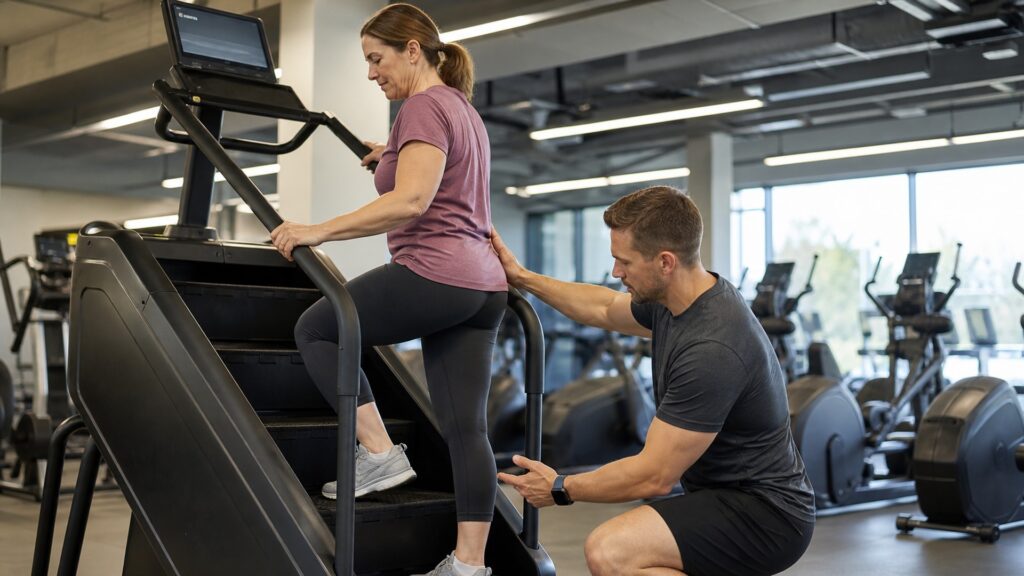
A stair-machine explanation focused on stepping mechanics, support, controls, limits, and practical comparison.
Tip: Keep the explanation tied to the step path and upright support before interpreting intensity labels.
These definitions connect the main idea to the variables, limits, and practical signals readers need to compare options.
The height or position involved in stepping onto the machine.
The boundary of the moving step surface.
A control or safety feature used to halt motion on powered models.
Open room beside the machine for mounting and dismounting.
The surface and shape of the handrail contact.
The route of a power cord around the machine.
Tip: Each term should point to a thing a person can inspect on the machine or in the manual.
A stair machine's safety picture starts before the session. The user has to step onto the machine and have a clear way to stop and dismount.
Access is a real safety factor because every use begins and ends there.
The user depends on handrails, tread spacing, and moving steps to behave consistently. Loose rails or awkward foot placement can change control.
Predictable contact keeps the stepping task manageable.
Many stair machines move under power. Emergency stops, speed reductions, and control response should be easy to understand before stepping faster.
The safety question is how motion stops, not just how it starts.
A stair machine can feel different once rhythm and level increase. Levelers, floor grip, frame width, and weight limits matter under actual use.
Stability should be judged while the machine is used, not only parked.
Equipment safety factors can be inspected, but they cannot decide pain, balance limits, injury history, or medical restrictions.
The article stays with product-level checks.
Safety-factor analysis is helpful when it identifies observable setup and machine-control details before a user steps faster.
It turns vague safety talk into checks for entry, rails, treads, stop controls, clearance, and floor contact.
It explains why powered motion and elevated stepping need product-specific attention.
It cannot clear a person for exercise or judge pain, balance, injury history, or medical restrictions.
It cannot replace the manual for a specific stair-machine model.
Common shortcuts and misunderstandings can make the topic seem simpler than it is.
A stair machine still requires stepping onto moving or elevated surfaces.
Rails help only if they are secure, reachable, and used appropriately.
Stop controls matter anywhere powered steps are used.
Product features cannot decide individual medical questions.
Tip: Treat strong claims as starting points for comparison, not final answers.
Concise answers to common questions readers may have after the main explanation.
Check step-on access, clearance, and dismount path before using the machine.
They support balance and control while the feet manage moving steps.
Yes. The user should know how the machine slows or stops before pace increases.
They can help some setups, but they should not hide rocking or poor leveler adjustment.
No. It covers product-level factors only.
Stair-machine safety factors matter because the machine combines elevated access, repeated stepping, rails, powered motion, and frame stability.
Useful safety analysis stays observable and stops before making personal medical claims.
Use these Review Streets paths to connect the explainer to related categories, comparisons, and next decisions.
Use this to understand the powered or resisted step mechanism behind the checks.
Read this to connect repeated stepping with access and rail use.
Browse stair-machine types after identifying safety factors to compare.
Choose a retailer
Prices checked regularly. We may earn a commission at no cost to you.