
Warmup Role
A warmup role prepares the body for movement without exhausting it.
- Example: using a mobility stick for gentle shoulder range before lifting
- Check: keep the effort light and repeatable
- Limit: long intense holds may reduce readiness
Workout role matters because stretching tools can be used before training, after training, during mobility work, or as part of a recovery routine. The same strap, block, band, or wheel can be helpful or distracting depending on where it sits in the session.
A stretching tool should make the workout easier to organize and safer to control. It should not turn every warmup, cooldown, or recovery block into a harder stretch than the body needs that day.
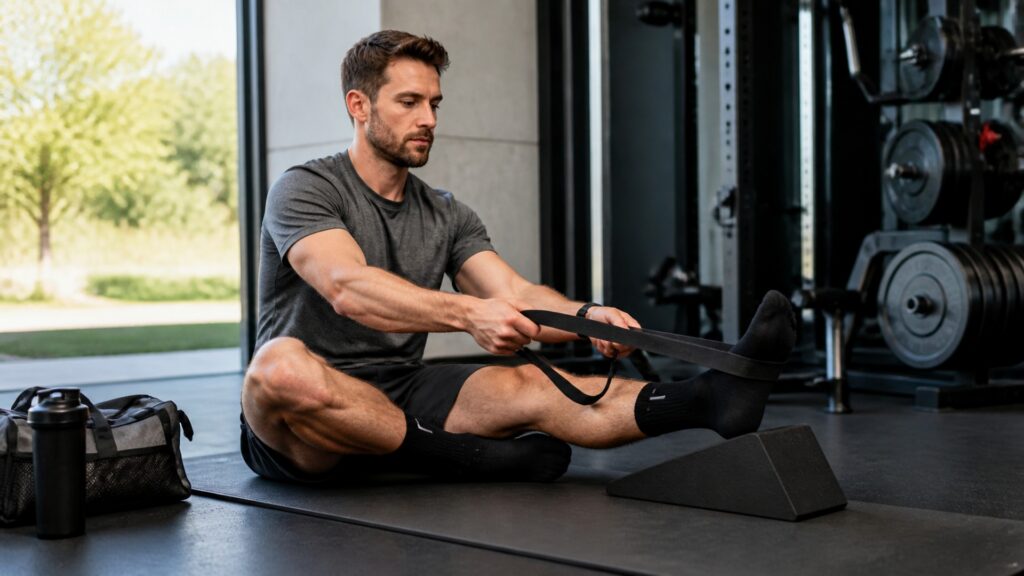
A practical look at warmups, cooldowns, mobility sessions, recovery work, and when a tool is unnecessary.
Tip: Define the job before using the tool. A warmup, cooldown, and recovery session should not all feel the same.
These concepts explain how stretching tools fit into different parts of training.
A warmup role prepares the body for movement without exhausting it.
A cooldown role helps the user settle after training with controlled positions and breathing.
A mobility session focuses on improving usable range and control.
Recovery support uses tools to reduce strain while the body calms down.
Session priority is the main outcome the workout is supposed to produce.
Dose control is how much range, tension, and time the user applies.
Tip: The role should decide the dose, not the other way around.
Stretching tools can help a warmup when they make movement smoother and more controlled. They can hurt the session when they create long, intense holds before the main work starts.
A warmup tool should leave the body ready to train.
Cooldown use is different because the body is already tired. A strap or block can make positions easier, but fatigue can also make force harder to judge.
Cooldown stretching should feel controlled, not competitive.
A stretching tool is more useful when the user knows what range or position needs attention. Random stretching can add time without improving the movement that matters.
Mobility work should connect back to a real movement need.
Recovery work should help the body calm down. Tools are useful when they reduce effort, support relaxed breathing, and make the position easier to leave.
Recovery support should lower stress rather than add another hard effort.
Not every stretch needs equipment. If the user can reach and hold a position comfortably without a tool, adding one may create unnecessary complexity or force.
The best workout role is the one that makes the session clearer.
The value depends on whether the tool supports the session goal.
They make positions easier to reach, support, and control.
They can organize warmups, cooldowns, mobility work, and recovery blocks.
They can turn light preparation into forced stretching.
They can add complexity when bodyweight positioning is enough.
A tool does not have one universal job in every session.
They can also support warmups and mobility work when the intensity stays appropriate.
The right depth depends on whether the goal is preparation, recovery, or mobility practice.
Many stretches work better with no tool when the user already has control.
Recovery work usually benefits from lower effort and easier breathing.
Tip: Use the tool to support the session, not to make every session harder.
Short answers for placing stretching tools in a routine.
Sometimes. Use them before workouts when they improve movement without causing fatigue or overstretching.
They can be useful after workouts if they reduce strain and keep the stretch easy to control.
They can be central to a mobility session, but they are not the same as strength or conditioning work.
Skip it when it adds force, setup time, or distraction without improving control.
Let the workout role decide how much range, tension, and time the tool should add.
Stretching tool workout role matters because the same tool can support preparation, cooldown, mobility, or recovery in different ways.
The safest use matches the tool's intensity to the session's purpose.
Use these Review Streets paths to compare related categories and practical next decisions.
See how stretching tools change reach, support, and control.
Review safety checks before adding force or range.
Explore the stretching tools category.
Choose a retailer
Prices checked regularly. We may earn a commission at no cost to you.