
Solar Load
Radiant energy entering or striking the vehicle and becoming heat in glazing and cabin materials.
- Angle and season change intensity
- Color and material affect absorption
- Ventilation removes heat after entry
Sun protection matters because sunlight entering through glass delivers visible, ultraviolet, and infrared energy to occupants and interior surfaces. Absorbed energy heats the dashboard, seats, steering wheel, trim, and air; repeated exposure can accelerate fading, embrittlement, coating change, and adhesive failure while increasing cooling demand after parking.
No single product blocks every pathway. A removable windshield shade helps during parking but must never obstruct driving. Factory glazing and lawful film alter spectral transmission continuously, while covers protect selected surfaces and personal sun protection addresses occupant exposure. The useful system distinguishes heat from UV and glare, preserves night visibility, follows current law, and avoids trapping heat against sensitive equipment.
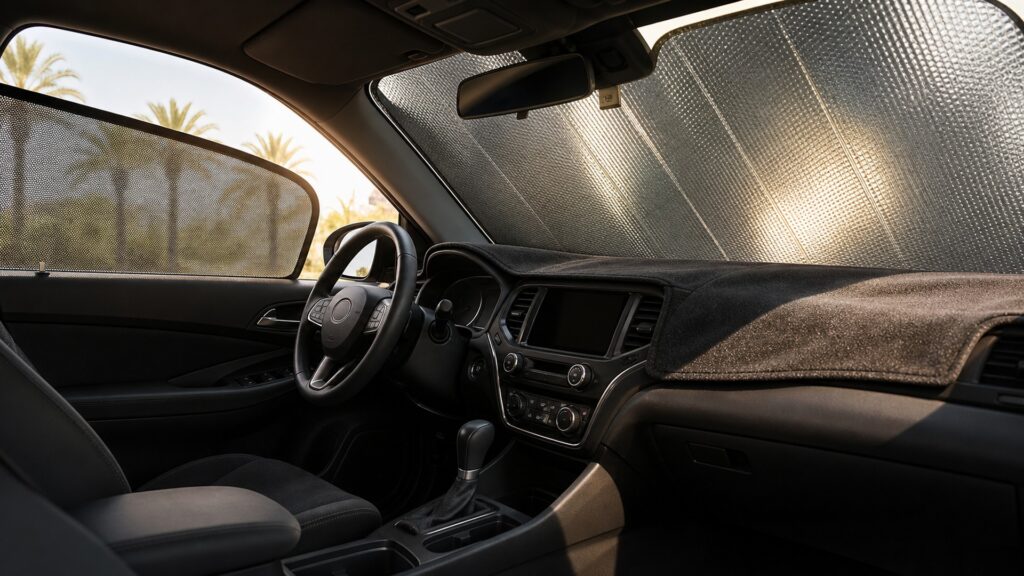
Sun protection works by reflecting, absorbing, filtering, shading, or covering specific wavelengths and surfaces while preserving the driver's required view.
Tip: Treat every removable shade as a parked-vehicle device unless the vehicle and law expressly provide otherwise; remove and secure it before moving so it cannot block sight lines or become loose cargo.
These terms distinguish spectral protection, thermal comfort, and driver visibility.
Radiant energy entering or striking the vehicle and becoming heat in glazing and cabin materials.
The proportion of visible light passing through a glazing system.
Shorter-wavelength solar energy associated with skin exposure and material degradation.
Longer-wavelength radiation commonly associated with solar heat transfer through or from glazing.
Temperature rise while a parked vehicle accumulates solar energy faster than it loses heat.
A removable barrier positioned to reflect or intercept sunlight before it reaches selected interior surfaces.
Tip: Ask for measured transmission by wavelength range and the combined glass-film result; a dark appearance alone does not quantify UV or heat performance.
Sunlight transmitted through glazing is absorbed by dark dashboards, seats, carpet, and trim, which warm and transfer heat to cabin air and occupants. NREL research shows that limiting solar gain can reduce soak temperature and later cooling demand.
Cooling the air alone does not instantly remove energy stored in interior surfaces.
A parked shade intercepts a major opening temporarily; solar-control glazing is built into the vehicle; film modifies existing glass; dash and seat covers protect local surfaces. Each has different spectral performance, legal status, installation risk, and permanence.
Layered protection is effective only when each layer has a defined job and does not compromise visibility or equipment.
Laminated windshields and tempered side glass can attenuate UVA and UVB differently, and vehicles vary. Long-duration drivers and photosensitive occupants may need clothing, sunscreen, shade positioning, or professionally evaluated lawful glazing solutions beyond assuming all glass performs alike.
Occupant exposure depends on wavelength, glass, angle, duration, body position, and any added certified barrier.
Reducing visible transmission can lessen daytime brightness while also lowering contrast at dusk, in rain, or at night. Federal glazing requirements apply to vehicle manufacture and commercial installation, while state rules can add different limits and exemptions.
A product that feels comfortable at noon can impose its greatest visibility cost under the darkest permitted driving conditions.
Bubbles, edge lift, scratches, metallic interference, damaged defroster lines, trapped debris, or a warped shade can reduce useful performance. Covers and shades should not trap moisture, stain surfaces, block sensors, or remain loose during travel.
Sun protection remains a system only when optical quality, secure handling, and material compatibility are inspected over time.
Sun-control choices can reduce heat, glare, UV exposure, and material aging while visibility and legal limits remain nonnegotiable.
Parked shades, compatible glazing or lawful film, surface covers, shade selection, and occupant measures can address different solar pathways.
Reducing radiation before interior mass absorbs it can improve touch temperatures and shorten the cooling burden after heat soak.
No shade, tint, or coating keeps a parked cabin safe for people, children, animals, medicines, batteries, or heat-sensitive objects.
Darkness is not a universal measure of UV or infrared performance, and excessive visible-light reduction can impair driving under low-light conditions.
These myths collapse UV, heat, glare, and visible darkness into one performance claim.
Visible darkness does not directly quantify infrared or total solar-energy rejection. Film construction, wavelength response, glass absorption, installation, and test method matter, while darker visible transmission can impose a larger night-visibility penalty.
Laminated windshields usually attenuate UV strongly, but transmission varies by wavelength and glass construction, and side windows can differ. Photosensitive occupants and frequent drivers should not assume identical protection at every window.
Ventilation can reduce part of the temperature rise but cannot eliminate solar heating of cabin surfaces or guarantee safe conditions. Never leave children, animals, or heat-sensitive occupants based on a ventilation assumption.
Any shade that blocks requisite visibility, shifts, reflects into the driver's view, or becomes loose creates risk. Remove it completely before moving and store it so it cannot enter controls or occupant space.
Tip: Separate wavelength behavior, parking use, occupant protection, and legal visibility before judging any product.
These answers cover UV, infrared claims, tint law, shade orientation, and protecting electronics or interior materials.
Follow the product instructions. Many reflective designs place the reflective face toward incoming sunlight, but construction and mounting differ. Ensure complete stable coverage while parked and avoid damaging cameras, mirrors, sensors, or glass.
Use documented spectral test results for the exact glass or film, not color. Vehicle glass markings, manufacturer data, professional measurement, and medical guidance can help when photosensitivity or long occupational exposure raises the consequence.
No. Permitted visible transmittance, reflectivity, windshield bands, medical exemptions, certificates, and enforcement can vary widely. Check current rules where the vehicle is registered and driven before installation or interstate travel.
Incompatible backing, trapped grit, adhesive, concentrated reflections, blocked ventilation, high glass temperature, or poor cleaner choice can mark surfaces or electronics. Use approved materials, keep interfaces clean, and inspect after severe heat.
Combine shade when available, a fully removed parked windshield barrier, appropriate lawful glazing, clean covered surfaces, and preconditioning where supported. Ventilate safely before entry and verify touch temperatures before placing occupants inside.
Sun protection matters because solar radiation heats interior mass, exposes occupants, creates glare, and accelerates material change through pathways that glass, shades, films, and covers affect differently.
Use measured, lawful barriers for defined wavelengths and surfaces, preserve the required view, remove parked shades before driving, and never treat heat reduction as occupant-safe parking.
These explainers show how sun barriers interact with upholstery, accessory placement, visibility, and a driver's supported view of the road.
Review how shades, films, covers, and stored barriers must preserve visibility, sensors, materials, airbags, and crash retention.
See how sunlight, heat, dye transfer, waterproof layers, and cleaning affect protected seat surfaces.
Maintain an unobstructed sight line, proper airbag distance, and supported posture when adding glare or comfort aids.
Choose a retailer
Prices checked regularly. We may earn a commission at no cost to you.