
Body position
Body position is how the swimmer's head, torso, hips, and legs align in the water.
- Small changes can affect drag.
- Gear can reveal or hide problems.
- Fatigue can alter position.
Swim technique matters because water punishes small alignment and timing errors. A lifted head, dropped hips, rushed breath, slipping catch, or mistimed kick can create drag that fitness alone has to fight every length.
Technique is not a single perfect stroke shape. Pool events, open water, body proportions, mobility, breathing comfort, and training goals all change what the swimmer needs to refine.
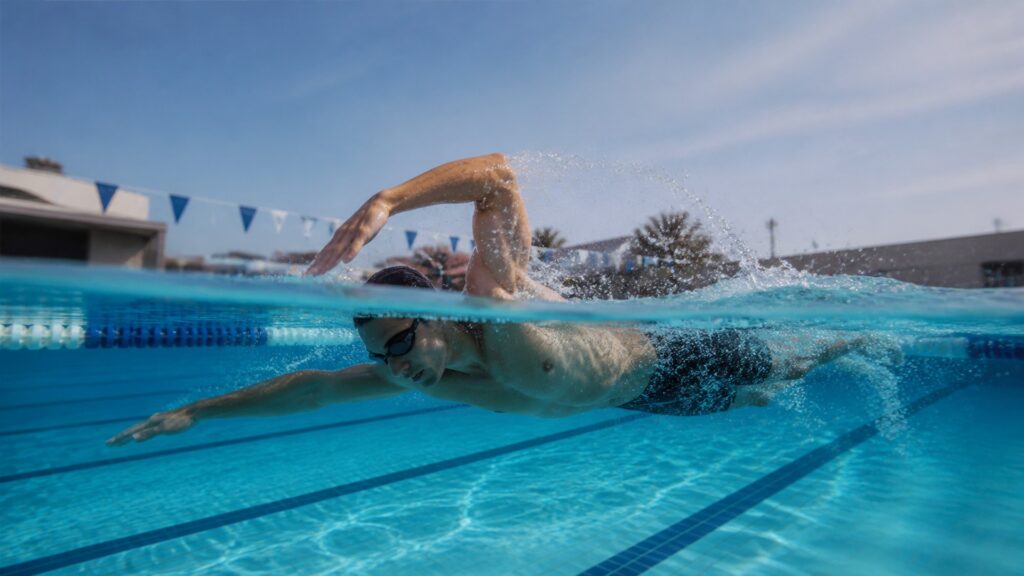
Swim technique matters when body position, catch, breathing, rotation, kick timing, and drag determine how efficiently the swimmer moves through water.
Tip: For swim technique, decide which variable is actually changing before comparing products.
Body position is how the swimmer's head, torso, hips, and legs align in the water. The rest of these concepts explain where swim technique changes the swim or training task.
Body position is how the swimmer's head, torso, hips, and legs align in the water.
The catch is the moment the hand and forearm begin holding water for the pull.
Breathing timing is when and how the swimmer turns for air.
Rotation is the body roll that links reach, pull, and breathing.
Kick timing is how leg rhythm supports the stroke.
Drag is water resistance against the swimmer.
Tip: The catch is the moment the hand and forearm begin holding water for the pull.
Swim technique matters because poor alignment creates resistance every stroke.
Technique is how swimmers negotiate drag.
Moving the hand is not enough; the swimmer needs pressure against the water in a useful direction.
Propulsion depends on water connection.
Breathing is necessary, but timing and head position decide how much it changes the body line.
Breathing is a technique skill.
Buoys, fins, paddles, snorkels, and boards change feedback.
Technique tools need a target.
Technique work is best when one variable is chosen and retested.
Swim technique matters when it solves a real stroke problem.
Swim Technique is useful when its mechanism is matched to a specific swim or training task rather than a generic improvement promise.
It explains what swim technique changes during real use.
It gives swim technique a practical decision frame based on mechanism, setup, and limits.
Swim Technique cannot guarantee performance, safety, recovery, injury prevention, or technique improvement.
Swim Technique decisions still need coaching or medical context when pain, symptoms, open-water risk, heavy impact, or individualized programming is involved.
Common shortcuts and misunderstandings can make the topic seem simpler than it is.
Swim Technique changes with setting, skill, fatigue, conditions, and the specific drill.
Extra features help only when they solve the actual technique, setup, or movement problem.
Gear and drills can support training, but they cannot promise safety, performance, recovery, or adaptation.
Pressure, speed, resistance, or visibility can feel obvious without proving the training target is correct.
Construction, fit, rebound, buoyancy, drag, and use conditions often matter more than the category name.
Tip: For swim technique, treat the tool label as a starting point and inspect the mechanism, setting, and limits.
Concise answers to common questions readers may have after the main explanation.
Start with the exact mechanism swim technique changes, then decide whether that mechanism fits the swim, drill, lift, or conditioning task.
No. Swim Technique can support better decisions, but outcomes depend on technique, progression, recovery, setting, and individual response.
Compare the fit, construction, movement demand, setup, and evidence limits before comparing swim technique by brand language.
Use controlled training sessions to test swim technique before relying on it during races, open water, hard throws, or demanding workouts.
Expert help is useful when swim technique involves pain, symptoms, open-water safety, complex technique, or individualized programming.
Swim Technique matters when it changes a named swim, strength, power, or movement-training task.
The useful decision about swim technique follows mechanism, fit, setup, transfer, and evidence boundaries.
Use these related explainers to continue the Review Streets fitness decision path around swim technique.
Use it to place this swimming topic inside the full gear system.
Read it when the gear decision is really about changing stroke mechanics.
Use it before adding fins, paddles, buoys, boards, or snorkels to training.
Choose a retailer
Prices checked regularly. We may earn a commission at no cost to you.