
Load Index
A numerical code in the tire service description corresponding to a standardized maximum load value.
- The lookup value depends on the code
- It is tied to the marked tire size
- It does not raise vehicle ratings
A tire's load rating is the boundary between the weight applied at one wheel position and the load that its air-supported casing can carry under defined conditions. The sidewall number is not a stand-alone payload allowance: inflation, size, service type, speed, and single or dual installation determine what that tire can support.
The rating matters most when weight moves. Passengers, cargo, accessories, trailer tongue load, braking, cornering, and uneven loading can push one axle or corner beyond expectation while the vehicle remains below its advertised maximum. A sound decision checks the vehicle placard and axle ratings, the exact tire's service description, an appropriate load table, and measured loaded axle weights—not sidewall maximums added into an imaginary vehicle capacity.
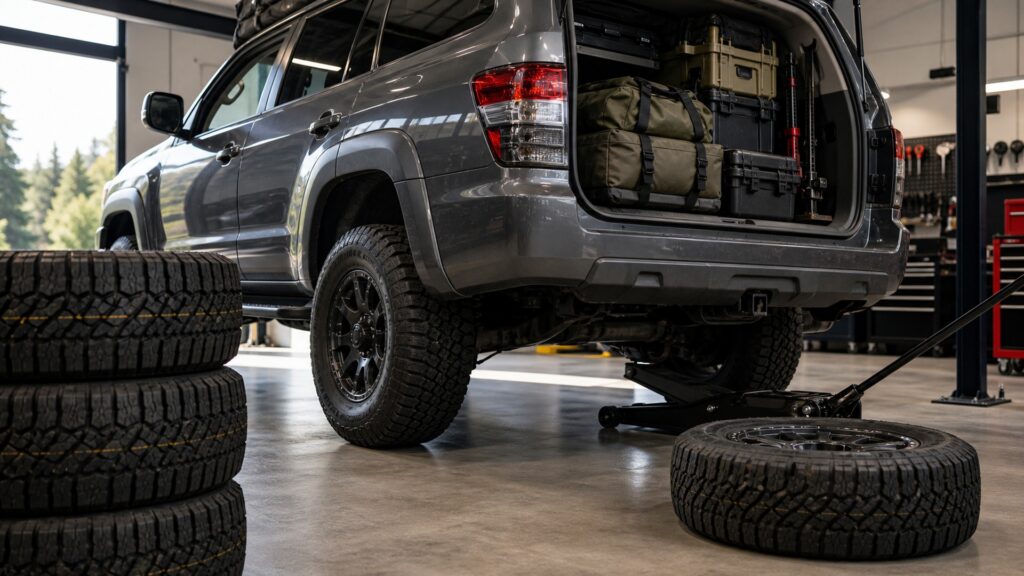
Capacity is credible only when vehicle limits, measured distribution, tire size, inflation, and service conditions describe the same loaded trip.
Tip: Weigh the vehicle as it travels—with occupants, cargo, accessories, fuel, and trailer attached—then compare each axle with its rating and each tire pair with the correct pressure-based capacity.
These terms keep tire capacity, vehicle capacity, and inflation-based capacity from being mistaken for one number.
A numerical code in the tire service description corresponding to a standardized maximum load value.
A tire-industry table relating a specified tire size and inflation pressure to supported load.
Gross Axle Weight Rating set by the vehicle manufacturer for a specific front or rear axle.
The vehicle maker's cold inflation recommendation for the original tire size and intended loading condition.
A tire marking describing a strength and pressure category rather than the weight carried by itself.
Deliberate margin between expected operating load and the allowable tire or axle boundary.
Tip: No load number is useful until its reference condition—size, pressure, speed, and application—is known.
The tire carcass provides shape and containment, but compressed air supplies the principal load support. At lower cold inflation, the casing deflects farther for the same weight, increasing strain and heat; the load table therefore assigns less capacity at that pressure.
A high load index cannot compensate for insufficient pressure.
A payload sticker summarizes a vehicle limit, but real placement decides axle load. Trailer tongue weight usually bears heavily on the rear axle; roof cargo raises the center of gravity; drawers, bumpers, batteries, and tools may permanently consume capacity.
Total scale weight can look acceptable while one axle or tire pair is overloaded.
The maximum-load and maximum-pressure markings identify limits for that tire under stated rules. They do not override the door placard, GAWR, wheel rating, axle hardware, handling calibration, or the lower limit elsewhere in the system.
Capacity is capped by the weakest applicable rating, not the largest number on the sidewall.
Each rotation bends the sidewall and tread package. Load, low pressure, sustained speed, ambient heat, and internal damage raise temperature and fatigue. Some high-load or high-speed applications require manufacturer-defined adjustments rather than simple load-index matching.
A static capacity lookup is necessary, but operating heat determines whether the casing can sustain the trip.
Start with the placard size, load index, speed symbol, and pressure. Confirm replacement tires meet vehicle-maker requirements, then evaluate loaded axle weights, intended towing, wheel ratings, clearance, and any documented alternate-size procedure.
The right replacement maintains the vehicle's required envelope; a bigger sidewall number does not redefine it.
Tire capacity, wheel capacity, axle rating, and overall vehicle rating apply simultaneously; the lowest relevant limit wins.
Actual loaded axle weights remain below GAWR, and each tire pair has sufficient pressure-based capacity for its measured share with sensible distribution margin.
The exact tires and wheels satisfy vehicle requirements for size, service description, pressure, speed, fitment, TPMS, and the heat-producing duty they will see.
It cannot increase payload, GAWR, GVWR, towing allowance, hitch rating, wheel capacity, braking ability, or structural limits established by the vehicle manufacturer.
It cannot repair an underinflated, aged, damaged, overloaded, mismatched, or heat-stressed tire, nor justify operating outside the documented load and inflation conditions.
Load-rating shortcuts are risky because they detach a standardized tire code from the vehicle and pressure conditions that give it meaning.
Adding tire capacities ignores vehicle curb weight, axle distribution, GAWR, GVWR, wheel ratings, and suspension or brake limits. Payload comes from the vehicle certification information, then loaded axle measurements test how that payload is actually distributed.
Extra casing capability may be useful in an approved application, but it can bring different inflation needs, mass, stiffness, heat behavior, and ride. Safety depends on complete fitment and documented pressure, not the letter alone.
The sidewall maximum is not the routine vehicle recommendation. Begin with the door placard for the original fitment and use documented guidance for changed loads or sizes; never inflate beyond tire, wheel, or equipment limits.
GVWR controls total vehicle weight, but a poorly distributed load can exceed rear GAWR or one tire's capacity first. Separate axle-scale readings and sound side-to-side loading are needed for a meaningful tire check.
Tip: Keep the tire, wheel, axle, and vehicle numbers in separate columns until the complete loaded case is proven.
These answers resolve the practical code, scale, towing, replacement, and pressure questions that arise after the basic rating is understood.
The sidewall service description places a load index beside the speed symbol after the size. Use a recognized index table for its value, then confirm any XL, LT, single, dual, or special-service markings that change interpretation.
Use a certified scale with the vehicle configured for travel. Record steer, drive, and trailer axle groups where applicable; separate left-right weights when possible, and include passengers, cargo, fuel, accessories, and actual trailer tongue load.
Not automatically. Towing changes axle loads, especially at the rear, but the correct cold pressure follows vehicle and tire guidance for the measured load and approved fitment. Never exceed tire or wheel limits to chase stability.
Possibly, when size, load index, speed rating, pressure requirements, wheel fit, clearance, TPMS, and vehicle guidance all align. The XL marking alone does not prove compatibility or require inflation to its marked maximum.
Service description, load range, construction, and intended category can differ within a nominal size. Read the full markings and the applicable load table; do not assume dimensions alone establish identical capacity, pressure, or service.
Tire load ratings matter because a real axle load must remain within the pressure-based capability of each tire while every wheel, axle, and vehicle limit also remains intact.
Use the certification placard as the baseline, weigh the travel configuration, consult the correct load table, and preserve margin for heat and distribution instead of inventing payload from sidewall maximums.
The next explainers show how pressure activates load capacity and how wheel geometry or construction can introduce separate limits even when the tire code looks sufficient.
Connect cold inflation to casing deflection, heat, footprint shape, and the capacity shown in the correct load table.
Compare cast and forged wheel manufacture without overlooking the wheel's own tested load, dimensions, and application.
Trace load and road force from the contact patch through the carcass, bead, rim, hub, and fasteners.
Choose a retailer
Prices checked regularly. We may earn a commission at no cost to you.