
Bed Rail
The upper bed-side structure used by many cover clamps, tracks, or seals.
- Rail shape varies by truck
- Liners can change clamp contact
- Loads must not deform it
Tonneau covers matter because an open pickup bed exposes cargo to rain, snow, sunlight, wind, road spray, casual view, and aerodynamic lift. A properly fitted cover creates a managed upper boundary that can reduce direct exposure and discourage opportunistic access while preserving the bed's utility.
That boundary is not a sealed vault or a cargo tie-down. Water can enter at rails, hinges, stake pockets, tailgate gaps, and drains; a locked cover may still be forced; loose cargo can shift beneath it. Safe use therefore combines cover retention, independent load securement, drainage, clearance, maintenance, and a verified open-or-closed travel configuration.
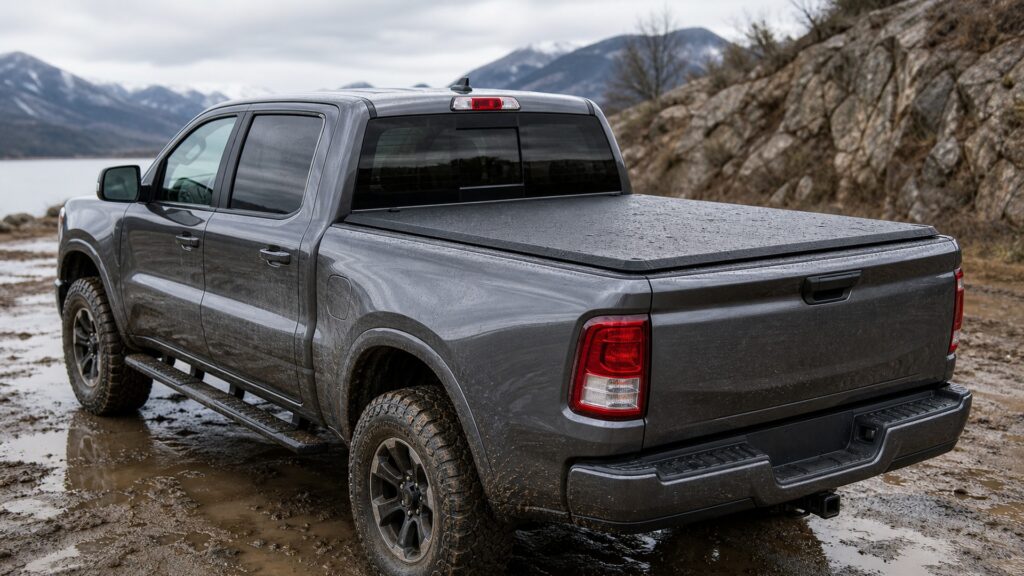
The useful model follows weather, air pressure, access, cargo movement, and latch forces through the bed system.
Tip: Before the first highway trip, close and latch the empty cover, verify every attachment by hand, and check the manufacturer's speed, position, and open-travel rules.
These concepts separate shielding from restraint and deterrence from security.
The upper bed-side structure used by many cover clamps, tracks, or seals.
Complete capture of the cover's locking or retaining mechanism.
Channels, seals, overlaps, and drains that redirect rather than eliminate water.
Independent equipment preventing cargo from shifting, rising, or leaving the bed.
Pressure that tends to lift flexible or rigid cover surfaces during travel.
The space panels, slats, hinges, and hardware occupy while opening or closing.
Tip: Use the exact bed length, rail shape, liner, cap, rack, tailgate, camera, and stake-pocket configuration when evaluating fitment.
A cover blocks direct precipitation and sunlight while seals, overlaps, and channels send water toward selected exits. It also changes airflow over the bed, so unsupported fabric, loose panels, or unlatched edges can experience significant movement.
Weather resistance comes from controlled paths and maintained retention, not from assuming the bed becomes watertight.
Covered cargo is less visible and may require more time to reach, especially with a locked tailgate. Yet covers, locks, rails, and tailgates have force limits, and cargo beneath can still slide, tip, or strike the cover.
The cover manages access and exposure; independent restraints manage mass.
Clamp geometry, rail accessories, drop-in liners, spray-in thickness, stake-pocket racks, tailgate caps, power outlets, and camera systems can alter installation. Some combinations need adapters or are mutually exclusive.
A correct bed length is only the first fitment dimension.
Vinyl can shrink or stiffen, seals compress, hinges collect grit, slats wear, drains clog, clamps loosen, and coatings corrode. Ice should be released by approved methods rather than forcing moving parts or striking panels.
Maintenance protects both weather performance and the cover's ability to remain attached at speed.
Folding, rolling, retracting, and one-piece designs have different approved positions. Open covers may require straps, prop rods, locks, or full removal; closed covers require all latches engaged and tailgate sequencing followed.
A cover is safe only in a manufacturer-approved position with its complete retention system functioning.
Useful protection comes from coordinated retention, drainage, cargo securement, and operating discipline.
They reduce direct weather, sunlight, wind, road contamination, and casual visibility while keeping the bed usable.
A well-managed cover can organize airflow and make sensitive cargo easier to package inside dry containers.
Covers are not automatically watertight, theft-proof, load-bearing, or rated to restrain cargo in a crash.
Poor latching, excess snow, tall cargo, blocked drains, loose clamps, or an unapproved open position can damage the cover or create a road hazard.
These myths confuse an upper boundary with a sealed, structural cargo enclosure.
Most systems manage water rather than seal every gap. Rain can enter around tailgates, rails, hinges, stake pockets, or drains, especially during wind or washing, so sensitive cargo still needs protected containers.
Concealment and a latch deter casual access but cannot guarantee resistance to tools, cutting, prying, tailgate attack, or stolen keys. Avoid leaving irreplaceable valuables and understand the exact lock and bed construction.
The cover generally is not a rated restraint for shifting mass. Braking, cornering, bumps, or a crash can move cargo into panels or out through a failure, so rated anchors and restraints remain necessary.
Each design specifies approved travel positions and required straps, locks, or supports. An improvised opening can expose panels to uplift, block rear visibility, strike the cab, or release components into traffic.
Tip: Verify the exact cover's water, load, security, and travel-position limits before relying on it.
These answers address security, car washes, snow, tall cargo, and maintenance.
Follow the exact cover and wash instructions. Brushes, high-pressure jets, chemicals, dryers, and moving panels can damage some designs or lift edges. Remove or secure the cover as specified and inspect afterward.
Use only the manufacturer's distributed-load guidance for the exact model and installed condition. Wet snow is far heavier than powder, and uneven accumulation can overload fabric, slats, panels, hinges, rails, or clamps.
Only when the cover is fully removed or secured in an approved open position and the cargo is independently restrained, visible, and legal. Never force panels over tall or sharp objects or let cargo contact moving hardware.
Pickup tailgates and bed corners commonly contain irregular gaps. Seal alignment, truck rake, wind, drain routing, liner geometry, and water volume affect entry. Add only compatible seals without blocking drainage or operation.
Check clamps, rails, hinges, panels, fabric tension, latches, straps, locks, seals, drains, wiring, tailgate operation, cargo height, and independent restraints. Stop immediately for flapping, lifting, rattling, or changed rear visibility.
Tonneau covers matter because they create a controlled boundary against direct weather, airflow, sunlight, and casual access while preserving pickup-bed flexibility.
Their benefit depends on exact fitment, complete latching, approved travel positions, drainage, maintenance, and independent cargo restraint; no cover turns an open bed into a watertight vault or structural tie-down.
These explainers place tonneau covers within cargo security, weather exposure, and the broader exterior system.
Review how exterior barriers, mounts, drainage, clearance, and inspection work together around the vehicle.
See how water, sunlight, freezing, road salt, and temperature cycling reach vehicle materials through different paths.
Decide when a removable bed cover is sufficient and when a permanent body, rack, or cargo-system modification is justified.
Choose a retailer
Prices checked regularly. We may earn a commission at no cost to you.