
Water Intrusion
Unwanted movement of liquid into body cavities, trim, cargo, electrical, or occupant areas.
- Entry can occur far from evidence
- Capillary paths move water
- Drying must follow repair
Weather protection matters because vehicles are assemblies of painted metals, bare fasteners, polymers, glass, adhesives, seals, electrical connectors, fabrics, and lubricated mechanisms. Rain, salt spray, ultraviolet radiation, heat, and freezing do not age those materials in the same way or enter through the same route.
Effective protection therefore uses layers: intact paint and coatings, clear drains, healthy seals, clean underbody surfaces, compatible covers, dry ventilation, and prompt repair of chips or leaks. Trapping moisture under a cover, blocking a drain, sealing over corrosion, or washing without controlling runoff can worsen the problem. The goal is to manage exposure and drying, not simply hide the vehicle from weather.
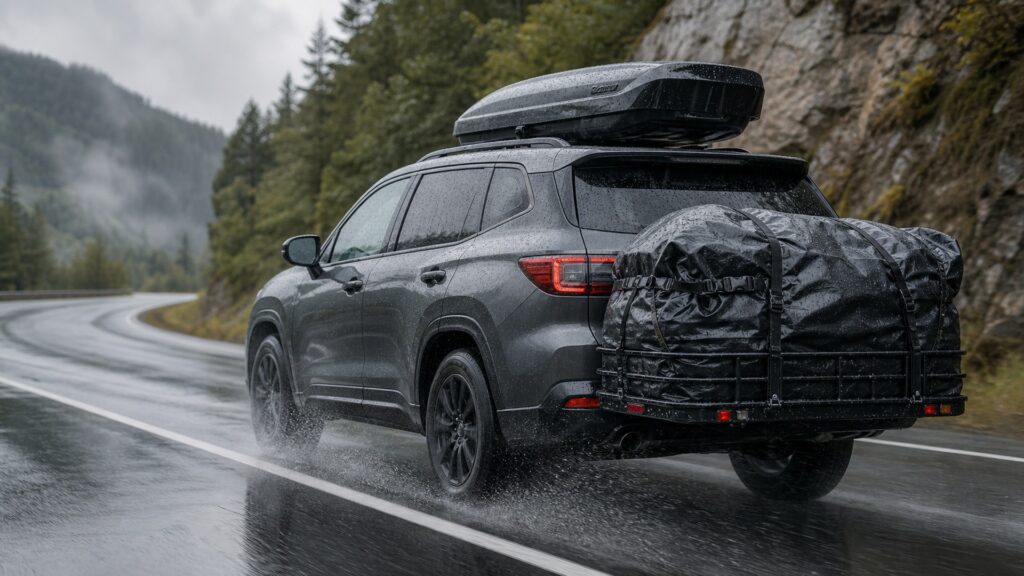
Protection works when water, salt, sunlight, and temperature are controlled without creating trapped contamination or blocked drainage.
Tip: After heavy rain or washing, check door bottoms, cowl drains, trunk wells, pickup beds, sunroof channels, spare-tire areas, and carpet edges for water that should have exited but did not.
These terms explain why weather damage often begins where it cannot be seen.
Unwanted movement of liquid into body cavities, trim, cargo, electrical, or occupant areas.
Deicing material that deposits chloride-rich residue on bodies, fasteners, brakes, and undercarriages.
Repeated freezing and melting that expands trapped water and changes seals or joints.
Compressible material that limits water, air, dust, or noise across a closure.
Water formed when humid air meets a surface below its dew point.
Designed channel carrying water from an entry area to a safe outlet.
Tip: Use vehicle-specific service guidance before applying sealers, undercoatings, lubricants, or drain-cleaning tools near sensors, high-voltage components, airbags, wiring, or body seams.
Some exterior joints are designed to admit small amounts of water and route it through channels. Seals reduce entry, while drains prevent accumulation. Blocking outlets can turn ordinary rain into soaked insulation, corrosion, odor, or electrical faults.
A dry result often depends on controlled exit rather than an impossible promise that no water crosses the outer surface.
Salt residue attracts and retains moisture, increases electrical conductivity, and concentrates in seams, fasteners, brake areas, and underbody crevices. Paint chips or damaged coatings expose metal and create small sites where corrosion can expand unseen.
Corrosion control requires removing contamination and restoring barriers before damage grows under an intact-looking edge.
Ultraviolet exposure can fade or embrittle polymers and coatings, while hot-cold cycles expand materials at different rates and stress adhesives, seals, plastics, and painted joints. Dark covers can also create high local temperatures.
Blocking rain while intensifying heat or trapping vapor is not complete protection.
Ice can bond wipers, seals, doors, tonneau panels, locks, and powered steps; packed snow adds mass and blocks lamps, sensors, vents, and drains. Forcing frozen mechanisms can tear seals, strip gears, or bend supports.
Winter protection includes reducing mechanical force, not merely preventing surface wetness.
A fitted cover can reduce sun, dust, precipitation, and contamination during storage, but a dirty, nonbreathable, wind-loose, or wet cover can abrade paint and hold condensation against the vehicle.
Storage protection succeeds when both the vehicle and the space beneath the cover can dry.
No single cover or coating addresses water, salt, radiation, temperature, and mechanical winter loads at once.
Intact coatings, maintained seals, open drains, controlled washing, dry ventilation, and prompt chip or leak repair interrupt different damage pathways.
A compatible cover or barrier adds value when it stays clean, secure, breathable, and clear of sensors and hot components.
Sealant cannot correct an unknown leak path, and undercoating can trap contamination or hide corrosion when preparation is poor.
Weather resistance does not make electronics, cargo, occupants, medicines, or batteries safe in a hot, flooded, or freezing vehicle.
These myths confuse hiding exposure with controlling moisture, contamination, and material change.
A nonbreathable cover can trap condensation, while wind and grit abrade paint. The correct cover must fit, remain secure, tolerate ultraviolet exposure, avoid hot components, and permit moisture management for the storage conditions.
Coating over salt, moisture, loose scale, or active corrosion can conceal rather than stop damage. Sound preparation, compatible chemistry, open drains, inspection access, and repair of affected metal are necessary before adding protection.
Many vehicle closures use both seals and internal water channels. Small amounts may pass an outer barrier and drain safely. The failure occurs when seals distort, drains clog, hoses detach, or water reaches unintended areas.
Garages reduce direct precipitation and sunlight but can retain humidity, road salt, melting snow, exhaust contaminants, or poor ventilation. A wet salted vehicle in a warm closed space still needs drainage, rinsing, drying, and inspection.
Tip: Trace where weather enters, where it should exit, and what must dry before adding another barrier.
These answers cover washing, covers, frozen doors, leak diagnosis, and seasonal inspection.
Rinse as conditions and vehicle guidance permit after meaningful exposure, prioritizing wheel wells, underbody, seams, and lower panels. Use a facility or method that manages contaminated runoff and avoid forcing water into sensitive components.
Generally wait until both vehicle and cover are clean and dry unless the exact system is designed for wet use and ventilation. Trapped moisture can promote spotting, mildew, corrosion, adhesive change, and grit movement.
Do not pull hard enough to tear seals or handles. Clear surrounding ice, use vehicle-approved warming or deicing methods, enter through another door if safe, and dry and maintain seals after the event.
Map when and where water appears, then inspect the highest plausible entry points, seals, body seams, drains, hoses, glass bonding, lamps, roof equipment, and prior repairs. Water can travel far before becoming visible.
Check paint chips, wheel wells, underbody coatings, fasteners, brake areas, drains, seals, wipers, lamps, sensors, battery terminals where applicable, cargo wells, carpets, cover mounts, and any crevice that retained salted slush.
Weather protection matters because water, salt, sunlight, heat, cold, and ice reach different vehicle materials through different entry, reaction, and load pathways.
Use layered barriers, maintained seals, open drains, contamination removal, compatible storage covers, complete drying, and prompt repair; protection fails when it traps moisture, hides corrosion, blocks drainage, or forces frozen mechanisms.
These explainers apply the weather model to finish protection, pickup-bed shielding, and lifecycle care.
Build a long-term preservation plan that detects small defects before weather exposure turns them into expensive deterioration.
See how a tonneau cover manages precipitation and airflow over a pickup bed without becoming a watertight enclosure.
Review how cleaning, paint condition, barriers, and prompt chip repair protect the exterior finish.
Choose a retailer
Prices checked regularly. We may earn a commission at no cost to you.