
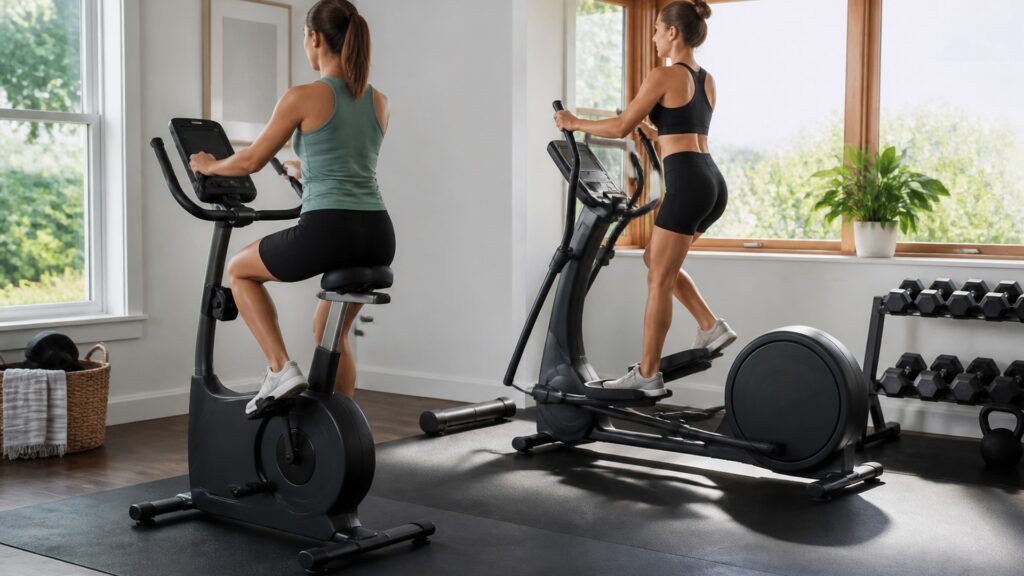
Why Upright Exercise Bikes Training Function Matters

Training function matters in upright exercise bikes because the bike's value depends on the rides it can support. An upright bike may be used for steady cardio, warmups, light intervals, rehabilitation-style routines, or low-impact exercise.

The best upright bike is not just the one with more programs. It is the one whose seat, pedals, resistance, console, and access make the intended workouts comfortable enough to repeat.

By: Review Streets Research Lab
Updated: October 6, 2026
Explainer · 8-12 min read
upright exercise bikes training function explainer hero image for Review Streets
What You'll Learn

How Training Function Shapes Upright Bike Value

A practical look at matching upright bike features to steady cardio, warmups, intervals, and home routines.

  • Why workout role should guide the choice
  • How resistance and comfort work together
  • Where console programs help
  • Why access and setup matter
  • How to choose for repeated use

Tip: Set seat height and resistance first, then judge the ride at the pace the user will actually repeat.

Definitions

Key Concepts Behind Upright Exercise Bikes Training Function

These concepts connect upright bike design to comfort, effort, setup, and workout use.

Upright Bike Position

Upright bike position places the rider on a saddle with the torso more vertical than a spin bike.

  • Example: sitting tall while pedaling with hands on fixed bars
  • Check: adjust seat height before judging comfort
  • Limit: some riders may still prefer back support

Seat Height

Seat height controls how much the knee bends through each pedal stroke.

  • Example: raising the seat until the leg extends comfortably
  • Check: pedal slowly and watch for hip rocking
  • Limit: too high or too low can make pedaling uncomfortable

Resistance Range

Resistance range is how much the bike can vary pedaling effort.

  • Example: using light resistance for warmups and higher resistance for intervals
  • Check: try several settings at normal cadence
  • Limit: high resistance is useful only when the motion stays controlled

Console Feedback

Console feedback shows workout information such as time, speed, distance, resistance, or heart rate.

  • Example: watching time and resistance during a steady ride
  • Check: confirm the display is easy to read
  • Limit: metrics do not matter if the bike does not fit

Pedal Path

Pedal path is the circular motion the feet follow during seated cycling.

  • Example: smooth pedaling without the knees drifting awkwardly
  • Check: test the stroke at an easy and moderate pace
  • Limit: pedaling can still bother some knees or hips

Workout Role

Workout role is the job the bike fills in a routine.

  • Example: steady cardio, warmups, intervals, or low-impact exercise
  • Check: match the bike to the rides the user will repeat
  • Limit: one bike may not fit every cardio preference

Tip: An upright bike works best when the seat, resistance, and controls fit the rider's routine.

Role

Start With The Ride The Bike Must Support

An upright bike can fill several roles. The best choice depends on whether the user needs steady cardio, warmups, intervals, or a simple daily ride.

  • Name the main ride type.
  • Choose features around that use.
  • Avoid paying for unused extras.

Training function starts with the routine.

Comfort

Comfort Controls Repeatability

Training only works when the rider can repeat it. Seat shape, seat height, pedal feel, and handlebar position all affect consistency.

  • Test the saddle.
  • Check knee comfort.
  • Ride long enough to notice pressure points.

Comfort is part of training value.

Resistance

Resistance Should Match The Workout

Light resistance may suit warmups or easy cardio, while higher resistance can support intervals. The range should feel smooth and usable.

  • Try easy and moderate settings.
  • Notice large jumps.
  • Confirm the rider can reduce effort quickly.

Useful resistance supports the role.

Programs

Programs Help Only If They Fit The User

Console programs can add structure, but they are not automatically useful. Clear controls and readable feedback often matter more.

  • Check display readability.
  • Try a simple program.
  • Make sure manual mode is easy.

Programs should make rides simpler.

Access

Access Affects Real Use

An upright bike has a higher seat and different mounting feel than a recumbent bike. The user should be able to get on and off confidently.

  • Practice mounting.
  • Check side clearance.
  • Keep the floor stable.

Easy access supports regular workouts.

Quick Reality Check

Where Training Function Helps And Where It Has Limits

Training-function checks connect bike features to real rides.

Where It Helps

It aligns comfort, resistance, console feedback, and access with intended use.

It separates useful features from extras the rider may ignore.

Where It Has Limits

It cannot fix a bike that does not fit the rider.

It does not replace medical or coaching guidance.

Common Myths

Misconceptions About Upright Bike Training Function

A simple bike still needs the right match.

More programs mean better training

Programs help only when the rider uses them.

Any upright bike works for intervals

Resistance changes need to feel smooth and controlled.

Comfort is separate from training

Comfort affects how often the rider can use the bike.

Compact size is the main feature

Fit and access may matter more than footprint.

Tip: Test the actual seat position, pedal feel, and resistance before trusting category claims.

FAQ

Frequently Asked Questions About Upright Bike Training Function

Short answers for practical upright bike decisions.

What training role fits upright bikes?

They often fit steady cardio, warmups, light intervals, and simple home routines.

What feature matters most?

Seat comfort, seat height, and smooth resistance matter most for repeat use.

Are programs necessary?

No. Programs can help, but manual control is often enough.

Can upright bikes support harder workouts?

Yes, if resistance range and fit support controlled effort.

What is the practical takeaway?

Choose an upright bike whose comfort, resistance, and access match the rides the user will repeat.

Bottom Line

Training function matters because an upright bike should match the workouts the user plans to repeat.

Prioritize seat comfort, smooth resistance, readable feedback, and easy access over unused extras.

Next Steps

Go Deeper or Compare Your Options

Use these Review Streets paths to compare related categories and practical next decisions.