
Forward Visibility
Extent and clarity of the road scene available through lighting, glazing, weather, and geometry.
- Curves shorten useful reach
- Low beams manage oncoming glare
- Dirty glass reduces contrast
Vehicle visibility matters in both directions. Drivers need enough contrast and illuminated distance to detect lanes, people, animals, debris, and curves; everyone else needs to detect the vehicle and understand whether it is braking, turning, reversing, stopped, or approaching.
Breakdowns can occur anywhere in that exchange. Weak or mis-aimed lamps reduce reach, excessive glare hides targets, dirty glazing scatters light, failed signals erase intent, cargo blocks mirrors, rain changes contrast, and speed consumes the available sight distance. A safe visibility system combines maintained lighting, clean optical surfaces, recognizable signals, correctly adjusted mirrors and cameras, weather-aware operation, and speed that permits action within what the driver can actually see.
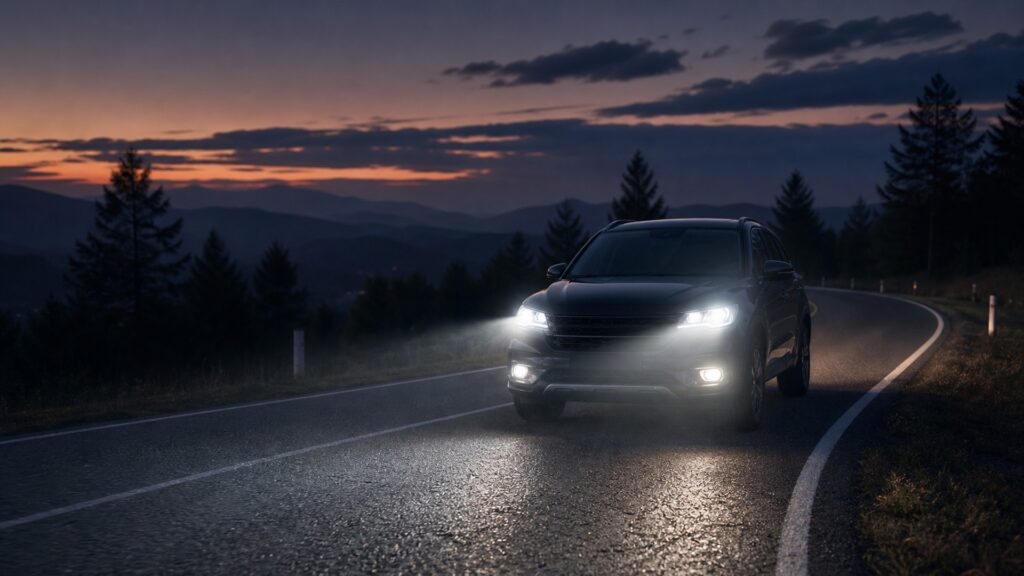
Visibility is useful only when a road user can see the object, understand it, choose a response, and complete that response before the distance is gone.
Tip: On a dark road, identify the farthest point where a low-contrast hazard would be recognizable—not merely illuminated—and ensure speed leaves room for perception, reaction, and braking.
These terms link optical performance to the time and distance needed for a safe response.
Extent and clarity of the road scene available through lighting, glazing, weather, and geometry.
Ability of the vehicle to stand out and be recognized in context.
Distance needed to perceive, react, and stop before reaching a hazard.
Correct interpretation of brake, turn, hazard, reverse, and marker indications.
Time the visual system needs to regain sensitivity after bright light exposure.
Area hidden by vehicle structure, cargo, seating, mirrors, cameras, weather, or surroundings.
Tip: Visibility varies with age, fatigue, weather, lighting, windshield condition, road geometry, target clothing, and glare; a daytime inspection cannot represent every driver or condition.
A target may receive light yet remain too similar to its background for a driver to identify. Beam intensity, angle, reflectance, size, movement, weather, and visual adaptation determine the distance at which recognition occurs.
Visibility should be measured by actionable recognition, not the first faint appearance of brightness.
Headlamps and markers show presence and width; brake lamps show deceleration; turn signals show intended direction; hazards indicate an unusual stopped or slow condition. Proper color, location, intensity, and separation let others decode the message quickly.
A vehicle that can be seen but cannot be interpreted remains unpredictable.
Interior windshield film, scratches, frost, water, worn wipers, mirror dirt, camera droplets, and lens haze scatter or block light. Nighttime glare can reveal contamination that looked minor in daylight.
Maintaining the receiving path can restore more useful contrast than adding another light source.
Bright oncoming lamps, high beams in mirrors, reflections from wet pavement, and excessive interior displays can constrict pupils or create veiling luminance. Recovery takes time while darker hazards remain hard to detect.
Glare control protects the visual sensitivity needed for everything outside the bright source.
Fog, rain, snow, curves, crests, darkness, dirty glazing, and weak lighting shorten the distance available. If the vehicle cannot stop or avoid within that visible path, no accessory can make the chosen speed safe.
The final visibility control is matching speed and following distance to what can actually be recognized ahead.
Drivers must detect and interpret the road while other users detect and interpret the vehicle.
Adequate beam reach, low glare, clear glazing, maintained signals, mirrors, cameras, and reflectors support earlier detection and more confident decisions.
Recognizable lighting helps others understand width, direction, braking, reversing, and abnormal stopped conditions.
Brightness cannot overcome excessive speed, dense weather, blind curves, fatigue, impaired vision, obscured signals, or a target with very low contrast.
Cameras and driver-assistance systems still depend on clean fields, calibration, environmental limits, and human supervision.
These myths confuse being illuminated with being detected, understood, and avoided in time.
Detection is not reciprocal. Background, angle, lighting, weather, vehicle color, blind zones, attention, and optical condition differ for each observer. Use required lights and never rely solely on eye contact or assumptions.
Useful stopping distance increases only when light reaches hazards without excessive glare and the driver can recognize them sooner. Speed, reaction time, road friction, curves, weather, and beam pattern still govern the available margin.
Many systems illuminate only the front and may use reduced intensity. They do not necessarily activate tail, marker, or instrument lighting. Use the required full lighting mode for darkness and reduced visibility.
Cameras add views but have finite fields, perspective distortion, latency, contamination, glare, darkness, and display limitations. Mirrors, direct observation, correct adjustment, low-speed checks, and awareness of vulnerable road users remain necessary.
Tip: Evaluate contrast, signal meaning, glare, and stopping distance together.
These answers cover daytime use, windshield haze, load effects, trailer signals, and adverse weather.
Interior residue, scratches, pitting, moisture, and wiper marks scatter point-source light toward the driver, especially under bright oncoming light. Clean both sides, maintain wipers and defogging, and replace glazing when damage compromises requisite visibility.
Yes. Loads can block mirrors, rear glazing, cameras, lamps, license plates, or sight lines. Reconfigure the load, use compliant extended mirrors when required, and verify signals and direct views before moving.
Use them when law or conditions require and whenever rain, snow, fog, smoke, dusk, tunnels, or low contrast make the vehicle harder to see. Confirm the rear lighting actually activates in the selected mode.
With the trailer connected, test tail, brake, turn, hazard, marker, clearance, and license-plate lamps; clean reflectors; verify wiring and grounds; adjust mirrors; and ensure cargo or accessories do not obstruct required lighting.
Reduce speed smoothly, use low beams and suitable fog lamps, increase following distance, avoid high beams, keep glazing clear, and leave the roadway at a safe designated location if visibility no longer supports controlled travel.
Vehicle visibility matters because safe road interaction requires enough distance to detect and recognize hazards while making the vehicle's presence, width, movement, and intent understandable to others.
Maintain lamps, aim, signals, glazing, mirrors, cameras, wipers, and reflectors; control glare; then match speed and spacing to the shortest real sight distance created by road, weather, and human vision.
These explainers develop the products that shape forward reach, signaling, and contrast when conditions become difficult.
Trace light through sources, optics, aim, weather, glazing, targets, and the driver's eye.
Learn why low, broad fog-light patterns can improve near-road guidance without restoring normal sight distance.
See what LED modules enable and why source technology still cannot guarantee a good beam or low glare.
Choose a retailer
Prices checked regularly. We may earn a commission at no cost to you.