How Autos Work

Autos are easier to compare when they are understood as connected systems rather than a collection of isolated specifications. Power, braking, steering, safety structure, electronics, tires, and maintenance all shape how a vehicle feels and behaves.

This explainer breaks the automobile into practical subsystems so readers can see how energy becomes motion, how the vehicle stays controllable, and why ownership outcomes depend on design, use, and upkeep working together.

By: Review Streets Research Lab
Updated: June 23, 2026
Explainer · 8-12 min read
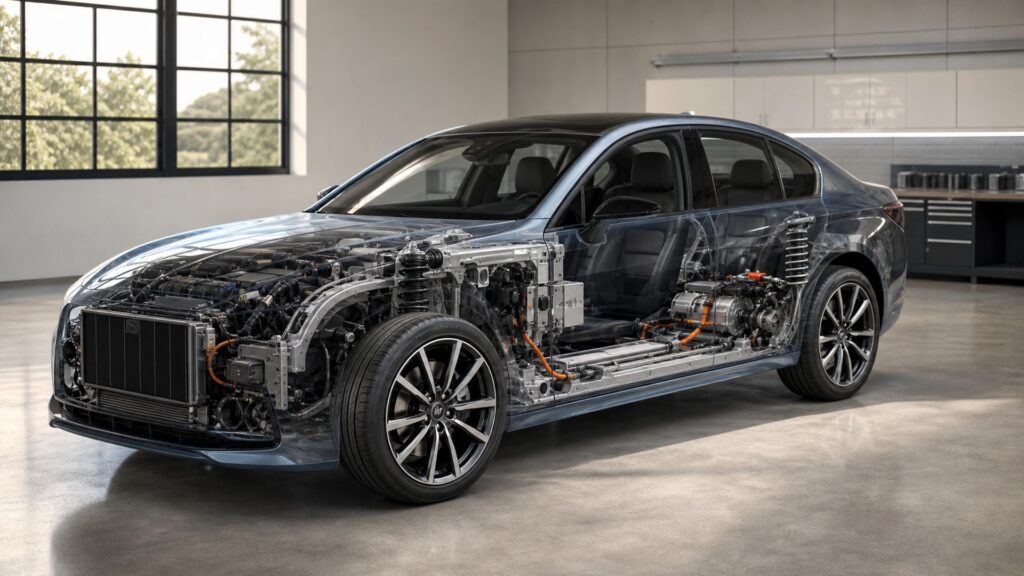
cutaway-style editorial view of modern auto systems without labels
What You'll Learn

How Automotive Systems Work Together

A practical map of the major systems inside an auto and how they influence motion, control, safety, comfort, and ownership.

  • How energy moves from fuel or battery storage into usable vehicle motion
  • Why powertrain, drivetrain, and chassis are related but not interchangeable
  • How suspension, steering, tires, and brakes shape control
  • Why electronics now influence performance, safety, comfort, and diagnostics
  • Where weight, aerodynamics, and gearing change efficiency and feel
  • How maintenance keeps mechanical and electronic systems inside their intended range
  • Which system-level tradeoffs matter most before comparing vehicle types

Tip: Read the concept as part of a system, then connect it back to the use case.

Definitions

Key Concepts That Define automotive systems

These definitions connect the main idea to the variables, limits, and practical signals readers need to compare options.

Powertrain

The system that creates usable power for the vehicle, including the engine or motor and supporting hardware.

  • Meaning: Converts stored energy into rotational force
  • Includes: Engine, motor, transmission, inverter, or related controls
  • Decision signal: Shapes acceleration, efficiency, noise, and maintenance

Drivetrain

The components that send power from the powertrain to the wheels that move the vehicle.

  • Meaning: Transfers torque to the road
  • Includes: Transmission, driveshafts, axles, differentials, and driven wheels
  • Decision signal: Changes traction, packaging, and driving feel

Chassis

The structural foundation that supports the body, suspension, drivetrain, and crash-management zones.

  • Meaning: Gives the vehicle its core physical structure
  • Includes: Frame, unibody, mounting points, and load paths
  • Decision signal: Affects rigidity, ride, safety, and repair complexity

Suspension

The system of springs, dampers, arms, and links that manages wheel movement over the road.

  • Meaning: Keeps tires controlled as the surface changes
  • Includes: Springs, shocks, bushings, control arms, and geometry
  • Decision signal: Balances comfort, grip, handling, and load capacity

Braking System

The hardware and controls that convert vehicle motion into heat so the auto can slow or stop.

  • Meaning: Controls speed by managing kinetic energy
  • Includes: Pads, rotors, calipers, hydraulics, ABS, and regeneration in EVs
  • Decision signal: Matters for safety, confidence, wear, and towing

Control Modules

Vehicle computers that monitor sensors and coordinate systems such as power delivery, stability, emissions, and safety.

  • Meaning: Turn sensor data into control decisions
  • Includes: Engine, body, battery, braking, and driver-assistance modules
  • Decision signal: Affects diagnostics, updates, reliability, and repair access

Tip: Keep the definitions connected; the strongest answer usually comes from the whole system, not one term.

Energy Path

How Stored Energy Becomes Vehicle Motion

Every auto starts by storing energy, then converting and routing it through systems that manage speed, traction, and losses. The details differ between gas, hybrid, and electric vehicles, but the chain is similar.

  • Fuel or battery energy must be converted into rotational force
  • Transmissions, inverters, or gearing shape how that force reaches the wheels
  • Tires turn wheel torque into road grip and forward motion
  • Losses appear as heat, friction, noise, and aerodynamic drag
  • Controls limit output when traction, temperature, or component protection requires it

A vehicle feels strong or efficient only when the full energy path works well together.

Control Systems

How Computers Coordinate Mechanical Parts

Modern vehicles rely on sensors and control modules to make mechanical systems predictable. These controls adjust power delivery, braking, stability, emissions, charging, and warning behavior in real time.

  • Sensors report speed, throttle position, temperature, wheel slip, and load
  • Control modules compare those inputs with safe operating ranges
  • Software can reduce power, change shift behavior, or activate stability systems
  • Diagnostics store faults that help technicians find system-level problems

Electronics do not replace mechanical design; they manage it inside safe boundaries.

Mechanical Tradeoffs

Where Vehicle Layout Changes Feel and Efficiency

Vehicle layouts create tradeoffs before any options are added. Weight, wheelbase, driven wheels, transmission design, tire size, and body shape all affect how the same energy feels on the road.

  • More weight can improve quietness but increases braking and energy demand
  • Lower gearing can improve launch feel while raising highway revs
  • All-wheel drive can improve traction but adds cost and complexity
  • Larger tires may improve grip while reducing comfort or efficiency

The best layout is the one that fits the driving pattern, not the one with the most impressive single spec.

Operating Limits

Why Heat, Wear, and Load Shape Performance

Autos work by moving energy, and every conversion creates heat or wear. Cooling, lubrication, friction materials, and protective software determine how consistently the vehicle can repeat the same behavior.

  • Engines, motors, brakes, transmissions, and batteries all need temperature control
  • Heavy loads, high speeds, and repeated stops increase thermal demand
  • Lubricants and friction materials wear faster when conditions exceed design ranges
  • Protective limits can reduce performance before a component is damaged

Performance is not only what the vehicle can do once; it is what it can do repeatedly without exceeding limits.

Practical Check

How to Use System Thinking Before Choosing

A useful auto comparison starts with the job the vehicle must do, then checks which systems support that job. Commuting, towing, winter driving, family use, and long trips stress different parts of the system.

  • Define the main driving pattern before comparing specs
  • Match drivetrain and tires to climate and road conditions
  • Check braking, cargo, towing, and comfort needs together
  • Consider maintenance access and repair complexity
  • Use ownership priorities to rank efficiency, reliability, safety, and feel

System thinking turns a vehicle from a spec sheet into a practical match for real use.

Quick Reality Check

Where Automotive Systems Explain the Vehicle and Where They Need Context

A balanced look at what system-level thinking clarifies, plus the limits of judging a vehicle from diagrams or specifications alone.

What System Thinking Clarifies

It explains why two vehicles with similar power or size can feel very different once gearing, weight, tires, software, and suspension are considered.

It also helps buyers connect maintenance, reliability, efficiency, and safety to the physical systems that create those outcomes.

Where the Shortcut Breaks Down

A system map cannot prove quality by itself because calibration, parts quality, manufacturing consistency, and service history still matter.

Real-world driving also changes the answer: climate, roads, load, speed, and maintenance habits can make the same design feel different over time.

Common Myths

Misconceptions About automotive systems

Common shortcuts and misunderstandings can make the topic seem simpler than it is.

All cars work basically the same

Most autos share broad systems, but the details vary widely. A hybrid, turbocharged gas car, diesel truck, and EV all manage energy, heat, traction, and software differently, which changes feel, maintenance, and ownership tradeoffs.

Horsepower tells the whole story

Horsepower describes one output point, not how the vehicle behaves everywhere. Gearing, torque delivery, weight, traction, aerodynamics, and software controls determine whether that power feels responsive, efficient, consistent, or useful.

Heavier vehicles are always safer

Mass can help in some crash interactions, but safety depends on structure, restraint systems, braking, visibility, stability control, and crash compatibility. Extra weight can also increase stopping distance and handling demands.

Newer technology removes maintenance

Modern controls can monitor problems earlier and improve efficiency, but they do not eliminate wear. Tires, brakes, fluids, filters, cooling systems, batteries, and software updates still require attention over the vehicle's life.

Tip: Treat strong claims as starting points for comparison, not final answers.

FAQ

Frequently Asked Questions About automotive systems

Concise answers to common questions readers may have after the main explanation.

What systems make an auto move?

An auto moves when stored energy is converted into rotational force, routed through gearing or power electronics, and delivered to tires. The tires then turn that force into grip against the road.

How are powertrain and drivetrain different?

The powertrain creates usable power, while the drivetrain sends that power to the wheels. In some vehicles they overlap physically, but the distinction helps explain energy creation versus energy delivery.

Why do similar vehicles feel different?

Similar vehicles can feel different because weight, gearing, suspension tuning, tire choice, throttle mapping, steering calibration, and sound control all affect the driver's perception of response, comfort, and confidence in daily driving.

What does maintenance change in an auto?

Maintenance keeps systems operating inside their intended range. Fresh fluids, healthy tires, working brakes, clean filters, and timely diagnostics reduce friction, heat, wear, and surprise failures that change vehicle behavior.

How should buyers use this information?

Start with the way the vehicle will be used, then compare systems that support that use. Towing, commuting, winter driving, cargo, and fuel costs stress different parts of the auto.

Bottom Line

Autos work as connected systems that convert energy, manage motion, protect occupants, and control wear.

The practical takeaway is to compare vehicles by how their systems match the driving job, not by one headline number in isolation.

Next Steps

Go Deeper or Compare Your Options

Use these Review Streets paths to connect the explainer to related categories, comparisons, and next decisions.

Quick Summary

automotive systems Explained

  • Autos convert stored energy into controlled motion through connected systems.
  • Powertrain and drivetrain are related but describe different parts of the energy path.
  • Brakes, suspension, steering, tires, and structure shape safety and feel.
  • Electronics coordinate mechanical systems and store diagnostic information.
  • Maintenance preserves the operating range that makes the design work as intended.