
Pre-Rinse
Initial water or suitable chemical removal of loose contamination before physical contact.
- Reduces movable grit
- Does not replace contact cleaning
- Runoff destination still matters
Car care and detailing works as controlled contamination removal followed by condition-specific restoration and protection. Loose grit should leave before contact; bonded particles need chemical or mechanical decontamination; paint defects may require measured abrasion; clean surfaces accept wax, sealant, film, or coating more consistently. Interior materials need their own chemistry and agitation limits.
Sequence matters because each step changes the risk of the next. Scrubbing dry grit can mar clear coat, polishing dirty paint can drag particles, and applying protection over oils can weaken bonding. A strong process inspects first, works from least aggressive to more aggressive methods, separates tools by contamination type, manages wash water responsibly, and verifies the finish under useful lighting before choosing a maintenance routine.
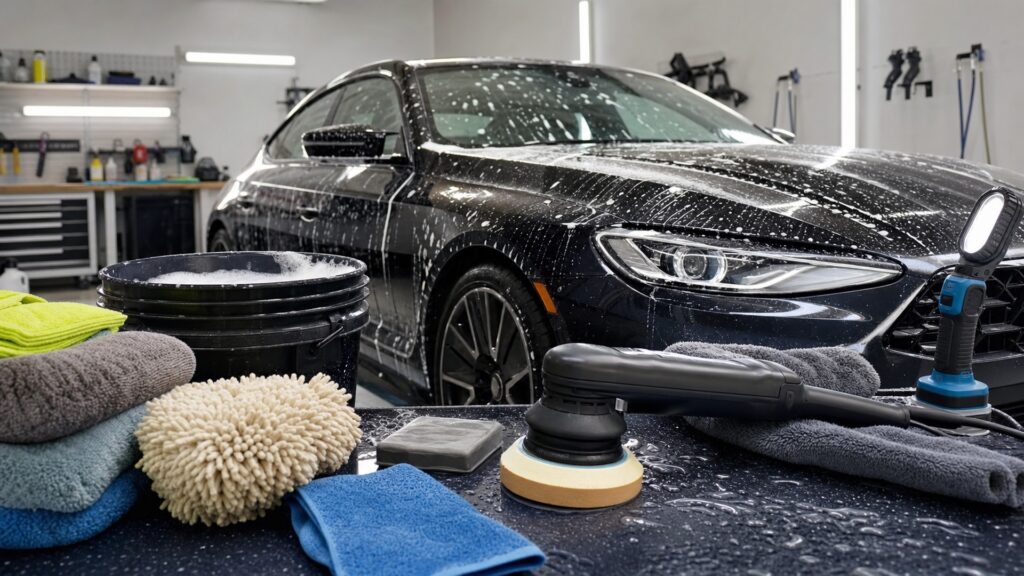
Detailing is a sequence of inspection, staged removal, selective correction, surface preparation, protection, and maintenance—not a pile of products used in any order.
Tip: Before adding pressure or abrasives, identify whether the contamination is loose, oily, mineral, metallic, organic, or bonded; each class responds to a different removal mechanism.
These terms distinguish cleaning, decontamination, correction, preparation, and protection.
Initial water or suitable chemical removal of loose contamination before physical contact.
Lubricated mechanical cleaning with wash media and compatible solution.
Removal of bonded particles or residues that normal washing leaves behind.
Controlled abrasion used to level or refine defects in the paint surface.
Removal of polishing oils and residue before inspection or protection.
Wax, sealant, coating, or film applied to change surface behavior and exposure.
Tip: Use the least aggressive method that achieves the defined result, then inspect again before escalating.
Begin with paint, trim, glass, wheels, fabric, leather-like materials, coatings, damage, and environmental constraints. Identify hot panels, failing finishes, sharp defects, aftermarket film, matte paint, or delicate interior markings before selecting chemicals.
The safest detail is designed around the material actually present, not the product collection available.
Rinsing and appropriate pre-cleaning reduce the particles that contact media could drag across paint. During the wash, lubrication, clean media faces, frequent rinsing, and separate wheel tools limit cross-contamination.
Risk falls when contamination exits the process instead of circulating through the wash mitt.
Iron particles, mineral deposits, tar, sap, overspray, and embedded grime do not respond to one universal cleaner. Chemical dissolution can reduce mechanical work; clay media can shear remaining bonds but may require later refinement.
Selective chemistry is usually safer than escalating pressure everywhere.
Abrasive correction removes or refines a small amount of the upper paint surface. Paint thickness, defect depth, pad, liquid, machine motion, temperature, and edge geometry determine whether improvement is safe and repeatable.
The goal is sufficient improvement with the least material removal, not automatic perfection.
Protection can increase water repellency, chemical resistance, gloss, or cleaning ease, but performance depends on preparation and exposure. A maintenance plan uses compatible washing, prompt contaminant removal, and periodic inspection instead of aggressive resetting.
Protection succeeds when it makes safe maintenance easier and repeatable.
Detailing can improve cleanliness, appearance, and maintenance while clear coat, trim, textiles, and coatings impose boundaries.
Staged cleaning removes contamination with less contact risk, while targeted correction and preparation make surface condition visible and protection more consistent.
Material-specific tools and chemistry can preserve paint, glass, wheels, trim, and interiors while establishing a repeatable maintenance baseline.
Cleaning and polishing cannot restore missing clear coat, cracked paint, deep corrosion, delaminated film, burned trim, torn fabric, or structural damage.
Every abrasive correction removes material, and every chemical has compatibility limits; appearance goals must yield to surface preservation.
Detailing myths often reward product quantity, foam volume, or visual gloss instead of contamination control and surface preservation.
Foam can improve dwell and lubrication, but cleaning depends on chemistry, concentration, water, agitation, temperature, and the soil. Thick foam that dries or leaves contamination behind is not evidence of a complete wash.
Clay or synthetic media can remove bonded contamination, yet it can also mar softer finishes or drag particles when lubrication and cleanliness are poor. Use chemical removal first where appropriate and inspect afterward.
Some products contain fillers, but abrasive correction levels the surrounding surface and removes finite material. Defect depth, paint thickness, edges, heat, and future correction needs decide how far it is responsible to go.
Coatings and sealants do not prevent brush marks, harsh chemical effects, trapped debris, or damaged trim. Wash design, water quality, maintenance method, and the protection maker's compatibility guidance still matter.
Tip: Judge the process by what it safely removes, what material it changes, and how easily the result can be maintained.
These answers cover wash order, household detergents, water spots, machine polishing, and environmentally responsible runoff.
Many detailers clean wheels first so brake dust and strong wheel chemistry do not splash onto freshly washed paint. Use dedicated tools, prevent chemicals from drying, and adapt the order to shade, temperature, and product instructions.
It may remove some oily soil but is not designed around every automotive finish, protection layer, trim, or wash method. Use a compatible automotive cleaner at its labeled concentration and reserve stronger cleaning for a defined need.
Minerals and contaminants can remain as water evaporates; heat accelerates deposition and some residues can etch. Work on cool panels, control dwell, rinse thoroughly, dry promptly, and diagnose deposits before using acid or abrasives.
It can be when the user understands the paint system, tests a mild combination, manages pad cleanliness and edges, and accepts limited correction. Unknown paint thickness, failing finishes, or deep defects justify professional assessment.
EPA guidance favors commercial facilities that treat or recycle wastewater. At home, follow local rules, use minimal compatible detergent, avoid storm drains, and direct wash water to an appropriate pervious or sanitary route where permitted.
Car care and detailing works by identifying materials and contamination, removing soil in controlled stages, correcting only defensible defects, preparing surfaces, and applying protection suited to future maintenance.
Sequence, tool separation, compatible chemistry, limited abrasion, responsible runoff, and inspection are the real system; product count and showroom gloss are secondary.
Continue with paint correction and ceramic-coating explainers to understand material removal, surface preparation, bonding, and ongoing maintenance in greater depth.
See why defect depth, paint thickness, abrasives, test spots, and finish inspection govern responsible paint correction.
Learn how preparation, crosslinking, cure conditions, exposure, and maintenance determine ceramic-coating performance.
Compare ceramic coatings with wax by film formation, durability, chemical behavior, application, and maintenance.
Choose a retailer
Prices checked regularly. We may earn a commission at no cost to you.