
Inlet Water Flow
The volume and steadiness of water supplied to the pump before pressure is increased.
- Starvation can cause cavitation
- Filters restrict when dirty
- Supply hoses need adequate size
Car wash equipment moves water through a controlled cleaning chain. An inlet supplies enough flow to a pump, which raises pressure and sends water through a rated hose, trigger gun, lance, and nozzle. The nozzle converts pressure and flow into a shaped jet; detergent injectors or foam devices distribute chemistry so road film can loosen before contact.
Cleaning succeeds when energy is matched to the surface. Wide spray, suitable distance, compatible detergent, lubricated mitts or soft brushes, abundant rinse water, and clean drying media remove soil while limiting abrasion. Commercial systems may sequence arches, brushes, blowers, sensors, conveyors, and reclaimed water. Every stage must control cross-contamination and route wash water to an appropriate collection or disposal path.
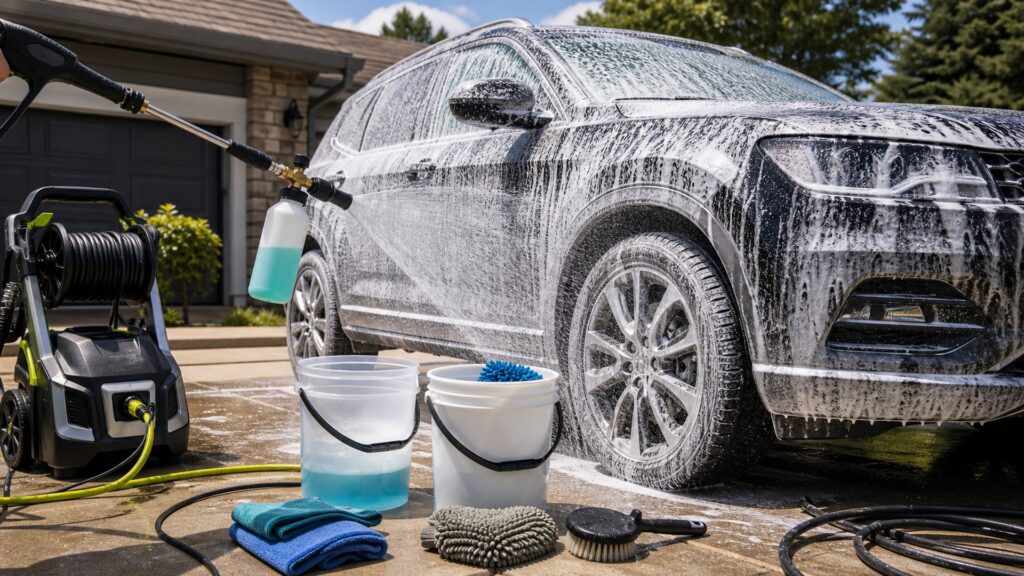
The mechanism joins hydraulic energy, spray geometry, chemical dwell, lubricated contact, rinsing, drying, and wastewater handling rather than treating pressure as the whole wash.
Tip: Test the least aggressive safe setting on an inconspicuous area before approaching damaged paint, loose trim, decals, sensors, seals, or exposed electrical hardware.
These terms connect pump output to the actual cleaning forces and contamination paths acting on a vehicle surface.
The volume and steadiness of water supplied to the pump before pressure is increased.
Fluid force developed by the washer pump and regulated within the machine's operating envelope.
The volume of water moved per unit time, influencing rinsing, soil transport, cooling, and chemical removal.
The calibrated opening that converts pressurized flow into a jet and determines system backpressure with pump output.
The controlled time a compatible foamed detergent remains wet on the surface to loosen soil before agitation or rinsing.
The liquid film reducing friction as a mitt, cloth, or soft brush carries loosened particles across paint.
Tip: Pressure ratings alone do not describe cleaning or safety; record flow, nozzle size, fan angle, distance, chemistry, surface, and dwell together.
An electric motor or engine drives the pump, which admits low-pressure water and discharges it into a rated high-pressure circuit. Stable inlet flow, sealed valves, and the correct nozzle let the machine reach its intended operating point.
The pump cannot compensate safely for a starved inlet or mismatched outlet.
A narrow jet concentrates force into a small area; a wider fan distributes it. Distance and angle further change impact, while constant motion prevents excessive dwell on edges, decals, chips, or seals.
Cleaning power is delivered at the panel, not printed on the machine label.
Vehicle-compatible shampoo lowers surface tension, surrounds particles, and softens organic or oily soil. Foam improves coverage and visual dwell, but it still needs correct dilution, temperature, time, and thorough rinsing.
More foam does not automatically mean more cleaning.
Once coarse grit is rinsed and soil is softened, a lubricated mitt or compliant brush supplies controlled shear. Frequent rinsing prevents the tool from becoming a loaded abrasive; final flow removes suspended soil and detergent.
The safest contact tool becomes harmful when it carries yesterday's grit.
Blowers reduce surface contact; clean absorbent towels remove remaining water with light technique. Wash water carries detergent, oil, metals, salt, and soil, so local collection, treatment, or pervious routing rules matter.
A clean vehicle does not excuse contaminated runoff or scratched drying.
Water pressure begins the process, but nozzle geometry, chemistry, lubrication, rinse flow, clean media, drying, and runoff handling determine the actual outcome.
Adequate inlet supply, correct filtration, rated pump circuit, vehicle-safe nozzle, stable distance and motion, compatible detergent and dilution, wet dwell, separated contact media, thorough rinse, and gentle drying.
Commercial or fixed systems add sensor timing, arches, brushes, conveyors, blowers, grit separation, oil control, filtration, reclaimed-water quality, fresh final rinse, and documented maintenance.
Loose paint, fresh repairs, degraded decals, exposed sensors, open electrical parts, damaged seals, hot panels, delicate trim, matte finishes, wraps, convertible tops, and special coatings may require different pressure, chemistry, contact, or no washing.
Follow vehicle, equipment, and chemical instructions. A high machine rating, thick foam, or successful use on another car cannot establish compatibility with the surface in front of the nozzle.
Marketing often isolates one visible effect—high pressure, thick foam, spinning brushes, or touchless operation—while the actual cleaning result depends on the whole soil-removal path.
Excess impact can lift paint, force water past seals, damage decals, fins, cameras, tires, or trim, and drive grit across surfaces. Use the mildest effective fan, distance, chemistry, and contact sequence.
Foam can wet and loosen soil, but bonded traffic film, minerals, bugs, tar, and fallout may remain. Safe contact or targeted decontamination may be necessary after coarse grit is removed and lubrication is established.
Avoiding brushes reduces one contact source, yet strong chemistry, high pressure, contaminated water, poor rinsing, and dirty drying methods can still dull, spot, etch, or scratch surfaces. Inspect the entire process.
Wash water can carry oil, grease, metals, salts, detergent, and debris. EPA guidance emphasizes controlling and routing runoff appropriately. Local rules and site drainage determine lawful disposal or collection options.
Tip: Judge each stage by what it adds, what it removes, and what contamination it can carry into the next surface.
These answers address pressure versus flow, foam, contact washing, commercial reclaim systems, drying, and runoff control.
Both matter with nozzle geometry and distance. Pressure contributes impact; flow transports loosened soil and rinses chemistry. A useful setup balances the vehicle surface, water supply, pump capability, nozzle, and required rinse volume.
Loose grit can become abrasive when trapped between wash media and paint. An initial controlled rinse removes easily displaced particles, while detergent and lubrication reduce friction before any necessary contact stage.
Pressurized water passes through an internal orifice and mixing path that draws diluted detergent and combines it with air, producing foam. Orifice size, pressure, flow, dilution, adjustment, and product viscosity shape output.
Treatment and reuse can reduce freshwater demand and sewer discharge. Reclaimed quality must match the wash stage; grit, oil, grease, dissolved material, odor, and microorganisms may require separation, filtration, oxidation, or fresh final rinse.
Evaporation can leave minerals, while dirty towels can reintroduce scratches. Clean absorbent media, filtered air where appropriate, cooler panels, and deliberate crevice drying remove water without turning the last step into new damage.
Car wash equipment works by converting supplied water into controlled pressure and flow, shaping it through a nozzle, adding compatible chemistry, using lubricated contact where needed, rinsing soil away, and drying without recontamination.
The system succeeds only when every surface, component rating, detergent, tool, and drainage path matches the task. Use the least aggressive effective process and verify that dirt left the vehicle without damaging paint or polluting the site.
Related explainers extend the mechanism into equipment fitment, operating measurements, and maintenance that keeps clean-water and dirty-water paths separate.
Match pressure, flow, connectors, nozzle sizes, chemical paths, electrical supply, and vehicle surfaces before assembly.
Evaluate delivered pressure, flow, fan geometry, dwell, lubrication, rinse quality, and drying under actual conditions.
Maintain filters, nozzles, hoses, pumps, foam devices, brushes, towels, and reclaim hardware before contamination or wear changes output.
Choose a retailer
Prices checked regularly. We may earn a commission at no cost to you.