
Inlet Restriction
A reduction in water reaching the pump caused by undersized supply, kinks, closed valves, debris, or a loaded filter.
- It can trigger cavitation
- Output may pulse
- Pump damage can follow
Car wash equipment gradually changes in ways that an operator can mistake for tougher dirt. Inlet filters load with debris, nozzles wear, seals leak, detergent passages accumulate residue, hoses abrade, and brushes or microfiber retain particles. Those changes alter pressure, flow, spray shape, chemical delivery, contact friction, and contamination transfer before a dramatic failure appears.
Maintenance preserves a known operating baseline. Inspection, cleaning, measured replacement, lubrication where specified, winterization, media segregation, and water-system service keep each stage inside its design envelope. It also prevents unsafe compensation: raising pressure, using stronger chemistry, or scrubbing harder when the true cause is restricted supply, damaged hardware, or dirty media.
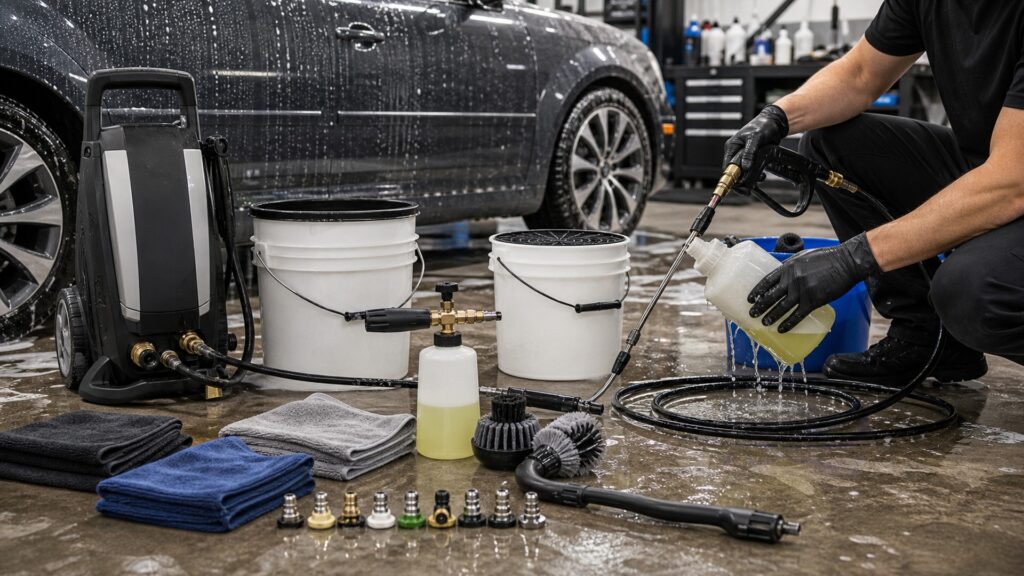
The maintenance role is to keep hydraulic output, chemical metering, contact cleanliness, and water handling predictable enough that changes in the wash can be diagnosed accurately.
Tip: Record symptoms, service, and replacement parts; memory cannot distinguish gradual nozzle wear from a change in soil, chemistry, or water supply.
These terms connect small maintenance changes to pressure, flow, safety, surface friction, and wastewater quality. Baseline maintenance watches inlet filter restriction, pump cavitation, unloader valve behavior, nozzle erosion, hose reinforcement, chemical-path deposits, media contamination, pump winterization, and reclaim sludge.
A reduction in water reaching the pump caused by undersized supply, kinks, closed valves, debris, or a loaded filter.
Growth or distortion of a spray orifice through wear, abrasion, corrosion, or damage during cleaning.
The condition of pressure-bearing tube, reinforcement, cover, ends, and fittings throughout a high-pressure hose.
Product residue or mineral scale inside pickup tubes, injectors, meshes, orifices, valves, bottles, and seals.
Accumulation of abrasive particles, oils, dyes, product, lint, or debris in brushes, mitts, pads, and towels.
Manufacturer-specified preparation that protects pumps, lines, tanks, seals, and accessories from freezing, corrosion, storage deposits, and stale fluids.
Tip: Follow the manufacturer schedule and compatible materials; improvised lubricants, seals, or cleaners can damage pumps and chemical systems.
The pump depends on adequate water. A kinked supply hose or clogged screen can introduce vapor bubbles, noise, pulsing, heat, and wear. Oil, seals, unloader service, and storage procedures vary by pump design.
The pump should never be asked to manufacture water the inlet cannot deliver.
A worn nozzle can lower pressure; a blocked one can overload the system. Cuts, blisters, exposed reinforcement, damaged threads, missing seals, or leaking triggers require isolation and correct replacement, not field patches.
Pressure-path maintenance protects both performance and the person holding the gun.
Pickup tubes, metering valves, foam-cannon meshes, bottles, injectors, and seals need rinsing or product-specific service. Mixing residues can form deposits, gas, heat, or ineffective chemistry and contaminate the next vehicle.
A clean chemical path makes dilution repeatable and cross-reaction less likely.
Particles held in media increase drag and scratching. Segregation by wheels, paint, glass, interior, coatings, and heavy contamination must continue through storage and laundering, with residue-free cycles and complete drying.
A soft label cannot overcome abrasive contamination trapped in the fibers.
Residual water can freeze in pumps, valves, hoses, and tanks. Reclaim systems accumulate sediment, oil, microbes, odor, and dissolved contaminants unless tanks, separators, filters, and treatment controls are serviced and monitored.
Maintenance continues when the wash bay is quiet.
When equipment condition is known, a change in cleaning can be traced to soil, chemistry, technique, water, or hardware instead of being masked by gradual drift.
Inlet flow is adequate, pump sound and pressure are stable, spray patterns are even, couplers remain dry, chemical ratios repeat, media are visibly clean, and reclaim water meets its assigned criteria.
Inspection and service records identify hours, symptoms, nozzle sizes, seals, filters, fluids, winterization, media retirement, tank cleaning, and verification after each intervention.
A hose has cuts, bulges, exposed reinforcement, damaged ends, or leaks; a gun or coupler will not secure; a cord is damaged; pressure cycles unexplained; or a safety device is defeated.
Do not compensate for maintenance faults with a smaller nozzle, stronger chemical, improvised repair, bypassed protection, or extra contact pressure; isolate, depressurize, diagnose, and use specified parts and procedures.
Maintenance myths often treat equipment as either disposable or self-correcting until it stops completely.
Supply restriction, hose deterioration, seal leaks, nozzle distortion, chemical deposits, overheating, or safety-device faults can appear before an obvious pressure loss. Inspection, storage service, and manufacturer schedules remain necessary even when the spray feels strong.
Stored pressure can eject debris, tools, or fluid and cause injection injury. Shut down, isolate supply, depressurize in a safe direction, remove the nozzle, and use only the manufacturer-approved cleaning method before inspection.
Oils, waxes, dyes, grit, softener, lint, and solvent residues can survive laundering or transfer between loads. Sort by contamination, use compatible detergent and temperature, rinse thoroughly, dry correctly, inspect, and retire doubtful media.
Water can remain trapped in pump cavities, valves, hoses, reels, tanks, and accessories. Follow the machine-specific winterization procedure, use only approved protectant when specified, store correctly, and inspect before recommissioning.
Tip: Use condition trends and scheduled controls so slow degradation does not become a new and unsafe operating norm.
These answers cover service frequency, nozzle diagnosis, hose retirement, foam-cannon cleaning, microfiber care, storage, and documentation for commercial wash systems.
Use the manufacturer's time, hour, cycle, seasonal, and condition intervals, then shorten inspection where water quality, chemicals, freezing, heat, dust, or heavy duty increase stress. Daily pre-use checks do not replace scheduled service.
Compare the installed size, spray pattern, pressure, flow, and pump behavior with a known baseline. An enlarged or uneven orifice can reduce pressure; obstruction can increase loading. Replace with the specified type and size.
No. Tape does not restore the pressure-bearing tube, reinforcement, ends, or rated containment. Shut down, depressurize, remove the hose from service, and replace it with a compatible pressure, temperature, chemical, and connection rating.
Empty product, rinse the bottle and pickup path, flush the injector or mesh as directed, relieve pressure, inspect seals and orifices, dry components, and store them protected from freezing, sunlight, impact, and chemical residue.
Track inspections, runtime or cycles, pressure and flow checks, chemicals, dilution tests, nozzle and filter changes, leaks, electrical tests, media laundering, reclaim service, sludge disposal, winterization, repairs, and verification before return to use.
Car wash equipment maintenance matters because gradual restriction, wear, deposits, contamination, freezing, and sludge change the process long before total failure.
Maintain inlet, pump, pressure path, chemical delivery, contact media, storage, and reclaim as one baseline. That preserves performance, prevents unsafe compensation, and makes future changes diagnosable instead of mysterious.
Related explainers show the function chain maintenance protects, the safety gates that require removal from service, and the fitment details replacement parts must retain.
Trace pressure, flow, spray, chemistry, contact, rinse, drying, and water quality as separate operating functions.
Review hydraulic, electrical, chemical, physical, environmental, and combustion stop-work conditions.
Match replacement nozzles, hoses, couplers, seals, chemicals, electrical supply, and site conditions to the complete system.
Choose a retailer
Prices checked regularly. We may earn a commission at no cost to you.