What Makes Coupe Cars Different from Electric Cars

Coupe describes a body concept; electric identifies the source of propulsion. A traditional coupe usually has two side doors and a low roof profile, while a battery-electric car uses a rechargeable battery and electric motors. A single car can satisfy both descriptions, so they cannot be treated as mutually exclusive categories.

Start a comparison from the coupe's physical layout: entry, seating, roof clearance, and luggage access. Then identify its powertrain. If the alternative is a four-door EV, some differences come from the body and others from charging and electric driving. Keeping those separate reveals which changes would actually affect your journeys.

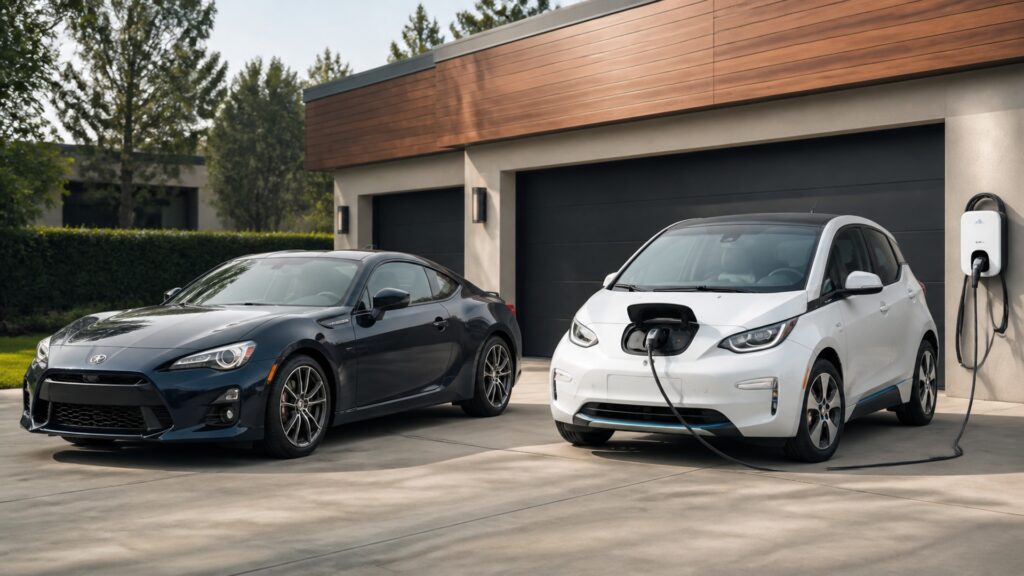
By: Review Streets Research Lab
Updated: October 6, 2026
Explainer · 8-12 min read
coupe cars explainer hero image for Review Streets
What You'll Learn

Read the Body and Powertrain Separately

Identify which differences belong to the coupe layout and which belong to electric propulsion.

  • Recognize that a coupe can be electric.
  • Compare door and seat access as body features.
  • Assess charging only after identifying the powertrain.
  • Separate cabin packaging from energy storage.
  • Judge driving character and costs on actual cars.

Tip: Describe each candidate with two labels: its body layout and its propulsion system.

Definitions

Two Independent Descriptions of the Same Vehicle

The comparison becomes clearer when every term has a specific job.

Coupe layout

A coupe layout traditionally uses two side doors and a relatively low passenger-body profile.

  • Example: rear access through a front-door opening
  • Check: actual seating and door geometry
  • Limit: marketing terminology is not completely uniform

Battery-electric car

A battery-electric car stores propulsion energy in a rechargeable battery and uses electric drive motors.

  • Example: charging the vehicle while parked
  • Check: range and charging capability
  • Limit: it may have a coupe, sedan, or hatchback body

Body packaging

Body packaging is the arrangement of people, luggage, and openings within the exterior shape.

  • Example: rear headroom beneath a sloping roof
  • Check: usable room for actual occupants
  • Limit: outside dimensions do not establish comfortable seating

Energy-supply routine

The energy-supply routine is how refueling or charging fits into ownership.

  • Example: a gasoline stop or a parked charging session
  • Check: availability, cost, and timing
  • Limit: body style does not determine this routine

Powertrain response

Powertrain response is the way propulsion reacts to the driver's requests.

  • Example: smooth low-speed acceleration
  • Check: the actual tuning and driving mode
  • Limit: a powertrain label does not fully describe control feel

Ownership specification

Ownership specification is the actual combination of powertrain, equipment, tires, and condition being compared.

  • Example: a particular trim with its fitted wheels
  • Check: the exact car rather than a broad model family
  • Limit: costs and comfort can vary within one model range

Tip: Attribute an advantage to the feature that produces it, rather than to the entire category.

Body First

The Coupe Difference Is Most Visible at the Doors

In a traditional two-door coupe, rear occupants generally enter past a moved front seat. A four-door electric car may offer separate access, but so can a gasoline sedan. An electric coupe can retain the two-door arrangement. Compare the opening and seating task directly before deciding that electric propulsion makes a car more practical.

  • Count passenger doors separately from a hatch.
  • Try the full rear-entry sequence.
  • Check the front seat's correct return position.

The motor does not create the rear-door opening; the body design does.

Interior

Roof and Floor Shape Both Affect Occupants

A coupe's descending roof can influence rear headroom and luggage height. An EV's component packaging can influence floor and seating arrangements, but designs vary substantially. Neither description establishes how a person will sit. Set the front seat correctly, then evaluate the rear posture and foot space in the actual car.

  • Check headroom without an unnatural posture.
  • Try the required passenger arrangement.
  • Inspect the luggage opening as well as volume.

A vehicle can be long outside and still provide an unsuitable rear seating position for a particular passenger.

Energy

Charging Is a Separate Ownership Change

If the coupe uses gasoline, it has a different energy routine from a battery-electric alternative. If it is electric, both candidates need a workable charging plan. Consider the parking location, compatible equipment, and longer trips. A convenient body does not compensate for an energy routine that repeatedly fails to fit the schedule.

  • Identify each car's actual powertrain.
  • Verify dependable charging where needed.
  • Review difficult regular routes.

DOE's consumer guidance frames EV suitability around driving needs and charging access, rather than a particular body style. DOE: electric-vehicle suitability.

Driving

Shape Does Not Dictate Motor Behavior or Chassis Tuning

An electric car can provide smooth response without conventional engine shifts and may slow differently with regenerative settings. A coupe may use that same electric arrangement or a combustion powertrain. Steering, suspension, tire choice, and seating position add their own character. Compare these on ordinary roads instead of assuming sporty shape equals superior handling.

  • Try gentle starts and low-speed maneuvering.
  • Learn braking-mode behavior.
  • Assess ride and visibility, not just acceleration.

Two coupes can feel very different, just as two electric cars can; the actual engineering and your preferences decide the result.

Costs

Compare the Complete Specification

A battery-electric powertrain removes several engine-related service tasks, but tires, brakes, suspension, insurance, and other expenses remain. A coupe may be inexpensive or premium, efficient or thirsty, simple or heavily equipped. Price the actual candidates over the same period and expected mileage, including the charging or fuel routine you would use.

  • Obtain model-specific insurance and service information.
  • Include relevant equipment or installation costs.
  • Keep purchase cost separate from energy savings.

DOE's maintenance overview explains a powertrain difference, not a universal cost advantage over every coupe. DOE: EV maintenance differences.

Quick Reality Check

What Each Label Can and Cannot Tell You

Use the labels as starting information rather than complete conclusions.

Coupe Describes Body Priorities

It suggests a particular arrangement of doors, roof, seating, and styling.

It does not establish fuel type, performance, luxury, or a universal luggage limit.

Electric Describes Propulsion

For a battery-electric car, charging, range, and electric-drive behavior become ownership questions.

It does not establish rear doors, cargo access, ride quality, or passenger comfort.

Common Myths

Misconceptions About Coupes and Electric Cars

The categories overlap and leave important details unspecified.

Coupe means combustion engine

A coupe can use an electric powertrain.

Electric means four-door practicality

Door count and seating access depend on the body.

A coupe shape guarantees a particular driving feel

Powertrain, chassis, tires, controls, and tuning all contribute.

Tip: Ask which physical feature explains the advantage you notice.

FAQ

Questions About Coupe and Electric-Car Differences

Clarifying the two descriptions before a purchase comparison.

Can a car be both a coupe and an EV?

Yes. One describes the body and the other the propulsion system.

Why compare them at all?

A buyer may be comparing a particular coupe with a particular EV. That is useful when the actual body and powertrain differences are identified.

Does a battery automatically reduce passenger space?

No universal conclusion follows. Assess the floor, seat positions, roof, and luggage area in the exact design.

What should I compare first?

Confirm essential passenger and cargo needs, identify both powertrains, then assess energy supply, driving behavior, and complete costs.

Bottom Line

The coupe label describes the body; the electric label describes propulsion. A fair comparison keeps those roles distinct.

Inspect the actual openings and seats, verify the energy routine, and test the complete vehicle before choosing.

Next Steps

Go Deeper or Compare Your Options

Use these Review Streets paths to compare related categories and practical next decisions.