
Process Means
A product, medium, tool, instruction, or stage used to inspect, clean, decontaminate, abrade, prepare, apply, level, cure, or maintain a surface.
- Means can be optional
- Tools do not prove outcome
- Sequence governs interaction
A detailing kit is a collection of means. It may include wash chemistry, decontaminants, clay, compound, polish, towels, pads, applicators, trim products, interior cleaners, or protection. The package organizes work that can remove soil, change defects, prepare materials, or leave selected finishes. It does not name one uniform outcome.
Paint protection is a specific outcome and material system: wax, sealant, cured coating, adhered film, or another retained layer intended to alter exposure or maintenance behavior. A protection kit is therefore one type of detailing kit. Other kits may prepare for protection, maintain it, remove it, or contain no protective product at all.
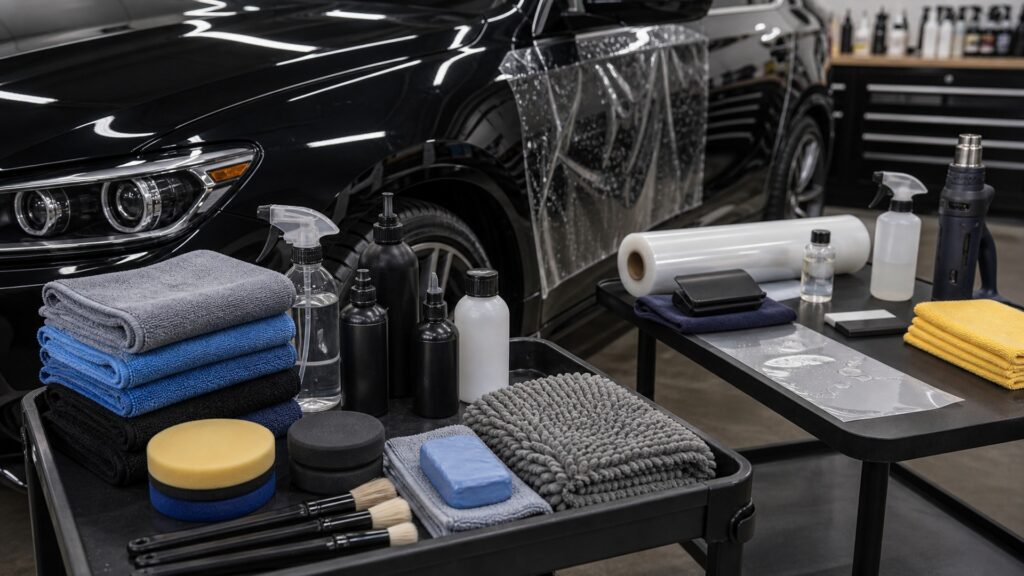
The comparison turns on process scope, material flow, preparation, cure, durability evidence, and maintenance rather than whether products share a shelf or brand.
Tip: Do not call polishing oil, dressing residue, filler, temporary gloss, or water behavior paint protection unless the product defines a retained layer, supported substrate, application, cure, and claimed exposure function.
These terms separate a broad treatment package from the particular material and acceptance conditions of paint protection. The boundary tracks process means, surface outcome, wash stage, bonded decontamination, defect correction, panel preparation, retained film, sacrificial layer, coating cure, film adhesion, maintenance compatibility, and protection acceptance.
A product, medium, tool, instruction, or stage used to inspect, clean, decontaminate, abrade, prepare, apply, level, cure, or maintain a surface.
The verified condition after treatment, described through cleanliness, defect level, gloss, texture, residue, adhesion, protection, or operational suitability.
Material deliberately left on or bonded to a substrate after application and removal of excess, including wax, sealant, coating, dressing, or adhered sheet.
Controlled removal of contamination, defects where chosen, polishing oils, and incompatible residue to meet the specified protection interface.
Physical or chemical development of the applied layer after placement, influenced by time, temperature, humidity, film thickness, ventilation, and exposure.
Product-specific evidence that coverage, leveling, adhesion, clarity, edges, cure conditions, and surface behavior meet requirements without high spots, residue, or damage.
Tip: Name wax, sealant, coating, or film explicitly; the word protection hides large differences in thickness, bonding, cure, repair, removal, and physical limits.
General detailing sets may stop after cleaning or correction. Protection begins only when a defined product or film is intentionally left on a prepared substrate, then leveled, bonded, or cured.
Not every finished detail needs a protective application.
Washing exports soil, decontamination releases deposits, abrasion removes a controlled surface amount, and preparation clears oils. Wax, sealant, coating, or film then reverses that flow by leaving selected material behind.
The last cleaner and first retained layer require the cleanest boundary.
Bonding and appearance can be limited by contamination, defects, oil, temperature, or moisture. A kit may provide preparation, yet the operator must prove substrate condition and follow the protection system rather than assume brand adjacency guarantees adhesion.
Good preparation enables protection but is not itself protection.
Wax or sealant may assist release and appearance; coatings may add chemical or stain resistance; film provides thicker physical interception. None prevents every scratch, chip, etch, water spot, UV effect, or wash-induced defect.
A protection label is meaningful only when its protected mechanism is named.
Kit cleaners, pads, towels, and abrasives deplete or wear independently. Installed protection ages through environment and washing, and may need decontamination, topping, localized film repair, reapplication, or removal.
Owning leftover kit product does not prove the vehicle's installed layer remains functional.
A protection kit sits inside the broader detailing-kit category, while cleaning, correction, interior, and maintenance kits can exist without installing paint protection.
The package contains compatible means for a defined process, adequate product and media capacity, supported tools, and stage instructions that can stop when the surface reaches its intended condition.
Its value can be cleaning, decontamination, correction, preparation, application, or maintenance; the outcome must be described from the stages actually used rather than the package name.
The exact retained material, supported substrate, preparation, coverage, cure, edge or leveling condition, claimed exposure mechanism, maintenance, durability basis, and removal or repair path are known.
Protection cannot replace clean paint, sound clear coat, chip repair, corrosion control, careful washing, prompt contaminant removal, or realistic limits around scratches, impacts, minerals, chemicals, heat, and aging.
Comparison myths turn any gloss-enhancing kit into protection or treat protection as a substitute for the cleaning and preparation means that make it viable.
Wash, clay, correction, headlight, wheel, glass, interior, and maintenance kits may remove or change material without leaving a durable paint layer. Read the included product functions and identify whether any protection is intentionally retained.
Protection can preserve contamination, haze, residue, or defects beneath it and may fail to adhere through oils or incompatible chemistry. Preparation is selected from actual condition and system requirements, not eliminated by the final product.
Polishing can increase gloss by refining defects, and oils or fillers can alter appearance temporarily. Protection requires a named retained product or film, correct application, excess removal, cure, and product-specific acceptance evidence.
A coating is a thin liquid-applied cured layer; protection film is an adhered polymer sheet with different thickness, edge, impact, installation, repair, and removal behavior. They can coexist but do not supply identical protection.
Tip: Require a defined retained layer, interface, cure, mechanism, and maintenance plan.
These answers cover protection kits, preparation, polishing gloss, wax, coatings, film, cure, maintenance, and whether protection is required after every detail.
Yes. The remaining items may wash, decontaminate, prepare, apply, level, or maintain it. Verify that every product supports the selected protection system and that quantities, tools, environment, and cure time complete the process.
No universal rule requires maximum correction. Clean and prepare the substrate to the protection specification, then choose correction from defect severity, finish thickness, owner goals, risk, and test results rather than automatically removing clear coat.
Wax can form a sacrificial retained film that changes appearance, water behavior, and contamination release within limited exposure and durability. It remains paint protection, but its mechanism and service life differ from coatings and adhered film.
Inspect coverage, residue, clarity, high spots, film edges, adhesion, and cure conditions under appropriate light; record application; then use product-specific behavior after cure. Water beading alone cannot distinguish clean bare paint from durable protection.
It can remove masking contamination or add a compatible topper, revealing or supplementing behavior. It cannot rebond delaminated film, repair coating defects, restore missing clear coat, or prove underlying protection remains without proper diagnosis.
Detailing kits are containers for process means across cleaning, decontamination, correction, preparation, application, and maintenance. Paint protection is the narrower outcome of deliberately retaining a wax, sealant, coating, or film.
A kit may enable that outcome, but protection exists only when the exact layer, substrate, preparation, cure, limits, and acceptance evidence are established. Product adjacency and temporary gloss are not substitutes.
Related explainers trace kit sequencing, explain how protection chemistry fits into operating roles, and compare the layer with wash-equipment removal.
Follow the full detailing-kit workflow and see where preparation, protection, and maintenance sit among optional stages.
Distinguish cleaning, decontamination, abrasive, transfer, preparation, and retained-layer functions.
Compare wash equipment that exports contamination with paint protection that intentionally remains.
Choose a retailer
Prices checked regularly. We may earn a commission at no cost to you.