What Makes Electric Cars Different from Luxury Sedans

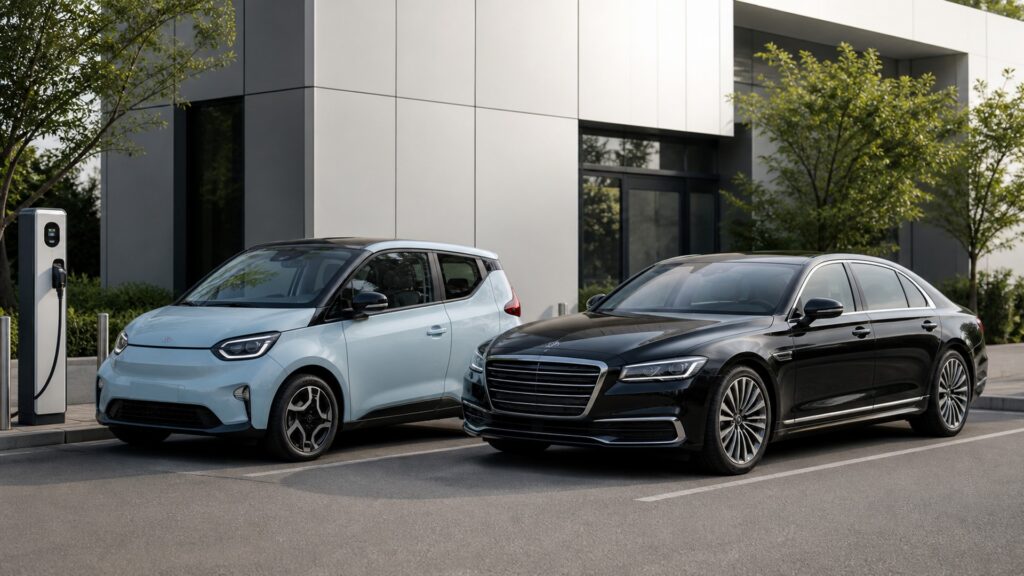
Electric cars and luxury sedans describe different characteristics, so they are not opposing categories. Electric identifies the propulsion system. Luxury sedan combines a passenger-body style with an emphasis on premium comfort, materials, equipment, and refinement. A luxury sedan can be battery-electric, gasoline-powered, or hybrid.

When comparing a mainstream electric car with a conventional luxury sedan, separate the changes caused by propulsion from those caused by body design and equipment. Charging, energy use, and engine-related servicing belong to the powertrain comparison. Seat comfort, ride quality, sound insulation, controls, and luggage access must be judged on the actual vehicles.

By: Review Streets Research Lab
Updated: October 5, 2026
Explainer · 8-12 min read
electric cars explainer hero image for Review Streets
What You'll Learn

Separate Electric Propulsion from Premium Comfort

Understand which differences come from the motor and which come from the car around it.

  • Recognize electric luxury sedans as an overlapping category.
  • Compare charging with the alternative refueling routine.
  • Assess quietness and ride independently.
  • Check passenger and luggage space directly.
  • Compare exact trims and ownership costs.

Tip: Write down both cars' body styles, powertrains, and equipment before comparing features.

Definitions

Two Different Ways to Describe a Car

These terms prevent a powertrain choice from becoming a misleading comfort claim.

Battery-electric car

A battery-electric car uses a rechargeable traction battery and electric propulsion without a combustion engine.

  • Example: a car charged while parked overnight
  • Check: charging capability and usable range
  • Limit: it may be either mainstream or luxurious

Luxury positioning

Luxury positioning describes an emphasis on premium comfort, finish, equipment, and ownership experience.

  • Example: a cabin with supportive seats and refined controls
  • Check: the actual equipment and execution
  • Limit: a badge or price is not proof of every desired feature

Sedan layout

A traditional sedan layout separates the luggage compartment behind the passenger cabin.

  • Example: a rear trunk opened below the rear window
  • Check: the actual luggage opening
  • Limit: some sedan-like cars instead have a liftback

Ride quality

Ride quality is how the vehicle responds to bumps and other road inputs.

  • Example: crossing broken pavement without harsh impacts
  • Check: the exact wheels, tires, and suspension
  • Limit: electric propulsion does not determine suspension comfort

Cabin refinement

Cabin refinement is the combined impression of noise, vibration, finish, and control quality.

  • Example: conversation remaining easy at highway speed
  • Check: road, wind, and powertrain noise separately
  • Limit: a quiet motor does not remove tire or wind noise

Equipment specification

Equipment specification is the set of features fitted to a particular vehicle.

  • Example: seat adjustment and climate controls on the actual trim
  • Check: standard equipment, options, and feature conditions
  • Limit: a review of another trim may describe a different car

Tip: Compare experienced comfort and useful features, not just category labels.

Propulsion

The Electric Difference Begins with Energy Supply

A battery-electric car replaces fuel stops with charging opportunities and route planning suited to its range. This is an ownership change whether the car is inexpensive or luxurious. A conventional luxury sedan may refuel quickly but cannot offer the same parked-time charging routine unless it is a plug-in model.

  • Identify dependable charging locations.
  • Check the longer routes you regularly use.
  • Confirm the actual powertrain in the sedan.

DOE's consumer guidance treats driving needs and charging access as practical selection questions, independent of a vehicle's premium positioning. DOE: choosing an electric vehicle.

Refinement

Removing Engine Noise Does Not Finish the Cabin

An electric motor avoids the sound and vibration of a running combustion engine, but road and wind noise remain. A carefully insulated gasoline luxury sedan can feel refined, while an electric car with firm tires or less sound isolation may expose more road noise. Compare the vehicles at the speeds and on the surfaces that matter to you.

  • Listen on rough as well as smooth roads.
  • Check conversation comfort at cruising speed.
  • Try the actual wheel and tire combination.

The useful question is which cabin feels better on your journeys, not which power source should theoretically sound quieter.

Comfort

Seats and Suspension Need Their Own Test

Luxury features may include extensive adjustment or sophisticated suspension, but availability and effectiveness vary. Spend enough time in the seats to assess support, control reach, and rear-passenger comfort. A large battery or long wheelbase does not automatically create a comfortable seating position.

  • Set the seat for a natural posture.
  • Try controls without losing road attention.
  • Include passengers in the evaluation.

A feature list cannot reveal whether a seat cushion suits your legs or whether a ride feels unsettled on your local roads.

Space

Check the Body Rather Than Assuming an EV Advantage

Electric packaging can change where components sit, but useful cabin and luggage space depends on the whole design. A floor-mounted battery can affect floor height, and a sloping roof can affect headroom. Some EVs have extra front storage; others do not. Compare the actual openings and seating configuration.

  • Check rear foot space and headroom.
  • Try regular luggage with all needed seats occupied.
  • Inspect a trunk or liftback rather than relying on the silhouette.

An electric hatchback and a gasoline luxury sedan may differ more in loading access than two sedans with different powertrains.

Ownership

Premium Equipment and Electric Service Are Separate Costs

An EV generally has fewer engine-related maintenance needs, but premium tires, insurance, repairs, and optional equipment can still be expensive. A conventional luxury sedan adds its own engine and drivetrain service requirements. Obtain model-specific quotes and compare the period and mileage you expect to own each car.

  • Price the actual trim and tire size.
  • Include charging or fuel at realistic rates.
  • Read warranty and service terms for each vehicle.

DOE's maintenance overview supports a distinction in powertrain upkeep, not a promise that every electric car is cheaper to own than every luxury sedan. DOE: maintenance differences.

Quick Reality Check

Choose the Combination You Actually Want

Electric propulsion and luxury can coexist.

Prioritize the Electric Routine

Charging fits your parking and travel, and you value electric driving in a car that meets your comfort needs.

Compare mainstream and premium EVs without assuming price determines suitability.

Prioritize the Cabin and Ride

Seats, controls, refinement, and suspension are the deciding features for your journeys.

Evaluate luxury sedans with electric, hybrid, or gasoline propulsion where available.

Common Myths

Misconceptions About EVs and Luxury Sedans

Keep the two categories from doing each other's job.

An electric car cannot be a luxury sedan

A car can have both battery-electric propulsion and a luxury sedan body and specification.

Every EV is quieter and smoother on every road

Motor behavior is only part of refinement; tires, suspension, wind noise, and insulation still matter.

More screens mean more luxury

Control usability, comfort, materials, and execution matter more than display count alone.

Tip: Test the features you will use repeatedly, not only the ones that impress in a showroom.

FAQ

Questions About Electric and Luxury-Car Differences

Clarifying the practical overlap.

Is this electric versus gasoline?

Only if the luxury sedan being compared uses gasoline. Luxury describes positioning rather than a single powertrain.

Does an electric motor guarantee a comfortable ride?

No. Ride comfort depends on the suspension, wheels, tires, seats, and other vehicle choices.

Do all EVs have more luggage space?

No. Check the actual compartments, openings, and seating configuration.

How can I compare fairly?

Use exact trims and similar journeys, assess charging or refueling, and compare passenger comfort, equipment, and complete ownership costs.

Bottom Line

Electric propulsion changes energy supply and driving behavior; luxury depends on how well the entire car serves its occupants.

Choose the body, cabin, equipment, and powertrain together rather than treating electric and luxury as competing labels.

Next Steps

Go Deeper or Compare Your Options

Use these Review Streets paths to compare related categories and practical next decisions.