
Traction battery
The traction battery stores electrical energy used to propel the vehicle.
- Example: energy available for a planned journey
- Check: state of charge and vehicle guidance
- Limit: it is separate from the lower-voltage auxiliary system
An electric car's operating function is the way stored energy, motor control, braking, temperature management, and charging work together during a journey. The useful result is not simply strong acceleration. It is predictable response, understandable controls, sufficient energy for the route, and a charging routine that reliably prepares the car for its next trip.
Knowing the main energy paths helps explain ordinary behavior: why lifting off may slow the car, why charging power changes during a session, or why cold weather affects the range estimate. The exact settings and warnings remain model-specific, so use the owner manual to connect these general principles to the car you drive.
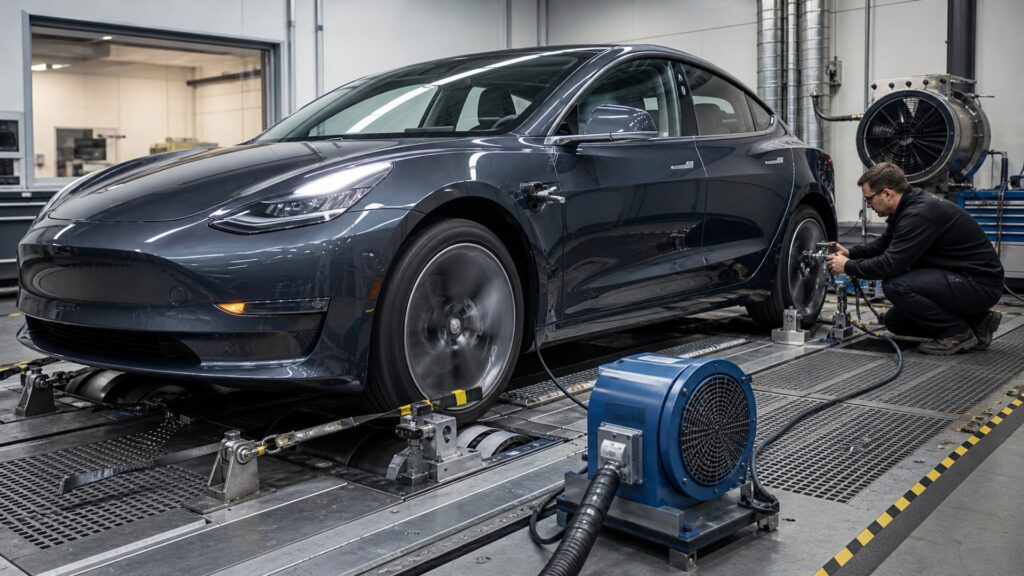
Connect the main systems to the actions a driver notices.
Tip: A displayed range is an estimate for planning, not a guaranteed distance under every condition.
These components and measures describe different jobs.
The traction battery stores electrical energy used to propel the vehicle.
Power electronics control electrical power delivered to the drive motor.
The drive motor converts electrical energy into mechanical turning force.
Regenerative braking recovers some motion energy through the electric drive system while slowing the car.
State of charge estimates how full the battery is relative to its managed usable range.
Charging power is the rate of energy transfer, usually expressed in kilowatts.
Tip: Use energy to describe how much is stored and power to describe how quickly it moves.
An EV can be ready to move without a running-engine sound. Use the vehicle's readiness indication and confirm the selected direction before releasing the brake. The auxiliary electrical system supports controls and other functions, so traction-battery charge alone does not establish that every system is ready.
A familiar sequence of checking readiness, direction, surroundings, and braking is more useful than judging the car by sound.
The driver's accelerator input is interpreted by the control system, which manages electrical delivery to the motor within available limits. Battery condition, traction control, and selected driving modes can affect the result. Smooth response depends on the whole calibration, not simply a large quoted peak-power number.
DOE's component overview distinguishes energy storage, power control, and the motor: each performs a different part of propulsion. DOE: electric-car components.
When the car slows, the drive system can recover some energy instead of losing all of it as heat. The amount of deceleration and the use of friction brakes depend on the model and mode. A full or cold battery can limit energy recovery, so the driver must understand the vehicle's behavior and use the brake pedal whenever needed.
One-pedal behavior is a driving feature with conditions, not permission to ignore the ordinary braking controls. Chevrolet: regenerative-braking limits.
Heating, cooling, and other systems also draw energy. Battery temperature management helps the system operate within its intended conditions, and the car may adjust available power or charging behavior accordingly. Weather, speed, terrain, and cabin settings can change consumption, so a familiar percentage does not guarantee a familiar remaining distance.
Plan around the journey ahead rather than expecting yesterday's displayed range to repeat exactly.
Plugging in is only one step. The vehicle and equipment must be compatible, authorization may be required, and a schedule can delay the start. Check the displayed charging state and intended target. Actual power can change with battery state and the limits of the car or station.
DOE's charging guidance explains why the same charger rating can produce different session times for different vehicles or battery states. DOE: charging equipment and session times.
Several readings describe different aspects of the trip.
Readiness and direction tell you whether and how the car is prepared to move.
State of charge, trip consumption, and charging status help plan the next journey.
Range is treated as an exact promise, or a connected cable is assumed to mean active charging.
Peak charging or motor power is treated as constant in every condition.
A simple driving interface sits on top of several coordinated systems.
Energy recovery is partial and subject to limits; it cannot make driving energy-free.
Authorization, settings, schedules, or a fault may prevent an active session.
Distance depends on the car and the conditions in which that energy is used.
Tip: Check the actual operating state instead of inferring it from one sound, number, or cable.
Answers about controls, energy, and charging.
Its selected mode may request regenerative deceleration or a blended braking response. Read the model's instructions and remain ready to use the brake pedal.
Battery management and charging limits can reduce accepted power as conditions change, including at higher states of charge.
No. Kilowatts measure power; kilowatt-hours measure an amount of energy.
Temperature, battery conditioning, accessory use, and the car's estimate can affect the display. Investigate persistent unexplained changes or warnings using the vehicle guidance.
An EV is easiest to use when the driver understands readiness, pedal response, energy limits, and charging status.
Learn the actual car's modes and warnings, then use its information to plan realistic journeys rather than relying on a single headline specification.
Use these Review Streets paths to compare related categories and practical next decisions.
Plan the maintenance an electric car still needs.
Separate electric propulsion from luxury features.
Check crash evidence, charging, and safe ownership.
Choose a retailer
Prices checked regularly. We may earn a commission at no cost to you.