Why Electric Cars Maintenance Role Matters

Battery-electric cars avoid engine oil changes and many combustion-engine service items, but they still need maintenance. Tires, friction brakes, suspension, cabin filtration, charging equipment, and vehicle-specific cooling systems affect reliability and everyday usability. Fewer scheduled tasks should make the remaining ones easier to manage, not easier to forget.

The starting point is the maintenance information for the exact model, year, and equipment. Separate routine owner checks from scheduled workshop service and from faults that need diagnosis. A change in range, a charging interruption, and a worn tire are different problems; treating all three as a battery issue can waste time and miss the real cause.

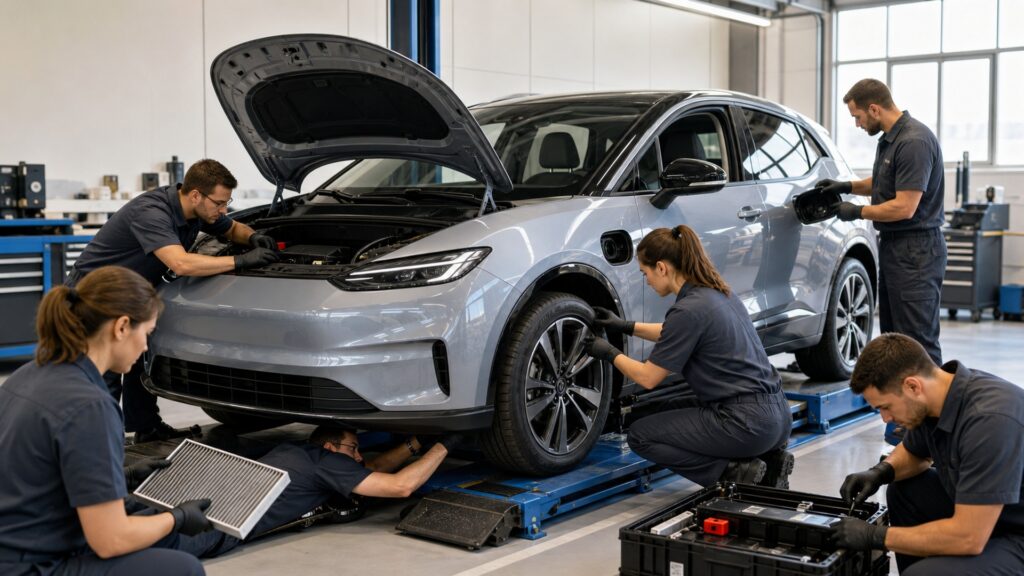
By: Review Streets Research Lab
Updated: October 5, 2026
Explainer · 8-12 min read
electric cars explainer hero image for Review Streets
What You'll Learn

Build an EV Maintenance Routine That Fits the Car

Know what disappears with the engine and what remains essential.

  • Follow the exact service schedule.
  • Keep tires and mechanical brakes in the routine.
  • Recognize charging problems without dismantling equipment.
  • Distinguish the traction battery from the auxiliary battery.
  • Record symptoms and service work clearly.

Tip: Use the current owner information for your car rather than a universal EV interval list.

Definitions

The Maintenance Tasks Behind Reliable Electric Driving

Different systems require different checks and expertise.

Scheduled maintenance

Scheduled maintenance is work required at the time, distance, or condition specified by the manufacturer.

  • Example: a prescribed filter replacement
  • Check: the schedule for the exact vehicle
  • Limit: one brand's intervals do not apply to every EV

Condition inspection

A condition inspection looks for wear, damage, or abnormal operation.

  • Example: checking a tire for uneven wear
  • Check: visible condition and changes in behavior
  • Limit: an inspection does not replace a required service

Friction brakes

Friction brakes slow the wheels using mechanical braking surfaces and remain necessary in an EV.

  • Example: the brakes providing a firm stop
  • Check: wear, corrosion, fluid requirements, and symptoms
  • Limit: energy recovery does not remove their maintenance needs

Thermal management

Thermal management controls operating temperatures using the equipment fitted to the vehicle.

  • Example: a cooling system supporting battery operation
  • Check: specified service and warning messages
  • Limit: coolant type and access procedures are vehicle-specific

Auxiliary battery

The auxiliary battery supports lower-voltage vehicle functions separately from the traction battery.

  • Example: power for control and access systems
  • Check: the car's diagnostic and replacement guidance
  • Limit: a charged traction battery does not prove the auxiliary system is healthy

Charging interface

The charging interface includes the vehicle port and compatible external connection used to replenish energy.

  • Example: a connector seating correctly in its port
  • Check: visible damage and reported charging faults
  • Limit: electrical contacts and high-voltage parts are not owner repair areas

Tip: Record the symptom before deciding which component is responsible.

Schedule

Start with the Services Your EV Actually Requires

An all-electric car has no combustion-engine oil or exhaust system to service, but that does not make every maintenance schedule identical. Some items depend on age, others on mileage or operating conditions. Check the current owner information and retain records so a later technician can distinguish completed work from assumptions.

  • Confirm the model and applicable schedule.
  • Track time-based items even with low annual mileage.
  • Keep receipts and inspection findings together.

DOE explains why all-electric vehicles generally require less maintenance than combustion vehicles while still needing ordinary vehicle care. DOE: EV maintenance.

Road Contact

Tires and Brakes Deserve Deliberate Attention

Quiet operation can make it easy to overlook familiar wear items. Use the specified tire pressure and suitable replacements, and have pulling, vibration, damage, or uneven wear investigated. Friction brakes still matter even when electric braking handles much of the slowing. Follow the car's inspection guidance rather than assuming reduced use means no deterioration.

  • Check tires when cold as directed.
  • Observe changes in braking or steering.
  • Have unusual brake noise or corrosion assessed.

Tesla's maintenance guidance includes tire and brake-related work, illustrating that electric propulsion does not eliminate those systems from the service routine. Tesla: maintenance guidance.

Charging

Notice Faults Without Improvising Repairs

A failed charging session can involve the car, the station, a schedule setting, or access authorization. Record the displayed message and circumstances. Check only the ordinary operating steps permitted by the manuals. Stop using visibly damaged equipment; do not force connectors, probe contacts, or open electrical housings to investigate.

  • Note the station, time, and error message.
  • Check scheduled charging and authorization settings.
  • Use the operator or vehicle support channel for persistent faults.

A clear account of what happened is more useful to support staff than repeatedly trying an unsafe or damaged connection.

Systems

Treat Cooling and Auxiliary Power as Separate Concerns

Battery temperature control and the low-voltage electrical system support normal operation, but their service needs vary. A low-voltage fault can affect access or vehicle readiness even when the main battery contains energy. Cooling warnings or unexplained leaks call for the prescribed response, not a generic top-up with whatever fluid is available.

  • Follow warnings and the owner manual.
  • Use only specified service materials and procedures.
  • Arrange qualified diagnosis for persistent faults.

High-voltage work belongs with technicians trained and equipped for the vehicle; routine ownership does not require opening the battery pack. NHTSA: EV service and safety.

Evidence

Interpret Range Changes Before Ordering Parts

A lower range estimate can reflect weather, speed, tires, heating use, or a changed driving pattern. Compare similar trips and conditions before concluding that capacity has deteriorated. If the change persists or comes with warnings, record charging behavior, consumption, and relevant circumstances for a qualified assessment.

  • Distinguish displayed range from measured trip consumption.
  • Look for changes in conditions or tire pressure.
  • Keep service and software-update records.

Maintenance history gives a used-car buyer a more useful picture than a single dashboard range figure photographed after charging.

Quick Reality Check

A Smaller Service List Still Needs Ownership

Separate routine checks from work requiring specialized equipment.

Owner Routine

Follow the schedule, observe tire condition, keep viewing surfaces clear, and record faults.

Use charging equipment as directed and report damage or persistent errors.

Workshop Diagnosis

Investigate braking, cooling, electrical warnings, and abnormal wear using the correct procedures.

Leave traction-battery and high-voltage repairs to qualified personnel.

Common Myths

Misconceptions About EV Maintenance

Fewer engine-related tasks do not mean no upkeep.

An electric car is maintenance-free

It retains tires, brakes, suspension, filters, and model-specific service requirements.

Reduced friction-brake use means brakes never need checking

Wear is only one concern; condition, corrosion, fluid, and operation still matter.

A lower range estimate proves battery failure

Conditions and driving patterns affect the estimate. Persistent concerns need a proper assessment.

Tip: Keep a short record of completed work and unresolved symptoms.

FAQ

Questions About Maintaining an Electric Car

Answers for ordinary ownership and service planning.

Does a battery-electric car need an engine oil change?

It has no combustion engine, so it does not need engine oil service. Other specified fluids and inspections may still apply.

Can I use another EV's service intervals?

No. Use the guidance for your exact vehicle and operating conditions.

Can I repair a damaged charging cable myself?

Do not improvise electrical repairs. Stop using damaged equipment and arrange the manufacturer's approved support or replacement route.

What matters in a used EV service history?

Look for completed scheduled work, tire and brake care, resolved warnings, relevant updates, and evidence supporting any battery-condition claims.

Bottom Line

EV maintenance protects the systems that keep the car dependable, even when the engine-service list disappears.

Follow the exact schedule, notice changes early, and keep a clear boundary between owner checks and specialized electrical work.

Next Steps

Go Deeper or Compare Your Options

Use these Review Streets paths to compare related categories and practical next decisions.