
Crashworthiness
Crashworthiness is the vehicle's ability to protect occupants in a collision.
- Example: performance in a specified crash test
- Check: the exact model year and test results
- Limit: one score does not cover every crash circumstance
Electric-car safety combines familiar road-safety responsibilities with a few requirements specific to charging and high-voltage equipment. Crash protection, seat belts, tires, visibility, and attentive driving remain fundamental. Battery condition, suitable charging equipment, and the correct response to damage add another set of checks.
Assess the exact vehicle rather than assuming that electric propulsion makes every car equally safe or unsafe. Use model-specific test results and recall information when choosing the car. During ownership, follow the vehicle and charger instructions, address warnings, and leave high-voltage diagnosis and damaged-battery handling to qualified professionals.
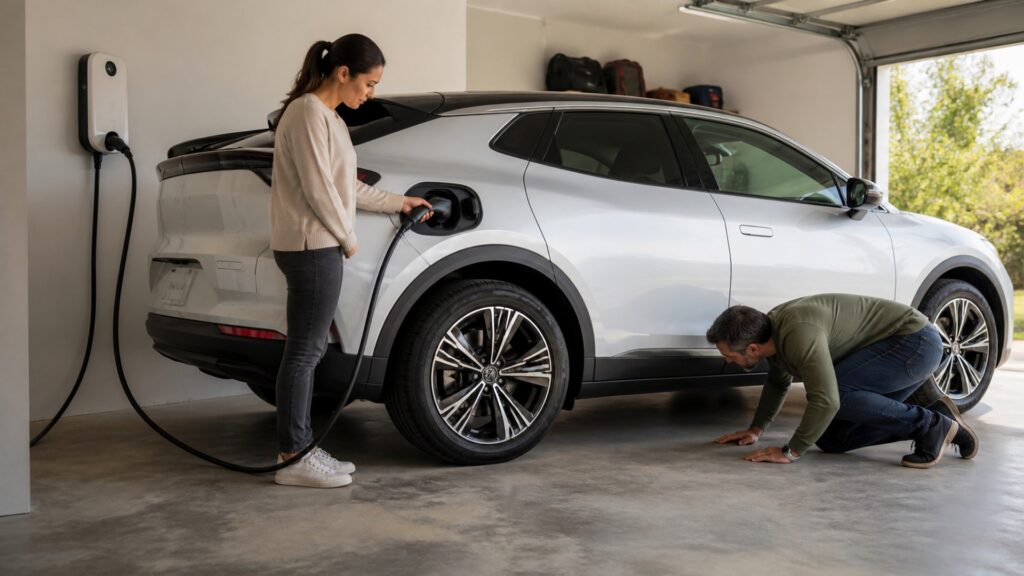
Combine evidence about the car with sensible operating habits.
Tip: A strong result in one test does not replace maintenance, correct restraints, or attentive driving.
Each concept addresses a different source of risk.
Crashworthiness is the vehicle's ability to protect occupants in a collision.
Crash avoidance includes vehicle functions and driver actions that help prevent a collision.
High-voltage isolation separates the traction electrical system from areas not intended to carry its voltage.
Suitability means the equipment and installation are appropriate for the vehicle and electrical supply.
Battery damage is physical or electrical harm that may compromise the pack's safe operation.
A safety recall addresses a defect or noncompliance identified for affected vehicles.
Tip: Use the right evidence for each question instead of relying on one reassuring feature.
Look up the exact model and year, then read the individual results and any safety concerns. NHTSA's frontal and overall star ratings are intended for comparison within the same vehicle class and a weight difference of no more than 250 pounds. Do not turn a star count into a universal ranking across unrelated cars.
Ratings help with a purchase decision, but they do not establish the condition of a particular used car. NHTSA: safety-rating comparisons.
Electric propulsion does not secure a child seat, set tire pressure, or clear an obstructed view. Check the required seating arrangements and keep each passenger in a designated seat with the proper restraint. Tire damage, unsuitable replacements, or poor condition can undermine the vehicle's ability to steer and stop.
NHTSA's tire guidance explains routine pressure and condition checks that remain relevant regardless of powertrain. NHTSA: tire safety.
Home charging should use equipment and an electrical supply suitable for the intended load. The U.S. Fire Administration recommends certified charging devices and qualified electrical installation. Do not use a household extension cord or multiplug adapter as a workaround. Stop using equipment with visible damage and seek the operator's or manufacturer's support.
Charging convenience should come from a suitable setup, not an improvised connection to whatever outlet is nearest. USFA: EV charging safety.
After a significant impact, flooding, or a warning suggesting battery damage, follow the vehicle's emergency guidance and contact qualified assistance. If there is smoke, fire, or an immediate threat, get away from the vehicle and call emergency services. Do not attempt to open the pack or handle exposed high-voltage components.
NHTSA warns that physical battery damage can produce delayed hazards; a vehicle appearing quiet immediately after an incident is not proof that it is safe. NHTSA: electric-vehicle safety.
Electric braking modes and assistance systems differ. Familiarize yourself with ordinary pedal response and stopping behavior in suitable conditions, and remain ready to brake normally. Keep current with safety notices and check the VIN for open recalls, especially before buying a used car or after receiving a manufacturer notice.
Use the official VIN recall lookup as one part of ongoing ownership, alongside maintenance and attention to changes in behavior. NHTSA: VIN recall lookup.
Both matter, but they answer different questions.
Review relevant ratings, equipment, condition, and VIN recall information.
Check passenger restraints and assess the charging setup you will use.
Maintain tires and visibility, follow charging instructions, and stay attentive.
Treat significant damage and electrical warnings as reasons for qualified help.
Avoid blanket conclusions from the powertrain label.
Design, size, equipment, year, and condition vary. Assess the exact car.
Assistance operates within limits and does not remove the driver's responsibility.
Some hazards can appear later. Seek appropriate professional guidance rather than resuming use on that assumption.
Tip: Prepare the charging routine before purchase and learn the emergency guidance before it is needed.
Practical answers without replacing the vehicle's own instructions.
No single powertrain label establishes overall safety. Compare relevant test evidence, equipment, condition, and intended use.
Do not use an ordinary extension cord or multiplug adapter as a charging workaround. Arrange a suitable installation following the equipment instructions.
Do not touch exposed high-voltage components or open the traction battery. Use personnel with appropriate EV training and equipment.
Do not charge or resume use based on appearance alone. Contact qualified assistance and follow the manufacturer's guidance; call emergency services if there is an immediate hazard.
EV safety depends on the particular car, a suitable charging setup, sound condition, and responsible use.
Combine reliable evidence with familiar road-safety habits, and treat high-voltage damage as a job for qualified assistance.
Use these Review Streets paths to compare related categories and practical next decisions.
Plan the maintenance an electric car still needs.
Separate electric propulsion from luxury features.
Understand driving, braking, and charging behavior.
Choose a retailer
Prices checked regularly. We may earn a commission at no cost to you.