
Fitness Band
A fitness band is a wrist-worn tracker that estimates activity and related metrics.
- Example: step, heart-rate, and sleep tracking
- Check: review the metrics the user will act on
- Limit: it does not create the workout
Fitness bands are different from elliptical machines because bands track activity data on the wrist, while elliptical machines provide a stationary cardio exercise. A fitness band measures and estimates movement, heart rate, workouts, sleep, and habits. An elliptical creates the workout itself through pedals, handles, resistance, and stride motion.
The two categories can work together, but they are not substitutes. A fitness band helps the user observe and review training. An elliptical gives the user a specific low-impact cardio activity to perform.
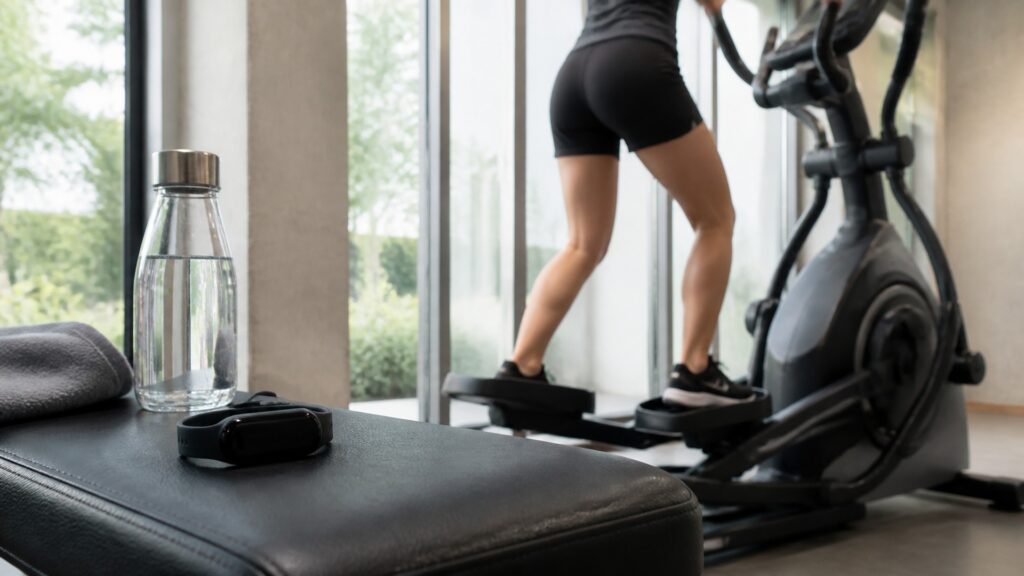
A practical comparison of wrist-worn activity feedback and stationary cardio equipment.
Tip: Decide whether the user needs feedback from a wearable or a dedicated cardio machine.
These concepts clarify the practical signals readers should check before choosing equipment or planning workouts.
A fitness band is a wrist-worn tracker that estimates activity and related metrics.
An elliptical machine is stationary cardio equipment with guided stride motion.
A tracking tool records or estimates data about activity.
A training tool provides the physical exercise stimulus.
Low-impact cardio raises effort while limiting repeated impact.
Routine feedback shows how workouts and daily movement fit together.
Tip: The best equipment choice is the one that matches the training job, available space, and user's current ability.
Fitness bands collect wrist signals and turn them into estimates such as steps, heart rate, sleep, active minutes, and workout logs. Their value is feedback and habit visibility.
A band helps the user understand activity.
An elliptical gives the user a structured cardio exercise with pedals, handles, resistance, and a repeatable movement path. It is equipment for doing the workout rather than only tracking it.
An elliptical creates the exercise stimulus.
A fitness band can track an elliptical session and show how it fits into the week. The elliptical supplies the workout, and the band records estimated effort and routine patterns.
Tracking and training can complement each other.
A fitness band will not provide cardio by itself, and an elliptical will not track all-day habits as well as a wearable. Choosing between them depends on whether the user needs feedback or exercise equipment.
The categories solve different problems.
If the user already exercises but needs better visibility, a fitness band may help. If the user needs a reliable indoor cardio option, an elliptical is the stronger purchase.
The missing piece should lead the decision.
The better category depends on whether the goal is feedback or cardio equipment.
The user needs activity tracking, reminders, heart-rate trends, or habit feedback.
The goal is visibility across the whole day and week.
The user needs a dedicated low-impact cardio workout.
Indoor exercise equipment is the missing part of the routine.
Tracking and training are different jobs.
It tracks and estimates activity, but the user still needs to do the workout.
It can show machine-session data, but it does not track the whole day like a wearable.
One is mainly feedback, and the other is mainly cardio equipment.
Wrist estimates can still vary during machine workouts.
Tip: Treat strong claims as reasons to inspect the workout fit more closely.
Short answers for practical training and buying decisions.
A fitness band tracks activity data, while an elliptical provides a cardio workout.
Many bands can log elliptical sessions, though readings are still estimates.
Buy a band for feedback and habit tracking. Buy an elliptical for indoor cardio exercise.
Yes. The elliptical provides the workout, and the band helps review trends.
Choose the category that supplies the missing piece: feedback or cardio equipment.
Fitness bands differ from elliptical machines because they track activity rather than provide the cardio workout.
Use a fitness band for feedback and an elliptical for dedicated low-impact cardio training.
Use these Review Streets paths to compare related categories and practical next decisions.
Review how wrist-worn tracking works.
See how tracking features should support training decisions.
Compare with the cardio machine side of the decision.
Choose a retailer
Prices checked regularly. We may earn a commission at no cost to you.