What Makes Floor Protection Different from Interior Comfort

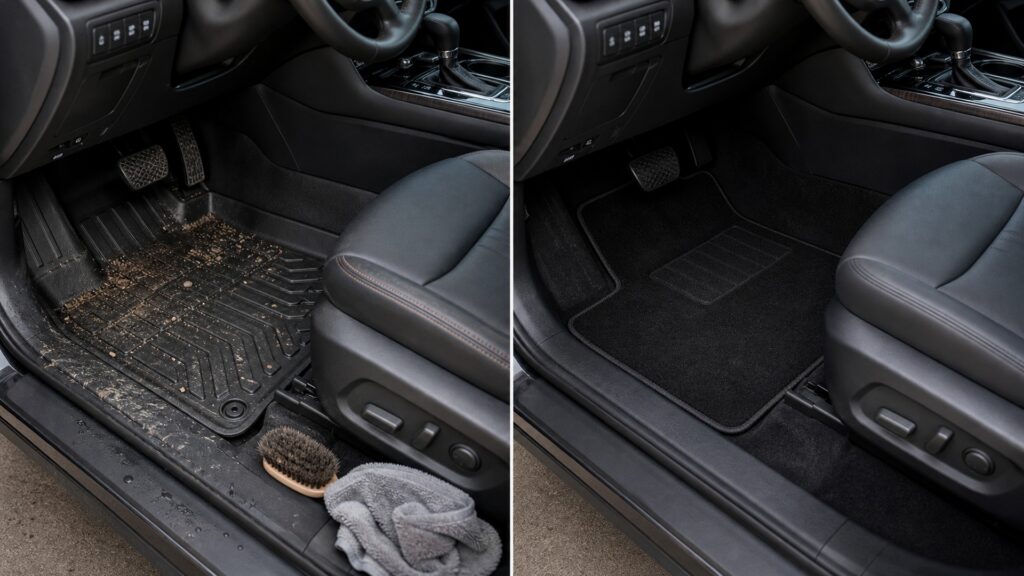
Floor protection and interior comfort occupy the same cabin but solve different problems. A floor liner or mat intercepts shoe wear, grit, water, salt, and spills before they reach carpet. Its performance appears in captured contamination, dry underlying material, stable retention, intact edges, and clear pedal travel.

Interior comfort manages how an occupant experiences posture, pressure, temperature, airflow, sound, touch, and reach. Seat cushions, shades, covers, supports, or thermal accessories can change that experience, yet they do not create a sealed debris reservoir. The categories meet at shared space: a thick or displaced floor covering can change foot position, while a comfort accessory can alter control access or restraint geometry. Each needs separate acceptance evidence.

By: Review Streets Research Lab
Updated: September 11, 2026
Explainer · 8-12 min read
floor protection different from interior comfort explainer hero image for Review Streets
What You'll Learn

Separate Contamination Control from the Occupant Experience

The comparison distinguishes inputs, mechanisms, evidence, shared fit boundaries, and upkeep.

  • What floor protection receives
  • What comfort changes
  • How success is observed
  • Where safety boundaries differ
  • Which cabin interfaces overlap
  • Why maintenance is unequal
  • How combined use is verified

Tip: Ask whether the missing outcome concerns material reaching the carpet or the occupant's experience of the cabin.

Definitions

Key Concepts That Define Floor Protection and Interior Comfort Comparison

These definitions keep protection, sensation, and shared geometry from blending together.

Contamination Barrier

A replaceable layer that intercepts solids, liquids, salts, oils, and abrasion before they reach underlying cabin materials.

  • Locate the contamination barrier
  • Observe contamination barrier changes
  • Verify the contamination barrier

Comfort Variable

A changeable condition such as pressure, posture, temperature, airflow, noise, touch, glare, or reach that affects an occupant.

  • Locate the comfort variable
  • Observe comfort variable changes
  • Verify the comfort variable

Contact Surface

The material interface touched by shoes, clothing, skin, cargo, or cabin components and therefore exposed to force and friction.

  • Locate the contact surface
  • Observe contact surface changes
  • Verify the contact surface

Pedal Clearance

The dynamic separation between a driver-side floor covering and every pedal through complete travel and normal foot transitions.

  • Locate the pedal clearance
  • Observe pedal clearance changes
  • Verify the pedal clearance

Thermal Sensation

The occupant's perception of heat or cold shaped by surfaces, airflow, radiation, clothing, humidity, and metabolic state.

  • Locate the thermal sensation
  • Observe thermal sensation changes
  • Verify the thermal sensation

Shared Interface

A cabin boundary where protection and comfort products can interact with the same floor, seat, control, vent, trim, or occupant movement.

  • Locate the shared interface
  • Observe shared interface changes
  • Verify the shared interface

Tip: Assign each result to the surface or body interface that produces it.

Different Inputs

Floor Protection Receives Contamination While Comfort Receives Human Response

Grit, water, salt, mud, and heel pressure act on floor coverings. Comfort begins with body dimensions, posture, pressure distribution, heat exchange, airflow, sound, and control reach.

  • Name the physical input
  • Identify the exposed surface
  • Keep body response separate

The first input determines which category can influence the result.

Different Mechanisms

Barriers Capture and Contain While Comfort Systems Redistribute or Moderate

Channels, fibers, walls, and wear layers manage material. Cushions, supports, shades, ventilation, and tactile surfaces alter force, temperature, glare, or perception without removing footwell contamination.

  • Trace material movement
  • Trace occupant contact
  • Avoid category substitution

Similar materials can serve entirely different mechanical jobs.

Different Evidence

A Clean Dry Carpet Is Not the Same Result as a Comfortable Occupant

Protection is checked by leakage, abrasion, migration, capacity, and cleanout. Comfort is evaluated through fit, reach, pressure, thermal response, noise, stability, and sustained user experience.

  • Inspect beneath the mat
  • Use a representative trip
  • Record distinct pass criteria

One favorable impression cannot validate both categories.

Shared Boundaries

Pedals, Seats, Vents, Restraints, and Trim Constrain Both Products

Floor walls can contact seat tracks or vents; comfort additions can shift feet, body position, belt routing, or access to controls. Combined thickness and movement must remain within vehicle geometry.

  • Test all seat positions
  • Operate every control
  • Preserve restraint paths

Cabin coexistence is a safety and fit problem before it is a style decision.

Different Maintenance

Captured Dirt Is Removed While Comfort Surfaces Are Restored and Reassessed

Mats are lifted, emptied, washed, dried, and resecured. Comfort products may need laundering, attachment inspection, thermal checks, odor control, support recovery, and reassessment for changed occupants.

  • Follow material instructions
  • Dry hidden surfaces
  • Recheck fit afterward

Maintenance restores the category's capacity without creating a new interface hazard.

Quick Reality Check

A Softer Floor Is Not Necessarily Better Protection

Added softness may improve one contact sensation while reducing containment, anchor engagement, pedal clearance, drying, or positional stability.

Protection Evidence

Underlying carpet remains dry and unworn after representative contamination and removal.

The covering stays anchored and outside all control paths.

Comfort Evidence

Occupant comfort changes with body size, trip duration, clothing, climate, and preference.

A comfortable accessory can still obstruct a restraint, vent, control, or view.

Common Myths

Misconceptions About Floor Protection and Interior Comfort Comparison

These myths confuse shared cabin materials with shared outcomes.

A plush mat improves both categories equally

Pile can feel softer, yet liquid capacity, drying time, anchor engagement, edge shape, and pedal clearance still govern protection. Comfort at initial touch does not prove stable containment or safe long-term driver-side fit.

If the carpet stays clean, the cabin is comfortable

Clean flooring says nothing about seat pressure, posture, heat, airflow, glare, noise, control reach, or motion tolerance. Protection removes one source of annoyance but cannot establish the occupant's complete comfort condition.

Any comfort accessory is harmless if it feels good

Immediate relief can hide shifted posture, reduced belt contact, blocked airbags, unstable supports, altered pedal reach, or obstructed controls. Verify the vehicle's safety interfaces and reassess during a representative drive.

One cleaning method suits both product types

Rubber-like liners, carpeted mats, foams, textiles, gels, heaters, and coated surfaces tolerate different water, heat, chemicals, agitation, and drying. Follow material-specific guidance and inspect attachments and hidden moisture after service.

Tip: Trace the result to contamination control or occupant response.

FAQ

Frequently Asked Questions About Floor Protection and Interior Comfort Comparison

These answers clarify selection, combination, measurement, and maintenance.

Which category addresses wet shoes and road salt?

Floor protection owns that problem because channels, fibers, raised walls, and removable surfaces intercept and export contamination. Choose enough containment for the climate, then verify anchors, edge capacity, drying, and driver pedal clearance.

Which category addresses pressure or temperature discomfort?

Interior comfort owns pressure distribution, posture, contact temperature, airflow, glare, touch, and noise. Identify the discomfort source first, select a compatible intervention, and confirm it preserves controls, restraints, airbags, visibility, and stable body position.

Can one product provide both benefits?

A floor surface may change underfoot feel while protecting carpet, but those are separate results. Test contamination capture and retention independently from foot support, texture, heat, noise, and any change in pedal transitions.

How should combined accessories be tested?

Install only intended layers, move seats fully, inspect vents and wiring, operate pedals and controls, enter and exit repeatedly, check belt and airbag zones, then use the cabin long enough to expose movement, heat, and pressure changes.

What should be checked after cleaning?

Confirm both faces and underlying surfaces are dry, no material curled or shrank, anchors and straps remain intact, residue has not changed friction, controls stay clear, and comfort products return to their accepted positions.

Bottom Line

Protection controls contamination; comfort controls occupant experience.

Treat them as separate systems even when they share the same floor, seat, or material. Write different success criteria, preserve every safety interface, and retest their combined thickness, movement, and maintenance state inside the actual vehicle.

Next Steps

Continue into Both Mechanisms and Fitment

These explainers show how floor materials manage contamination and how comfort variables act on the occupant.