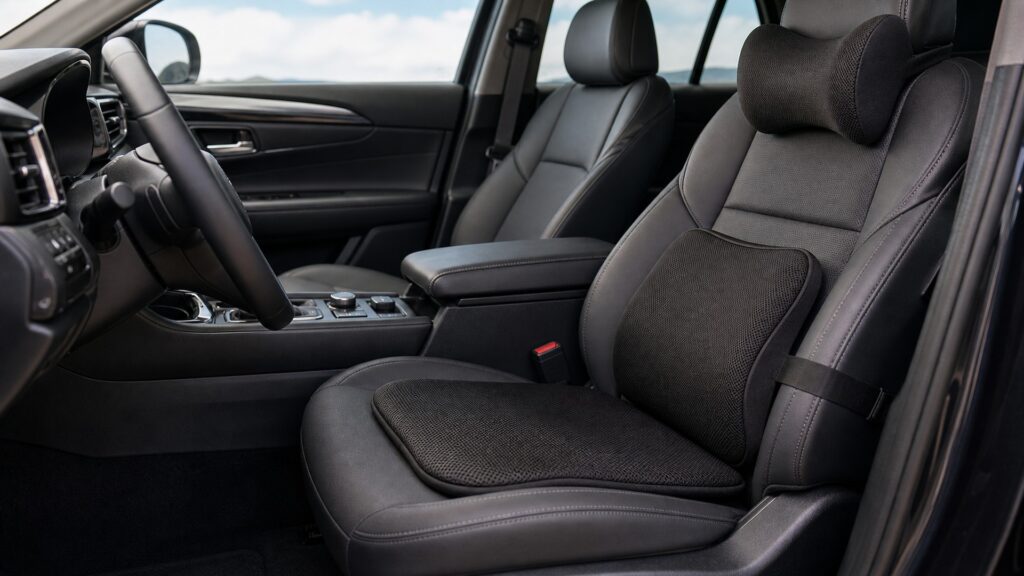
Interior comfort centers on the occupant. It combines support, pressure, temperature, airflow, sound, vibration, touch, glare, reach, motion, and time into a human response. An intervention succeeds when a particular person can remain stable, operate the vehicle, and tolerate the cabin more comfortably without sacrificing safety interfaces.
Floor protection centers on cabin materials. It receives abrasion, grit, water, salt, mud, and spills, then holds or redirects them until removal. Its evidence is physical: retained position, remaining capacity, intact wear surfaces, dry carpet, and cleanout. The categories can interact beneath the driver's feet, but softer contact and cleaner carpet remain separate outcomes with different mechanisms and maintenance.