What Makes Hardwired Chargers Different from Plug-In Chargers

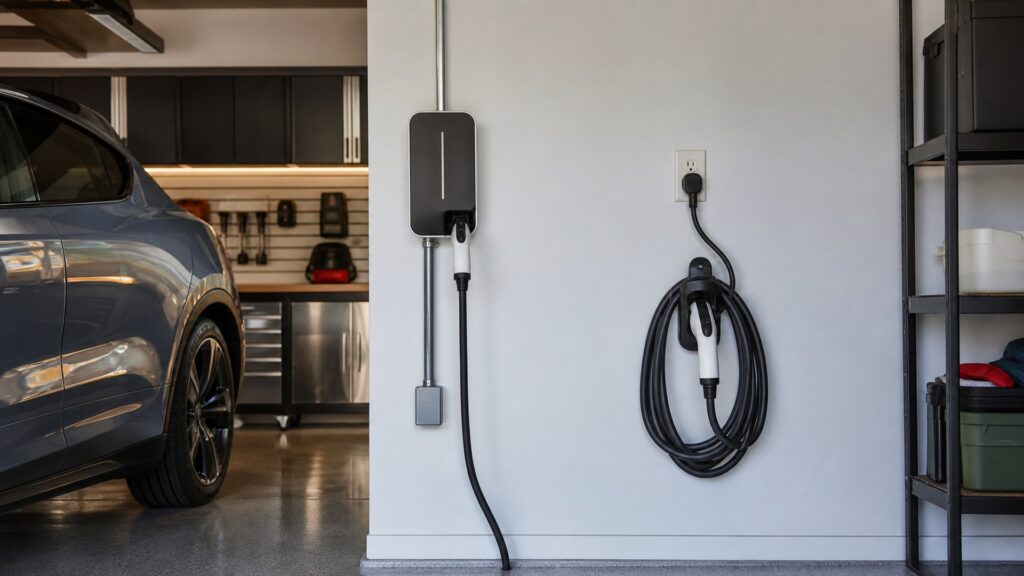
Hardwired and plug-in EV chargers differ at the building connection. Hardwired electric vehicle supply equipment terminates branch-circuit conductors inside the unit or a dedicated connection point. Plug-connected equipment adds a receptacle and mating plug between the circuit and EVSE, creating a removable appliance interface that can simplify replacement or portability.

That extra interface changes more than convenience. Receptacle contacts, plug insertion, enclosure covers, grounding, ground-fault behavior, weather exposure, current limits, and repeated handling enter the system. Hardwiring can reduce connection count and may support higher permitted current, while plug-in equipment can provide clean removal when the circuit and receptacle are correctly designed for sustained EV charging. Qualified installation and local code govern both.

By: Review Streets Research Lab
Updated: August 26, 2026
Explainer · 8-12 min read
hardwired chargers different from plug-in chargers explainer hero image for Review Streets
What You'll Learn

Compare the Building Connection before Comparing the Wall Units

The decision follows current from breaker to conductors, termination or receptacle, EVSE contactors, cable, vehicle, and the maintenance or replacement path.

  • How hardwiring removes a plug-and-receptacle interface
  • Why receptacle quality and contact pressure matter
  • Where current and code can favor hardwiring
  • How plug-in equipment gains portability
  • Why outdoor exposure complicates receptacles
  • What inspection and replacement look like for each

Tip: Choose the connection method with the electrician after the load calculation and parking plan; buying a plug type first can force an unsuitable receptacle, current, location, or enclosure decision.

Definitions

Key Concepts That Define Hardwired and Plug-In EV Chargers

These terms locate the electrical and mechanical interfaces that change between the two installations.

Hardwired EVSE

Charging equipment connected directly to branch-circuit conductors without a user-mated supply plug and receptacle.

  • It reduces detachable interfaces
  • Termination remains serviceable by qualified personnel
  • Removal requires electrical work

Plug-Connected EVSE

Charging equipment supplied through a specified cord cap inserted into a matching dedicated receptacle.

  • It can be unplugged for replacement
  • Contact condition affects heating
  • The plug and cord have ratings

Branch Circuit

The conductors and protective devices supplying the charging equipment from the electrical distribution system.

  • EV charging is a sustained load
  • Capacity must match the EVSE setting
  • Voltage drop and route matter

Receptacle

A fixed electrical contact device that receives the EVSE supply plug.

  • Contact pressure degrades with wear
  • Mounting and enclosure affect stability
  • Its rating alone does not prove suitability

Line Termination

The clamped or connected joint where branch conductors meet equipment wiring or terminals.

  • Torque and conductor preparation matter
  • Heat cycling can expose defects
  • Qualified inspection may be required

Environmental Rating

The equipment classification for exposure such as indoor, outdoor, water, dust, and temperature conditions.

  • All components need suitable ratings
  • Covers must function with a plug inserted
  • Installation location still matters

Tip: A plug is not a license to use any matching outlet; the circuit, receptacle, conductor, protection, EVSE setting, and environment must be designed as one system.

Hardwired Path

How Direct Termination Reduces Interfaces and Supports a Fixed Installation

Branch conductors enter the EVSE or connection enclosure and terminate under specified methods. Eliminating a receptacle and plug removes one user-mated contact pair, can simplify weather sealing, and may be required or preferred at higher current or by local rules.

  • Use the specified conductor type and size
  • Torque terminals to instructions
  • Provide disconnects where required
  • Mount for strain-free cable routing

Hardwiring removes one interface but does not remove the need for sound terminations, protection, service access, and inspection.

Plug-In Path

How a Receptacle Adds Removal Convenience and a Heat-Sensitive Contact Pair

A dedicated receptacle allows compatible EVSE to be unplugged without opening the unit, which can ease replacement, travel, or tenant turnover. The plug blades and receptacle contacts must remain tight and clean during hours of current; loose or worn interfaces generate heat.

  • Use a high-quality specified receptacle
  • Avoid repeated unnecessary insertion
  • Support the cord and enclosure
  • Stop for odor, discoloration, looseness, or warmth

Portability is purchased with an additional electrical and mechanical interface that becomes part of routine condition monitoring.

Capacity and Protection

Why Breaker Size, Continuous-Load Current, and Ground-Fault Design Must Align

The EVSE advertised current must suit the branch circuit under current code. Plug-connected installations can introduce required receptacle ground-fault protection that interacts with EVSE protection, while hardwired equipment may follow a different permitted arrangement.

  • Set maximum current under controlled access
  • Do not change breakers without redesign
  • Coordinate protective-device requirements
  • Investigate trips rather than bypassing protection

The connection method cannot be separated from circuit sizing and the complete fault-protection design.

Weather and Physical Exposure

How Outdoor Plugs, Covers, Cords, and Impact Zones Change Risk

An outdoor plug-in system needs a suitable receptacle, enclosure, in-use cover, drainage, mounting, and EVSE cord arrangement. Hardwired equipment avoids an exposed supply plug but still needs rated enclosure, cable support, impact protection, and safe water management.

  • Use components listed for the exact environment
  • Keep connections above standing water
  • Protect walls and posts from vehicles
  • Preserve enclosure seals and cover closure

Outdoor suitability is a property of the complete installed assembly, not the wall unit alone.

Lifecycle Decision

When Portability or Fewer Interfaces Creates More Value

Renters, fleets rotating portable units, or owners expecting equipment replacement may value a receptacle. A permanent outdoor site, higher-current design, public-access area, or user who never moves equipment may benefit more from hardwiring and its reduced contact count.

  • Estimate realistic relocation frequency
  • Include receptacle and protection cost
  • Plan future conductor and conduit capacity
  • Document settings for replacement equipment

Choose portability only when it will be used; otherwise an unused plug interface can add cost and a maintenance point without benefit.

Quick Reality Check

Fewer Building Interfaces versus Easier Equipment Removal

Hardwiring integrates the EVSE into the branch circuit; plug-in installation inserts a serviceable but heat-sensitive receptacle and plug.

Hardwired Advantages

Fewer detachable contacts can simplify a permanent outdoor installation, reduce receptacle heating risk, and support current levels or rules that favor direct connection.

A fixed termination can discourage unauthorized movement and keep the supply interface enclosed from routine user handling.

Plug-In Advantages and Boundaries

A correctly designed receptacle can simplify EVSE replacement, portability, troubleshooting, tenant turnover, or use of an approved portable cordset.

The receptacle, plug, enclosure, ground-fault protection, insertion history, and contact temperature become additional installation and maintenance responsibilities.

Common Myths

Misconceptions About Hardwired and Plug-In EV Chargers

These myths confuse visible convenience with electrical suitability.

A plug-in charger can use any matching receptacle

Matching blade geometry does not prove dedicated capacity, conductor condition, contact quality, grounding, protection, enclosure suitability, or correct EVSE current. A qualified assessment must verify the full branch circuit for sustained charging.

Hardwired equipment can never overheat

Hardwired terminals, conductors, breakers, internal contactors, and vehicle cables still carry long-duration current. Incorrect torque, damaged strands, unsuitable conductors, loose connections, overload, or enclosure heat can create dangerous temperature rise.

A larger receptacle automatically permits faster charging

The branch conductors, breaker, continuous-load calculation, EVSE setting, plug, vehicle onboard charger, service capacity, and code all limit current. Receptacle shape or ampere marking cannot upgrade the rest of the system.

Plug-in installation is always cheaper

A suitable high-quality receptacle, box, cover, conductor route, ground-fault breaker, permitting, and labor can narrow or reverse the price difference. Cost depends on location, current, existing service, and local requirements.

Tip: Compare the complete branch circuit and lifecycle, including every termination, protective device, weather interface, inspection need, and realistic move.

FAQ

Frequently Asked Questions About Hardwired and Plug-In EV Chargers

These answers address portability, unplugging, receptacle heat, outages, and changing equipment later.

Can a plug-in EVSE be treated as portable?

Only if its listing, cord, plug, vehicle use, storage, and destination circuits support that role. A wall-mounted unit may be removable without being intended for frequent travel or unknown receptacles.

Should a plug-in unit be unplugged after every session?

Usually not unless the manufacturer directs it. Repeated insertion wears contacts and exposes blades. Leave a properly installed dedicated connection undisturbed, while de-energizing and inspecting according to the equipment and site procedures.

How warm is too warm for a receptacle or plug?

Any unusual increase, hot spot, odor, discoloration, softening, crackling, looseness, or repeated trip requires stopping use and qualified inspection. Do not rely on touch alone around energized equipment or high-current faults.

Which connection works better outdoors?

Hardwiring can reduce exposed supply interfaces, but either method can be suitable when every component and the installed configuration carry the required environmental rating, protection, drainage, mounting, cover, and cable management.

Can the EVSE be upgraded later without rewiring?

Only within the existing circuit, conductor, protection, service, and installation limits. A higher-rated replacement must be configured to the permitted current unless qualified redesign upgrades the entire affected electrical path.

Bottom Line

Hardwired EV chargers connect directly to the branch circuit and remove a user-mated supply interface, while plug-in chargers add a receptacle and plug that make equipment removal easier.

Choose after the load and site plan, design the entire circuit together, protect the environment, inspect every connection, and value portability only when it will actually be used.

Next Steps

Connect the Building Interface to Home Need and Level 2 Capacity

These explainers show why connection method follows the energy requirement, property plan, and complete charging chain rather than leading them.

Why Home EV Charging Matters

Plan the service, parking, cable route, weather, schedule, access, and backup context before selecting a building connection.

Why Level 2 Charging Matters

Determine the Level 2 current actually needed from daily energy and dwell before sizing the branch circuit or receptacle.