
Level 2 Charging
AC electric-vehicle charging supplied by 208- or 240-volt service within the applicable equipment limits.
- Power spans a broad range
- The vehicle converts AC onboard
- It suits home, work, and public dwell
Level 2 charging matters because it can replace more driving energy during the hours a vehicle is already parked. By using 208- or 240-volt AC service at an appropriate current, it commonly delivers several times the power of a standard 120-volt cordset, creating more margin for long commutes, larger batteries, cold-weather losses, irregular schedules, or multiple drivers.
Faster is not automatically better. The panel, branch circuit, EVSE setting, cable, connector, and vehicle onboard charger each impose a limit, while the battery and thermal system may request less. The correct installation begins with the household energy requirement and available dwell time, then selects the lowest capacity that reliably reaches the planned departure state without overbuilding the service.
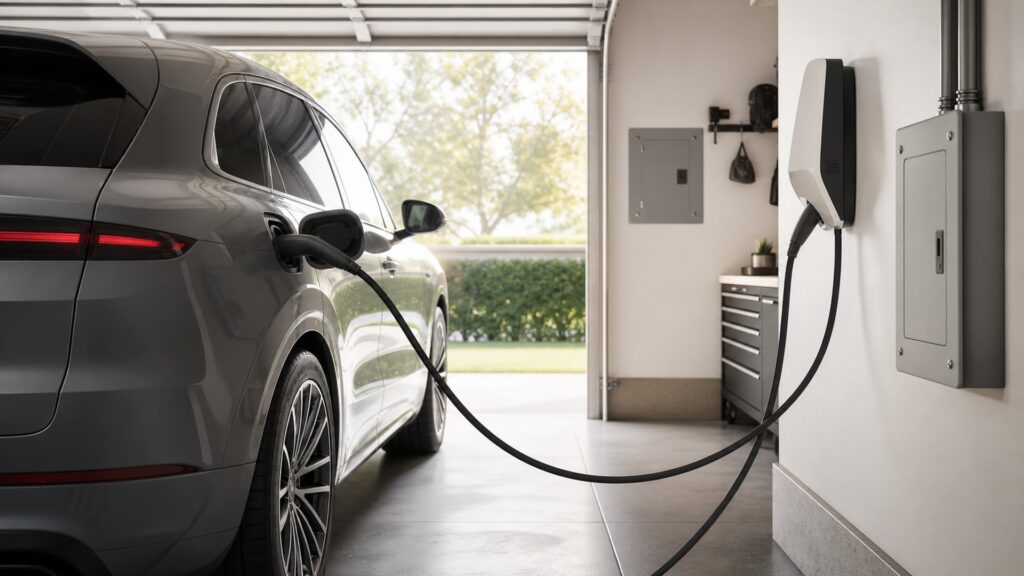
Level 2 value appears when available circuit power, vehicle acceptance, charging losses, schedule, and overnight dwell close the gap between arrival and departure energy.
Tip: Use several weeks of actual mileage and charging data to size the need; planning around the rare full-battery refill often overspecifies a circuit that will replenish only daily use.
These terms distinguish installed electrical capacity from the energy a driver actually needs by departure.
AC electric-vehicle charging supplied by 208- or 240-volt service within the applicable equipment limits.
An electrical load expected to operate for an extended period and therefore subject to specific circuit-sizing rules.
The maximum current an EVSE advertises to the connected vehicle for that circuit.
Vehicle hardware that sets the maximum supported AC conversion rate for the battery.
The period a vehicle remains connected and available to receive energy before departure.
Control that adjusts charging current based on site capacity, other loads, tariffs, or priorities.
Tip: Calculate with usable charging power and real dwell time, then retain margin for losses and seasonal conditions rather than multiplying advertised maximums alone.
Start with vehicle energy use per mile, actual distance, climate and accessory loads, then account for charging losses. The result is a daily energy target, not a requirement to refill the entire battery after every trip.
Circuit sizing should solve the repeated energy deficit within the repeated parking window.
Approximate input power follows voltage multiplied by current, but usable charging cannot exceed the circuit, EVSE advertisement, cable and connector rating, onboard charger, or vehicle request. A 48-amp wall unit does not make an 11-kilowatt-limited vehicle accept more.
Level 2 is a range of AC power, not one universal charging speed.
If Level 1 exactly covers normal use, a late arrival, cold night, detour, or second outing can leave no recovery margin. Level 2 can restore the routine energy need in fewer connected hours, making departure readiness less fragile.
The practical benefit is schedule resilience, not merely a larger number on the charging screen.
Long-duration current exposes loose terminals, worn receptacles, undersized conductors, poor plug contact, and unsuitable enclosures. A qualified assessment covers service capacity, breaker, conductor, voltage drop, protection, mounting, environment, and permitting.
A charging session is an hours-long electrical test, so small connection defects can become consequential heating problems.
Drivers with short mileage and long dwell may already meet needs at 120 volts. A Level 2 unit can still run below maximum, schedule off-peak hours, share capacity, or preserve future flexibility without demanding full power every session.
The right charging level is the least complex system that consistently meets departure energy, cost, and resilience requirements.
Level 2 adds scheduling margin when the site and vehicle support it, but excess nameplate power has no value beyond the actual energy need.
Longer commutes, larger batteries, cold climates, short overnight windows, shared cars, and irregular schedules can benefit from faster AC replenishment.
Adjustable or managed equipment can use available capacity without requiring the vehicle to draw the maximum on every connection.
Low daily mileage and long dwell can make a dedicated 120-volt circuit entirely sufficient at lower installation cost.
Onboard-charger limits, site capacity, temperature, scheduling, and battery requests can prevent a high-rated EVSE from delivering its advertised maximum.
These myths size charging around labels instead of energy, time, and the weakest electrical interface.
Many drivers need only enough energy to replace daily travel during overnight dwell. Higher power can raise installation cost, service demand, and heat while providing no practical benefit after departure needs are reliably met.
The entire branch circuit and EVSE must be designed together, and the vehicle's onboard charger can cap AC power. Changing only overcurrent protection without compliant conductors and equipment creates a dangerous mismatch.
Battery capacity, delivered power, losses, temperature, start time, schedules, interruptions, and vehicle limits determine the result. It often supports overnight charging, but the phrase does not guarantee every pack or window.
An adjustable limit can match temporary panel capacity, reduce coincident load, support power sharing, fit a tariff window, or improve thermal margin. Available maximum power and selected operating power serve different purposes.
Tip: Build the decision from measured daily deficit and qualified site capacity, then verify sustained delivery.
These answers cover sizing, charging time, service upgrades, cold weather, and whether Level 2 harms the battery.
Divide the wall energy needed for daily travel by the reliable connected hours, then add measured loss and seasonal margin. Confirm vehicle acceptance, site capacity, code requirements, and future needs with a qualified installer.
Estimate energy required, not total pack size, then divide by the lower of delivered EVSE power and vehicle AC acceptance while allowing losses and changing conditions. Vehicle estimates remain the better operational reference.
Not always. A load calculation may find adequate capacity, while adjustable EVSE, energy management, or a smaller circuit can avoid an upgrade. A qualified electrician and permitting authority should assess the specific service.
Battery protection, pack heating, cabin preconditioning, reduced cell acceptance, and auxiliary loads can consume or limit power. Keeping the vehicle connected and using supported departure preconditioning can improve readiness without overriding safeguards.
The vehicle manages charging within its battery strategy. Battery aging depends on chemistry, temperature, time at high state of charge, power, cycles, and use; follow vehicle guidance rather than assuming all Level 2 operation is harmful.
Level 2 charging matters when it replaces the daily energy deficit with enough time margin to make departure readiness dependable under real schedules and seasons.
Size it from measured need, accept the lowest limit in the AC chain, use qualified electrical design, schedule deliberately, and avoid paying for power the vehicle or routine cannot use.
These explainers connect AC power to site planning, connection method, and the complete EV charging chain.
Plan where home charging belongs, how it fits service capacity, and how arrival, scheduling, cable handling, and utility rates shape the routine.
Compare field-wired EVSE with receptacle-connected equipment by interfaces, current, maintenance, portability, and environmental exposure.
Return to the complete EVSE, signaling, conversion, battery, connector, and thermal chain behind AC delivery.
Choose a retailer
Prices checked regularly. We may earn a commission at no cost to you.